Instagram Didn’t Ruin Itself — It Was Always Going to End Up Here


I genuinely hate Instagram.
It is honestly the shittiest platform to be on right now. And yet here we all are.
So I got curious — how did we get here? How did something people casually used or loved at some point turn into this?
When was the last time you opened Instagram with a clear purpose?
Maybe you wanted to reply to a message, check a friend’s update, or look at something specific. But somehow, ten minutes turned into forty. You moved from one Reel to another, watched videos from people you don’t know, saw advertisements for products you never searched for, and eventually closed the app wondering where your hours of time disappeared.
And when you finally close the app you are hit with this burst of emotion all at once. Comparison. Embarrassment. Unmet expectations. That hollow feeling of not having done enough, not being enough. All from an app you opened to kill five minutes.
This feeling is strangely universal.
Instagram has become one of the most powerful digital products ever created. It has billions of users, influences culture, shapes businesses, creates careers, and generates enormous advertising revenue. Yet many of its users also feel disconnected from the platform they once loved.
How did a simple application built around sharing beautiful photographs transform into a global attention economy machine?
The answer lies in one of the most fascinating journeys in modern technology: the story of Instagram.
The Founder Who Almost Joined Facebook
The story begins with Kevin Systrom, a Stanford student studying management science and engineering.
During his time at Stanford, social media was beginning to reshape the internet. Facebook was growing rapidly, and Mark Zuckerberg was building what would eventually become one of the world’s largest technology companies.
Interestingly, Zuckerberg offered Systrom a job at Facebook.

At the time, Facebook was still young, and many people were uncertain about its future. Systrom discussed the opportunity with a mentor, who advised him that Facebook was probably a temporary phenomenon and would disappear within a few years and Systrom declined the offer.
Looking back, it became one of the most expensive career decisions imaginable. The stock options he could have received would eventually have been worth hundreds of millions of dollars.
But technology history is full of irony.
The person who rejected Facebook would later build a company that Facebook would acquire for $1 billion.
Before Instagram existed, Systrom worked at Google, contributing to products like Gmail, Google Calendar, and Google Docs. Although the experience gave him exposure to world-class technology, he eventually realized he wanted to build something of his own.
That desire led him to create a startup called Burbn.
The Failed Product That Became Instagram
Burbn was a location-based social networking application. It allowed users to check in at locations, share plans, post photos, and communicate with friends.
The problem was that it tried to do too much. It was not clear whether Burbn was a location app, a messaging app, or a photo-sharing app.
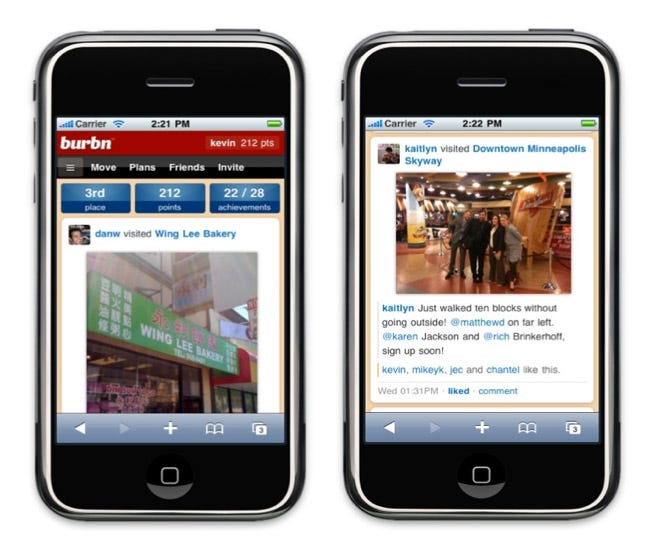
However, when Systrom and his co-founder Mike Krieger studied user behavior, they noticed something important. Users were ignoring most of the features. They were only interested in one thing: sharing photos.
This became the critical startup insight. They stripped Burbn down to its simplest form — take a photo, apply a filter, share it.
That decision created Instagram.
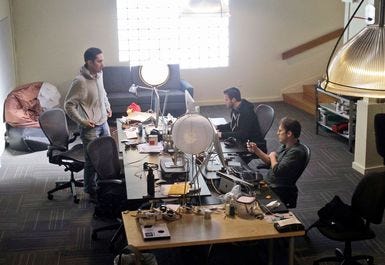
The founders spent approximately eight weeks building the first version, and on October 6, 2010, Instagram launched on Apple’s App Store with a team of only 13 employees.
The response was extraordinary. On the first day, approximately 25,000 people signed up. Within one month, Instagram reached one million users. Within 18 months, it had 30 million users.
The Billion Dollar Acquisition
By 2012, Instagram had become impossible for large technology companies to ignore.
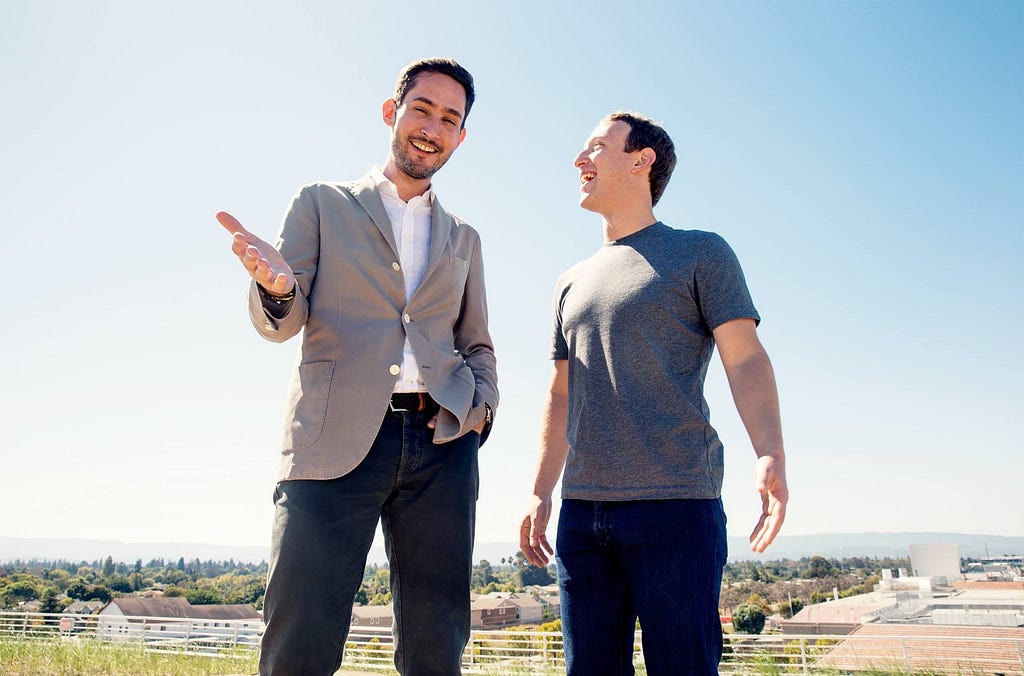
Mark Zuckerberg offered approximately $1 billion to acquire Instagram. The decision surprised many people at the time because Instagram had millions of users but almost no revenue. There was no clear advertising strategy, no proven business model, and no obvious path to profitability.
In traditional industries, companies are valued based on revenue, profits, and physical assets. In platform businesses, the most valuable asset is attention. A large and engaged user base creates future opportunities because users attract advertisers, generate data, and strengthen the overall ecosystem.
Initially, Facebook allowed Instagram to operate independently — preserving its original simplicity and creative focus. That would not last forever.
The Numbers Tell the Story
Every successful digital platform eventually faces the same strategic challenge: how do you make money without damaging the experience that attracted users in the first place?
Here is where the numbers become genuinely staggering.
In 2018, Instagram accounted for around 16% of Meta’s total revenue. By 2022, this had grown to approximately 31%. In 2024, it is estimated that Instagram is responsible for a remarkable 40% of Meta’s total revenue.
Meta made $160 billion from advertising revenues in 2024, with an estimated $66.9 billion coming from Instagram alone.
Think about that for a second. A platform that was acquired for $1 billion in 2012 with zero revenue is now generating $66.9 billion annually. That is what happens when you combine two billion users with an algorithm designed to keep them engaged.
Instagram makes $223 per US user annually more than Facebook’s $191 per user and almost double TikTok’s $109.
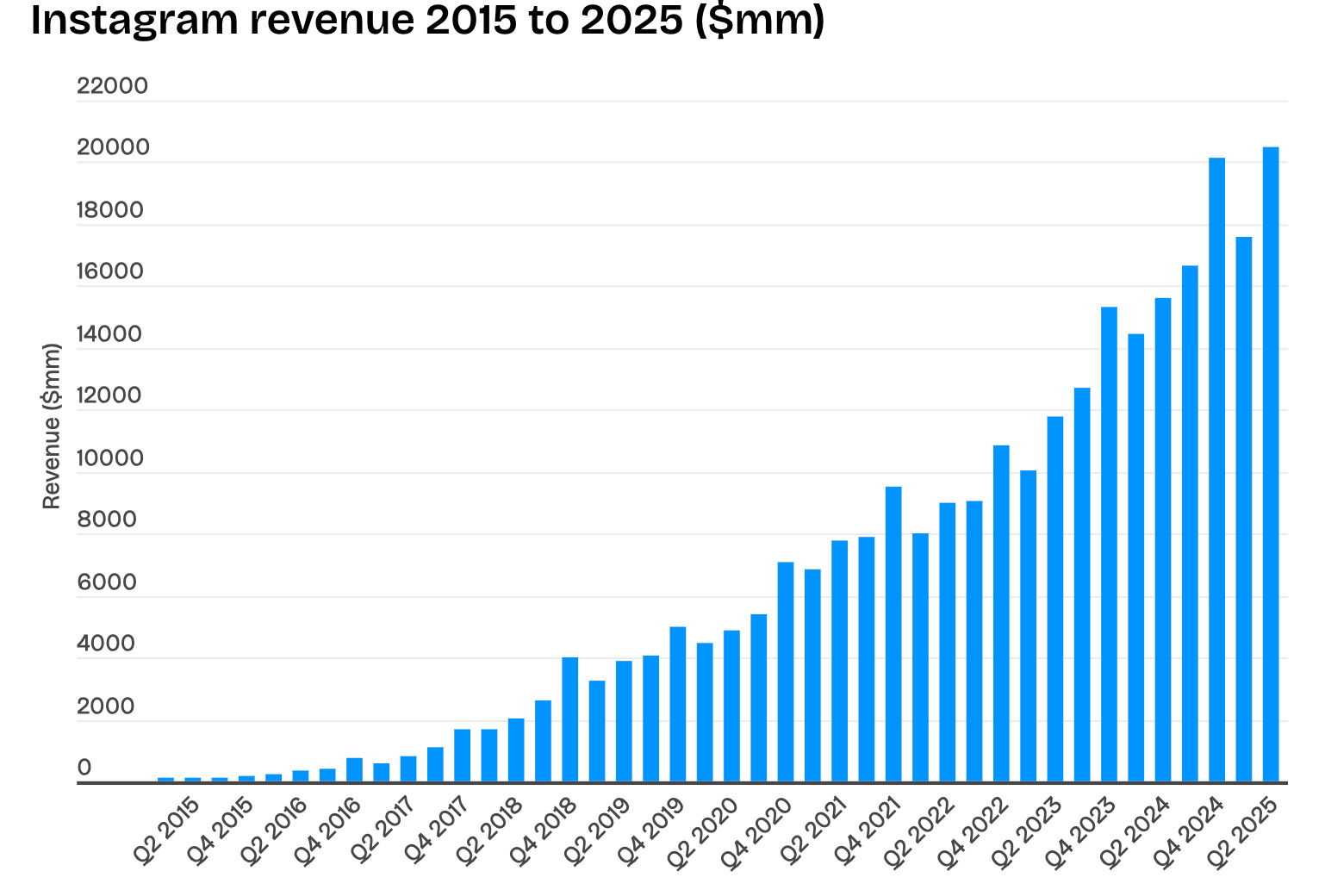
This is the business model in its simplest form your attention, converted into advertiser dollars.
The Algorithm
In 2016, Instagram introduced one of the biggest changes in its history: the shift from a chronological feed to an algorithmic feed.
Previously, Instagram was simple. You followed people you cared about, they posted photos, those posts appeared in your feed. Direct and clean.
The algorithm changed this relationship entirely.
Instead of showing posts based on time, Instagram began deciding what content users should see. The company’s argument was logical — as users followed more accounts, they were missing a large percentage of posts. An algorithm could surface the most relevant content for each individual.
From a business perspective, algorithms were extremely powerful. They increased engagement, extended time on the platform, and made advertising significantly more effective.
Before the algorithm, creators had a clear relationship with their followers. After the algorithm became dominant, Instagram controlled distribution. A creator could have millions of followers but still reach only a small percentage of them organically unless they paid to boost their content.
The Copying Strategy
When Snapchat introduced disappearing stories, Instagram launched Instagram Stories. When TikTok transformed short-form video consumption, Instagram introduced Reels.
From a strategic perspective this is called a fast-follower strategy you don’t need to invent the category, you just need to protect your existing position by copying what works before competitors gain too much ground.
It worked. Instagram remained culturally relevant and defended its user base.
Instagram is now a video-first platform, with users spending close to two-thirds of their Instagram time watching videos. That is a complete identity shift from a platform originally built around photographs.
But here is the competitive reality TikTok was the fastest growing social platform in the world for the second year in a row in 2024, with revenues growing by 42.8%. Instagram is copying TikTok’s format while TikTok keeps growing faster.
Who Is Instagram Actually Serving?
Instagram operates what economists call a multi-sided platform — a business that serves multiple distinct user groups simultaneously. In Instagram’s case there are three:
Users — who provide attention and data
Creators — who provide content
Advertisers — who provide revenue
The challenge is that these three groups want fundamentally different things. Users want a clean enjoyable experience. Creators want reach and fair distribution. Advertisers want maximum visibility and targeting. While Instagram wants all three to keep growing.
The moment you understand this framework, the product decisions start making sense. Every new ad format, every algorithm change, every new feature — it is all a balancing act between keeping users just engaged enough while extracting maximum value for advertisers.
The problem is that balance has been tilting heavily towards advertisers for years now. And users feel it even if they cannot always articulate why.
The Life Cycle of Digital Platforms
In the beginning technology platforms focus entirely on users. The experience is simple, the product feels unique, people genuinely enjoy it.
Then businesses arrive. Advertising begins. Growth becomes the priority. Algorithms are introduced. Eventually maximizing revenue becomes everything. Technology writer Cory Doctorow described this process as
“enshittification” — the gradual decline of user experience as platforms attempt to extract more value from both users and businesses.
The Future — Can This Go On Forever?
Instagram recently hit 3 billion monthly active users, announced by Mark Zuckerberg in September 2025. The scale is almost incomprehensible.
But scale creates new problems. The platform must now navigate creator dissatisfaction, AI generated content flooding feeds, regulatory pressure across Europe and the US, mental health concerns — especially around young users — and an entire generation of users who are increasingly aware of exactly how they are being manipulated.
Artificial intelligence creates perhaps the biggest question. Instagram was originally built around human expression — a person capturing a real photograph, sharing a real moment. But what happens when AI can generate unlimited images, videos, and fake personalities instantly?
When content becomes unlimited, authenticity becomes more valuable. The future competition may not be about who produces the most content. It may be about who can be trusted.
Conclusion — The Price of Scale
Instagram’s story is not just the story of a social media application. It is a case study of every successful digital platform.
A startup begins with a simple mission. Users love it. Growth follows. Businesses arrive. Monetization begins. The company faces pressure to continuously increase revenue. Slowly, the product changes.
This is the unavoidable challenge of platform businesses.
The same strategies that create billions of dollars in value can also create the exact feeling I described at the beginning of this article — that irk of opening the app and wondering why you even bother.
Instagram’s greatest achievement was capturing human attention. Lets see how long it stays
Instagram Didn’t Ruin Itself — It Was Always Going to End Up Here was originally published in Bootcamp on Medium, where people are continuing the conversation by highlighting and responding to this story.

 点赞
点赞 收藏
收藏 点踩
点踩 分享
分享