The Merchant QPU Market – Who Will Actually Sell You a Quantum Processor

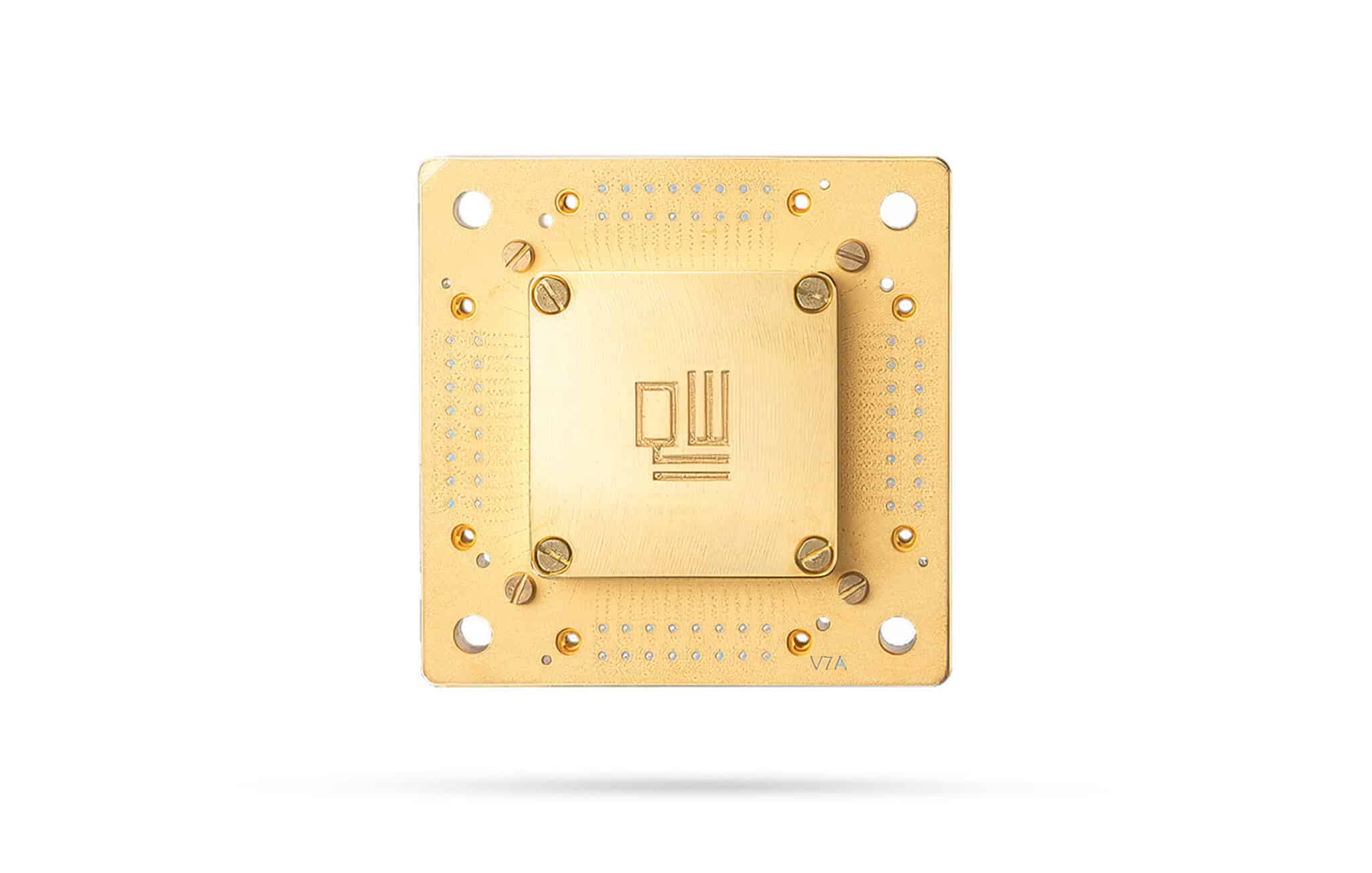
Table of Contents
- Introduction
- The Test a Purchase Order Applies
- The Six Who Pass It
- What the Near Misses Actually Sell
- Small, Dutch, and Superconducting
- The Scoreboard for the Modular Thesis
- Who Is Allowed to Buy
- Three Things I Am Watching
Introduction
On March 31, 2026, Rigetti announced the sale of a quantum processor to the University of Saskatchewan. Not cloud credits and not a turnkey machine – a 9-qubit chip in a crate, out of the company’s Fremont fab at a list price of $900,000. The chip goes into a dilution refrigerator from Zero Point Cryogenics in Edmonton, gets driven by control electronics from Qblox in Delft, and gets tuned by QuantrolOx software written in Espoo. Four companies, four countries, and none of them responsible for the finished computer.
That job belongs to the buyer.
Purchases like that one are the entire empirical basis for the claim that quantum computing is becoming a component industry. I have made that claim at book length in Quantum Systems Integration, and I run a firm that assembles machines from exactly this supply chain, so read my enthusiasm with that interest on the table.
The claim is testable, though, and this article tests it. Strip away every vendor who sells access, appliances, or finished machines, and ask who will actually sell the processor itself. Six companies remain. The modular-quantum argument depends on them, and every claim those six make can be checked with a purchase order.
The audit below covers who passes the test, what they charge, what their spec sheets omit, and what the shape of this small market says about where the industry is heading.
The Test a Purchase Order Applies
Three different transactions hide under the phrase “buy a QPU,” and vendor marketing works hard to blur them. In the first, the buyer gets a component, a device to take delivery of and mount in a refrigerator, vacuum chamber, or optical bench the buyer owns.
In the second, a module, meaning a sealed rack unit that slots into a data center but never opens. In the third, a turnkey machine, customer-owned but vendor-built end to end, with integration work amounting to power, cooling, and a network cable.
Only the first transaction is a merchant component purchase, and only the first tests the modular thesis. The second and third are legitimate products, several of them impressive, but calling them QPUs the way a press release does is a mild specimen of Q-FUD’s gentler cousin, capability inflation. A company that sells a sealed machine has not sold a processor any more than Dell sold you a CPU.
The test is whether a systems integrator, national lab, or university can take delivery of the device alone and integrate it into hardware the vendor never touches.
Applied to every company that markets QPUs, the test passes six.
The Six Who Pass It
QuantWare
QuantWare is the company the merchant thesis was built around, and the numbers back the framing. The Delft firm, founded in 2021 by Matthijs Rijlaarsdam and Alessandro Bruno out of QuTech, says it has shipped superconducting processors to more than 50 customers in 20 countries, the largest installed base claimed by any commercial QPU supplier.
Its D-Line ladder runs from the 5-qubit Soprano-D5 (from €60,000) through the 21-qubit Contralto-D (from €300,000) and the 64-qubit Tenor-D64, one of which has powered Italy’s largest quantum computer at the University of Naples Federico II since September 30, 2025. Above those sit the announced Baritone-D450, slated for 2027, and a listed Bass-D18K at 18,000 qubits for 2028. The naming runs down the vocal range, so someone in Delft is presumably holding “Basso Profondo” in reserve for the million-qubit part.
The published performance figures need a date attached, because the company doesn’t attach one prominently, and the date is February 2024. Average coherence of 60 µs, single-qubit fidelity of 99.9%, two-qubit fidelity of 99.7%, and 97.5% readout with the Crescendo-S amplifier all come from reference-setup measurements released alongside the D-generation launch that February. Two and a half years later, those are still the quoted numbers.
Nothing suggests the chips got worse. Plenty has changed in what buyers should expect a datasheet to disclose, and a 2026-dated median across shipped units would say more than a 2024 reference setup ever could.
The purchase covers the processor plus pre-delivery cryogenic characterization, magnetic shielding, high-density connectors, and support hours. Everything else comes from elsewhere. QuantWare’s own Contralto-D page specifies a DC source and arbitrary waveform generator per qubit for flux biasing, an RF generator per qubit for driving, and a readout module. One traveling-wave amplifier serves each of the four feedlines, and the refrigerator and wiring tree come on top. The company’s answer to that burden is the Quantum Utility Block, a pre-validated recipe with Qblox and Q-CTRL at 5, 17, and 41 qubits.
The answer to scale is VIO-40K, a 3D chiplet architecture announced in December 2025 that targets 10,000-qubit processors in 2028, with a backplane designed to carry third-party qubit designs. Carrying other companies’ qubits would make QuantWare a substrate vendor as well as a chip vendor. The $178 million Series B that followed in May, with Intel Capital and In-Q-Tel among the new names, priced that ambition, and I covered why the investor list is the story.
VIO-40K remains a roadmap item, not a product.
Rigetti’s Novera
The Novera QPU is the only superconducting processor with a firm public price on a public page. It lists from $900,000 and ships four to six weeks after order confirmation, as nine tunable transmons in a square lattice with 12 tunable couplers on the fourth-generation Ankaa architecture, plus a 5-qubit fixed-frequency companion chip for bring-up work. Rigetti’s datasheet is also the most honest in the market on one specific axis. The company labels its 99.9% single-qubit and 99.6% two-qubit figures as medians and states outright that customer performance varies with fridge and control configuration. Every buyer of every QPU should demand that sentence, and almost nobody else volunteers it.
The scope of sale is everything below the mixing-chamber plate – shielding, mount, chip carrier, signaling hardware. What the buyer supplies runs longer than what Rigetti ships. A refrigerator with a 290 mm plate and 12–14 µW of cooling power at 20 mK, a figure Rigetti’s own pages state two ways, a fully attenuated and amplified wiring chain, and control electronics spanning readout at 7–8 GHz, drive at 4–5 GHz, and flux to 1 GHz. The 9-qubit chip needs 9 microwave drive lines, 21 flux lines, and 6 readout lines. Thirty-six signal paths for nine qubits is the ratio that explains most of superconducting quantum computing’s cost problem, and it is the precise constraint VIO exists to attack.
Rigetti’s documented deliveries run from Fermilab’s SQMS center and the Air Force Research Laboratory in 2023 through Horizon Quantum Computing in Singapore, Montana State, and Saskatchewan. Two unnamed buyers added roughly $5.7 million in orders, with delivery through the first half of 2026. Those last two bought full systems, and the arithmetic teaches the rule of thumb. About $2.85 million per installed system against a $900,000 chip, so budget two to three times the QPU price for everything the QPU needs.
Mike Piech, Rigetti’s VP of business development, has also described the next step, a 36-qubit system tiled from four Novera chips. Buy several, tile them. That sentence couldn’t have been written about any quantum processor five years ago.
SpinQ
The merchant market’s Chinese entry is Shenzhen’s SpinQ, which sells its C-series superconducting chips as standalone components alongside foundry and characterization services. Its overview page names the C10, C25, and C103 at 10, 25, and 103 qubits, while the detailed spec sheets cover C5 and C25 Pro configurations, so the ladder is tidier in the marketing than in the catalog.
The company quotes 99.9% single-qubit and around 98% two-qubit fidelity on its 20-qubit system, with published median T1 figures of 30 µs and up per chip – and, credit where due, SpinQ tags its current QPU specs as medians.
No public price for the chips exists. The $28,000-to-$280,000 band that circulates online belongs to SpinQ’s NMR desktop education line rather than the C-series, which makes SpinQ’s the least documented pricing in this audit. The specs are vendor-published without third-party measurement. And the C103’s headline count puts it above the 34-qubit line in the export rules this piece closes on, though count alone doesn’t decide control there.
SemiQon Sells the Host, Not the Qubit
Espoo’s SemiQon, a 2023 spin-out of VTT led by Himadri Majumdar, passes the purchase test with an asterisk printed on its own datasheet. The SemiQit line, packaged silicon quantum-dot devices from €15,000 in variants from 4 dots up, plus a multiplexed 128-double-dot research device, is genuinely a component to buy and mount in a sub-Kelvin cryostat. But the numbering counts quantum dots rather than operating qubits, and the accessories list includes a 1–1.5 tesla magnet marked “required for qubit operation,” supplied by the customer.
SemiQon ships the house and leaves the buyer to move the tenant in.
I find that honesty clarifying rather than damning, because the company’s peer-reviewed record points exactly where the product does. The Applied Physics Letters paper from July 2026, whose preprint circulated from late 2024, reports a subthreshold swing of 0.32 mV per decade at 420 mK (for the p-type transistor, with the n-type plateauing at 1–2 mV per decade), and the 2024 Communications Physics device paper characterizes charge noise and multiplexing without operating a single qubit.
No gate fidelity, no coherence time, no qubit count exists anywhere in SemiQon’s published record, and its most commercially mature line is cryogenic control CMOS. What does exist is strong device physics, a real price, and a 128-dot automated-tuning demonstration run with Conductor Quantum in April 2026. SemiQon is a merchant vendor of qubit hosts, a category this market had no name for until it needed one.
QuiX Quantum
Photonics gives the merchant market its second real component line, and it comes from Enschede. QuiX Quantum’s Alquor 2.0, commercially available since August 4, 2026, is a rack-mounted programmable interferometer on silicon nitride, sold in 8-, 20-, and 32-mode configurations, air-cooled and running at room temperature. More than 20 first-generation Alquor systems already sit in research groups, and the platform has independent published results, the one credential nearly everyone else here lacks – most recently quantum-walk experiments from ENEA and INFN Roma Tre on a 20-mode unit.
The buyer supplies photon sources, detectors, and lasers, because modes are not qubits and an interferometer is not a computer. QuiX’s own turnkey architecture, Carina, is a separate development, with core hardware delivered to the German Aerospace Center’s quantum initiative in July 2026 for integration and commissioning.
QuiX also does what almost nobody else in this market does and publishes prices: €240,000 for the 8-mode, €490,000 for the 20-mode, and €790,000 for the 32-mode. Final pricing depends on configuration and service scope, and academic and public research institutions ordering the 8-mode by September 30, 2026 get a 20% early-adopter discount.
Data Center Dynamics printed those same figures with the thousands dropped, which is a good reminder to read prices off the vendor’s page.
AQT and the Merchant Ion Trap
Trapped ions run the most vertically integrated supply chain in quantum computing. One product in Innsbruck breaks the pattern. AQT, founded in 2018 by Rainer Blatt, Thomas Monz, and Peter Zoller, sells the PINE TRAP as a standalone module – a precision ion trap on a mounting flange, built for installation in the buyer’s own vacuum chamber, with optical access at 0.6 numerical aperture and low heating rates at room temperature. A flange is, by definition, an interface to hardware the buyer already owns.
Almost nothing else in trapped-ion quantum computing is sold that way. Infineon fabricates traps inside partner programs and QUDORA says it is commercializing standalone trapped-ion processors, but neither publishes a catalog offer with PINE’s specificity, and IonQ and Quantinuum sell machines and cloud time. IonQ’s purchase of Oxford Ionics moved the one swappable ion-trap QPU back inside a closed stack.
AQT also sells the surrounding tiers for buyers who want less assembly. The PINE SET-UP wraps the trap in an ultra-high-vacuum chamber sized for strings of more than 50 ions, with ablation loading, and the IBEX Q1 rack system ships 12 calcium-40 qubits at a 98.7% average two-qubit fidelity, which AQT quotes as a 1.3% average gate error. In May 2026 the company launched its LYNX series at a measured quantum volume of 32,768, which the company calls a European record, with first units reaching partners late this year. The trap module is the reason AQT sits in this section rather than the next one.
Qolab, Unresolved
A seventh vendor belongs in the ledger with a question mark. Qolab, the venture of Alan Ho and Nobel laureate John Martinis in Santa Barbara and Madison, markets “Qolab Start” as a deployable superconducting platform and placed its first devices at the Israeli Quantum Computing Center in December 2025 through Quantum Machines. The company publishes no qubit count, no fidelity, and no price for the product. Its one public device result, from the fabrication paper behind its junction process, reports T1 up to 57 µs against the 100 µs that the company’s own roadmap paper cites as already achieved in the field.
In that roadmap paper, Martinis and his co-authors fault the field for not publishing die and qubit yields, noting that no T1 data exists for IBM’s 1,000-qubit Condor. A company that demands disclosure from competitors and then ships a product without a published specification doesn’t meet its own standard. And Start, as marketed, is a platform rather than a bare component, so even a spec sheet would not move Qolab into the component tier unless the company unbundles. If it does, the count of merchant vendors goes to seven.
What the Near Misses Actually Sell
Everything else marketed as a QPU fails the delivery test, and sorting the failures is where most reader confusion clears up.
One claim needs correcting first, because I have repeated a version of it myself in an earlier manuscript draft. Secondary coverage keeps stating that IQM sells processors as standalone components, and I can find no SKU, no price, and no record of an IQM chip delivered to a third-party integrator. IQM sells complete systems, 23 sold and 18 delivered per its own mid-2026 investor disclosures, from the 5-qubit Spark to 150-qubit Radiance configurations, and it swaps chips inside machines it has already installed. A fine business, and a different one.
The rest of the field divides cleanly. Sealed modules with a processor inside include Equal1’s Bell-1, whose 6-qubit silicon chip sits behind an integrated 0.3-kelvin cooler that doesn’t open, and Quantum Brilliance’s diamond development kits, which slot a 2-qubit room-temperature QPU into an HPC node. Three of those kits run as a cluster at Oak Ridge, integrated into a computing facility rather than into a quantum computer under construction.
Turnkey machines a customer owns include Anyon’s 24-qubit MonarQ at Calcul Québec, ORCA’s and Quandela’s photonic appliances, and Alice & Bob’s cat-qubit Helium. QpiAI’s 25-qubit Indus joins them, its published 96% two-qubit fidelity a 4% error rate that runs roughly ten times the merchant superconducting field’s, with a 64-qubit Kaveri chip announced for later in 2026. D-Wave’s Advantage2 annealers join the same category, purchasable on-premises and genuinely owned, with cryostat and control inseparable from the processor.
SaxonQ’s headline number needs translation. The SXQ128 sells as a 128-qubit room-temperature diamond machine, but the architecture is 16 cores of 8 entangled qubits each, so the largest register a program can touch is 8. The quoted 0.9992 single-qubit fidelity is a maximum from the prior generation’s whitepaper, whose two-qubit figure was 0.97. And in late July the company told Supercomputing News that no complete SXQ128 had yet been assembled or delivered, with the first single-core system due in the third quarter.
A room-temperature diamond machine on wheels is a real and interesting product, and it is something other than the 128-qubit computer a reader of qubit counts would assume.
Origin Quantum, China’s flagship, sells finished systems and exported compute, and its site now carries a Wukong chip page – at least 100 computational qubits, average T1 of at least 14 µs – behind a contact-sales route.
I found no chip delivery to an independent buyer, and the export rules make the question academic for most readers of this audit anyway. And the neutral-atom vendors, Pasqal, QuEra, and Atom Computing, sell no standalone processor at any tier, because an atom-array QPU has no existence separate from its lasers and optics. That absence is physics before it is strategy.
Small, Dutch, and Superconducting
Whether a modality can produce a merchant market is decided by whether its processor is a shippable object. Superconducting qubits sit on chips, so a courier can move them and someone else can mount them. Photonic interferometers are chips in boxes. A silicon quantum-dot die is the most shippable object in the field. An atom array, though, exists only at the focus of a laser system, and an ion trap without its vacuum system and optics is a flange with promise, which is why AQT’s module is the exception that measures the rule.
The market’s geography follows its history. Four of the six merchant vendors are European and two of those are Dutch, and that isn’t a coincidence but a lineage. QuantWare grew out of QuTech in Delft and QuiX out of the University of Twente in Enschede, and both sell into a component cluster the Netherlands built deliberately, with Qblox control electronics and Delft Circuits wiring down the road and QuantrolOx calibration up on the Baltic in Espoo. The United States contributes Rigetti’s Novera and the unresolved Qolab, and China contributes SpinQ. Counted generously, the world’s merchant quantum-processor business runs to a few hundred people.
The precedent for what happens next has a date on it. In 1981, IBM chose to buy the PC’s processor from Intel instead of fabricating its own. Merchant microprocessors already existed, and IBM’s design win is what turned them into the industry’s default: within fifteen years the component vendors were setting computing’s pace, and Dell, HP, and Supermicro exist because the parts existed first. The six companies above are betting the same flip happens in quantum, one procurement at a time.
The analogy has a known limit, which my book spends a chapter on. The 8088 sat inside a published architecture whose bus became the industry’s standard, while a QPU still meets its cryostat through custom brackets and vendor-specific engineering guidance. Integrable is not plug-and-play, and the distance between those two words is where systems integrators earn their fee.
The Scoreboard for the Modular Thesis
The Quantum Open Architecture model describes a quantum computer as six independently procurable layers: processor, cryogenics, control electronics, wiring, calibration software, and HPC integration. Three working machines were assembled that way by mid-2026 – Q-PAC in Denver in five months, QuTech’s Tuna-5, and the Naples installation – and I have argued the model’s case at length.
The IQM-built system inside Euro-Q-Exa at LRZ makes an adjacent case. A quantum processor can run as a scheduled resource in a production supercomputing environment, even when a single vendor built the machine. The audit here was the missing column in that argument, because five of the six layers already had visibly competitive markets, and the processor layer had a list of names nobody had tested.
The tested result is that Layer 1 is real, priced, and shipping, and thinner than the vendor lists imply. Six suppliers. One’s largest merchant chip carries 9 qubits, one sells dots rather than qubits, one sells a trap.
The evidence within the six tiers as well, because QuantWare and Rigetti have named third-party deliveries, SpinQ and SemiQon have offers and published prices, and QuiX and AQT sell the components a stack gets built around. To my eye this six-supplier list is still the most informative leading indicator in quantum hardware, and almost nobody tracks it, because analysts count qubits and funding rounds, and both inflate more easily than a delivered crate.
Whether the thinness reads as fragile or as early depends on the reference class, and mine is 1978 rather than 1995, meaning merchant silicon a few years before the design win that made it inevitable rather than the mature market after it. What would falsify my read is simple to state. If the merchant vendors’ revenue stays flat while turnkey sales grow through 2028, the industry is telling us it wants Dells without wanting Intels, and the modular thesis fails commercially even where it succeeds technically.
The evidence discipline cuts both ways, so the caveats print at the same size as the claims. No merchant QPU has independent third-party benchmarking, and every fidelity figure here except QuiX’s community results is vendor-measured. Half the market publishes hero numbers without medians. The only defense a buyer has is contractual, meaning acceptance testing on the buyer’s own fridge and control stack, written into the purchase order, because reference-setup numbers don’t transfer, and the one vendor honest enough to say so put it on the datasheet.
Who Is Allowed to Buy
Export regulators noticed this market before most analysts did. In September 2024 the U.S. Bureau of Industry and Security created export classification 4A906 in an interim final rule, with parallel rules from allies including the UK, Canada, France, the Netherlands, Finland, and Japan, coordinated outside Wassenaar because Russia’s veto blocked the formal route.
The entry is usually shorthanded as a 34-qubit threshold, and the shorthand misleads. Control attaches to qubit count and gate error jointly. A 34-to-99-qubit machine is caught only at a CNOT error of 10-4 or better, a 100-to-199-qubit machine at 10-3, and the bands loosen from there. The same rule reaches the component layer this audit covers, with entries for cryogenic control CMOS, parametric amplifiers of the TWPA kind, large dilution refrigerators, and isotopically enriched silicon.
Allied buyers get a presumption of approval, while China and Russia sit under a presumption of denial.
Christopher Monroe was openly puzzled at who determined the logic behind the numbers, and on the physics he has a case, since no 34-qubit machine threatens anything.
On the market structure the two-part design is the more interesting story. On their published numbers, neither QuantWare’s Tenor-D64 nor SpinQ’s C103 clears the control bar today, because 99.7% two-qubit fidelity is a 3×10⁻³ error rate against a 10⁻⁴ ceiling. The rule is written for the machines these vendors intend to ship rather than the ones they ship now. The moment a merchant chip’s error rate improves past its tier, the license regime attaches, and the merchant QPU market is, by design, an allied-bloc market in waiting. China’s mirror move was Origin exporting computing capability rather than hardware in 2024.
The sovereignty consequence runs in the buyer’s favor inside the bloc. A country assembling from merchant components can source its processor, its cryostat, and its control stack from three different jurisdictions, and no single vendor holds a veto over the build, though the buyer now answers to several export regimes instead of one. Saskatchewan’s crate is a small instance of a large pattern, national capability without a national champion. That option barely existed in 2023, and the six companies here are why it exists now.
None of this moves the CRQC timeline. The largest standalone processor marketed in this audit claims 103 physical qubits, while published resource estimates for a cryptographically relevant machine start around a million physical qubits, plus error correction that nobody in this market sells. What the merchant market changes is diffusion – who can build, where, on whose license. That diffusion is the engineering-scale dimension of my capability framework, and precisely the dimension regulators moved on. PQC migration deadlines were set by regulators and data lifetimes long before Saskatchewan opened its crate, and nothing here moves them in either direction.
Three Things I Am Watching
First, a dated median across shipped units. The merchant vendor that publishes 2026 medians, rather than reference-setup numbers from 2024, converts a marketing document into an engineering one and forces every competitor to follow. Rigetti is closest, and QuantWare has the volume to make it count.
Second, the first unbundling outside superconducting and photonics. AQT’s trap module is a start, but a purchasable atom-array or ion-trap processor with a published interface would mean the componentization logic has jumped modalities, and the supply chain would reorganize around it within a couple of years.
Third, a third-party qubit on QuantWare’s VIO backplane. The company says the architecture accepts external designs. The day a chip designed elsewhere tapes out on VIO, the merchant market gains a substrate layer, and the classical parallel stops being an analogy and becomes a family resemblance.
The University of Saskatchewan’s machine will come online with parts from four vendors who never met in a room. In 1981 that sentence described a hobbyist’s PC, and by 1995 it described the industry. Six companies are currently priced, shipping, and auditable on the proposition that quantum computing repeats the pattern – and a purchase order remains the cheapest instrument ever devised for separating a market from a slide deck.
The post The Merchant QPU Market – Who Will Actually Sell You a Quantum Processor appeared first on PostQuantum - Quantum Computing, Quantum Security, PQC.

 点赞
点赞 收藏
收藏 点踩
点踩 分享
分享