Lessons I learned from my sister's murder
Friends –
This is something different than you’ve seen from me.
I usually write about a larger issue in life, trying to offer whatever insight I can. This, though, is about the lessons I learned from a singular event that shaped my life.
It’s more than a story about me, but a look at crime, justice, and politics in America through the lens of a single, traumatic event. And strangely, the biggest lessons didn’t come right after the murder. They came years later, in ways I never expected.
It’s also a story I’ve really never told in this type of detail. It’s painful to do so.
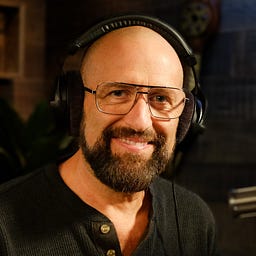
You can either watch it on this video here, or you can read the complete story below. Hopefully, you find some value from it all.
– Ken
February 11, 1976.
On a Wednesday evening, two police officers showed up at my family’s front door. My dad thought it was a subpoena for a business issue. Then he started screaming in a way I had never heard before or since. That’s how we learned my sister had been killed.
I had just turned eleven. My family lived in Arcadia, California, a middle-class suburb of Los Angeles. My parents had grown up poor during the Great Depression, but through hard work and sacrifice, created a comfortable life for us. My sister Cathy was eighteen, recently out of high school and working at an animal hospital. She was deeply involved in her church, where she met her boyfriend, Bob Morton.
After my dad’s initial reaction, it was hard to understand what he was saying. He kept shouting “NO,” over and over. The only words I could eventually make out were: “They say Cathy’s dead!” The police told us Cathy and Bob had been found dead in Bob’s van in the hills above our town. They didn’t share more details, and I can’t imagine how difficult that job must have been for those officers.
My parents didn’t want to tell our extended family over the phone, so throughout the night aunts, uncles, and cousins came to the house one by one, heard the news, and many collapsed in grief. I stayed in my room, more stunned than anything else. I didn’t even cry until a few days later.
The first lesson that stayed with me is how people react to death in wildly different ways. When I see someone acting strangely in the face of loss, they deserve a lot of leeway.
The second lesson is that sometimes lightning just strikes. Cathy and Bob were just two young people taking a hike in the mountains. There was no reason to think twice about it. And yet, in an instant, everything changed. That kind of randomness can be hard to accept, but once you do, life becomes a little easier to face.
February 11 was a beautiful day in the Angeles National Forest. That afternoon, a man walking his dog saw Bob’s Volkswagen van parked off the road, and something caught his eye. When he looked in the back, he saw two people—and a lot of blood. Bob was bound and gagged; Cathy wasn’t. Both were fully clothed, and both had been shot with a .22 caliber rifle—Bob five times in the back of the head, Cathy four times in the face.
Police found money in both Bob’s wallet and Cathy’s purse. They speculated it might have been an attempted sexual assault, but really had no clear theory. Cathy hadn’t been raped, and her autopsy showed no adrenaline spike, which you would expect. That led investigators to wonder if she knew her killer and didn’t expect to be harmed.
Finding a Killer
The months that followed were confusing and painful. Police questioned friends, classmates, and church members. There wasn’t much to go on, and a “love triangle” of some sort seemed the most likely explanation. But for five months, there were no solid leads. It was surreal to know their killer was out among us, and no idea why he did what he did. Fifty years later, we still don’t know why—but we do know who.
Investigators called early one Sunday morning to say they had caught him. And they caught him because someone answered the phone—his wife turned him in. The man, Richard Johnson, had told her he murdered two people in the Arcadia foothills, and had also told her about another woman he killed in Missouri ten months earlier. She finally went to the police after he tried to shoot her as well.
That led to another lesson I’ve carried through my journalism career: murderers often brag about their crimes. I see it all the time. They just can’t seem to keep it to themselves. Johnson likely would never have been caught otherwise. He had zero connection to Cathy and Bob, which made him especially difficult to track.
I have mixed feelings about his wife. She knew about the Missouri murder from the day it happened, but said he threatened her into silence. Without her call, he might never have been caught. But if she had gone to the police at any point during those ten months, my sister and Bob would be alive.
A trial and a sentence
Johnson also told another friend, who, along with his wife, testified at trial. His handprint matched one found on the van, and he still had the rifle at home, which matched the shell casings at the scene. Our family attended every day of the trial, and there was little doubt about his guilt. He was convicted, and the jury recommended the death penalty for each murder. The judge agreed.
This was California, so we never really expected him to be executed. But him being locked up for the rest of his life was enough—or at least, we thought it was.
Soon after, he was also convicted in Missouri for the murder of Gwynne Arrant, whom he had strangled, stabbed, and raped. He had actually been arrested in that case earlier but was released because police couldn’t prove it. There’s reason to believe he may have killed other women as well, including cases from that same timeframe that are still officially unsolved.
The takeaway here is uncomfortable. No one wants to live in a country where innocent people are convicted, so it’s critical that the justice system treats the accused fairly. But there’s a corollary: there can be deadly costs when dangerous people walk free. More than 20,000 people were murdered in America last year, and when you look at the numbers, many of their killers will never be caught—and some who are will kill again.
Then, another shock
Life moved on—until we were hit with something that, to this day, was harder to process than the murder itself.
I was sixteen, just five years later, when one of the original detectives told us Johnson was up for parole. If two out of three members of the parole board agreed, he could walk free. That raised an obvious question: how do you go from two death sentences to a parole hearing?
As it turned out, he didn’t even need a new court ruling. After his sentencing, the California Supreme Court struck down the death penalty, so his sentence defaulted to two counts of life in prison. At the time, that meant eligibility for parole in five and a half years—even for two counts of first-degree murder.
My parents were furious. We all were. We had come to accept that something random and evil could happen. But the idea that the government might release him felt different. That wasn’t randomness—that was a decision.
Changing a system
No one in my family was political. My parents were small business owners with little formal education and didn’t really understand how that system worked. My dad went to the mayor for help and was essentially told there was nothing to be done. But as it turned out, that wasn’t entirely true.
As we started reaching out to elected officials in California in the early 1980s, we noticed something. The reactions were very different depending on who we spoke to. Democratic officials offered sympathy but avoided involvement, giving general thoughts about criminal justice and rehabilitation. By the end of those conversations, it was clear they weren’t going to help.
Republican officials, from our point of view, reacted like normal people. They were horrified that someone like Johnson could walk free and were equally alarmed at the state’s laws. Our local legislator—whose priorities didn’t align with ours on most issues—helped us gather signatures, use his office, and connect with people who could make a difference. When one group avoids you and another steps in on something this important, it shapes how you see politics.
There’s a broader lesson in that. Many of us pick a political tribe and then tend to accept that tribe’s views across a wide range of issues. But personal experience can override that quickly. If my circumstances had been different—if, say, a family member had been wrongly accused—I might have ended up with a very different outlook.
My mom transformed from a beautician into a political activist. Her beauty shop became something like a campaign headquarters as we launched a petition that gathered tens of thousands of signatures. This was before the internet, which made that even more significant.
We demanded the right to speak at his parole hearing. We testified and worked to change laws so victims’ families would have a voice in the process. Before that, families often weren’t even told about hearings or the status of the person who killed their loved one.
Parole hearings are difficult to attend. They take place inside maximum-security prisons, usually in small rooms, with the parole board sitting just feet from the killer and his lawyer. They ask him questions about the crime, his behavior in prison, and his plans if released. Then we speak—essentially asking government officials to keep him behind bars.
So far, we’ve been successful. He has been denied parole eight times. But every few years, the process starts again. Letters, petitions, media outreach. My parents are gone now, so it’s me and my sister Linda continuing the effort.
The biggest takeaway from this part of the story is that change is possible. In a democracy, focused pressure can work. Governments respond when people organize and persist.
Stepping back, though, it’s also striking how policy shifts over time. Politics tends to move like a pendulum. I’ve watched criminal justice in California swing back and forth over the decades. The policies of the 1970s and 1980s sparked a backlash as crime rose and stories like ours became more common. Judges lost their positions, politicians faced voters who cared deeply about crime, and the system responded.
Sentences got tougher. Three-strikes laws were introduced, sending repeat offenders to prison for life, and crime declined.
But over time, the pendulum swung back.
Concerns about long sentences and prison overcrowding grew, and policies shifted again. Today, California’s prison population is at its lowest point in decades, even as the state has grown significantly. In areas throughout the country, criminals have been emboldened and new victims have suffered.
I don’t know how this ends. I do know that Richard Johnson is still in prison, and that my family helped keep him there. Our political system isn’t perfect, but people can change it for the better. I saw that with my own eyes.
Sometimes that’s the most you can ask for.
Stick around with a free subscription here.

 点赞
点赞 收藏
收藏 点踩
点踩 分享
分享