Catastrophes in Game Publishing

My first game console was Pong, which was THE first game console. Pong was created a few years before I was born, but by the time I could twiddle a knob it was the only thing in the household to jack into a TV. From there, we had an Atari, ColecoVision, my dad’s Apple IIe, and then the NES.
It felt like the videogame industry was five guys with pocket protectors rummaging in a Radioshack to see what they could do with pixels until the day the NES launched. It was a phenomenon. You couldn’t find one when they first launched. It felt like something from the future, complete with a laser gun and a weird robot accessory. From there, we got Playstation, XBox, and an entertainment sector that is now bigger than all of cinema and book publishing combined.
In 2010 or 2011, I got an email from one of the biggest names in this industry: Bungie. Their first hit was a shooter called Marathon, which was one of the few games playable on an Apple back when PCs dominated gaming. Their next big IP was Halo, one of the most successful games of all time. XBox would not have been the same without it. Halo would go on to sell millions of spin-off books and lead to a film adaptation. I can’t speak to the quality of either, but gaming became mainstream right around this time.
Bungie emailed me as WOOL hit the bestseller lists. Someone at the studio had read the books and become a fan. I took the meeting, a bit confused. Turns out they were recruiting sci-fi writers to help build out a new game they were cooking up. It hadn’t been announced anywhere yet, so I had to sign an NDA to do calls with them. They showed me the very beginnings of a game called Destiny.
I was very tempted to join on the development team. I’d been a hardcore gamer my entire life, and I was a fan of their work. One of my big dreams was to help develop a videogame from scratch, and here was an offer from an industry titan. Unfortunately, my publishing career was consuming sixty to eighty hours a week at the time, so I sadly declined.
Destiny ended up being a bit hit for Bungie, and Destiny 2 was even bigger. The franchise is over a decade old, with one of the major plot lines climaxing a year ago, concluding a saga as ambitious in scope and time as the first ten years of Marvel films. During this time, Destiny made Bungie a lot of money. So much so that Sony purchased the developer for an astounding $3.6 billion dollars.
3.6 Billion.
It raised eyebrows at the time, but with Microsoft’s purchase of Activision Blizzard at $68.7 billion, and several other consolidations at the time, it felt like you needed to gobble a studio or risk losing content to your competitors. Folks were overpaying, but this was Bungie. They created nothing but hits. Marathon, Halo, Destiny. Each one defined an entire generation of gaming. What has happened since has been an absolute catastrophe.
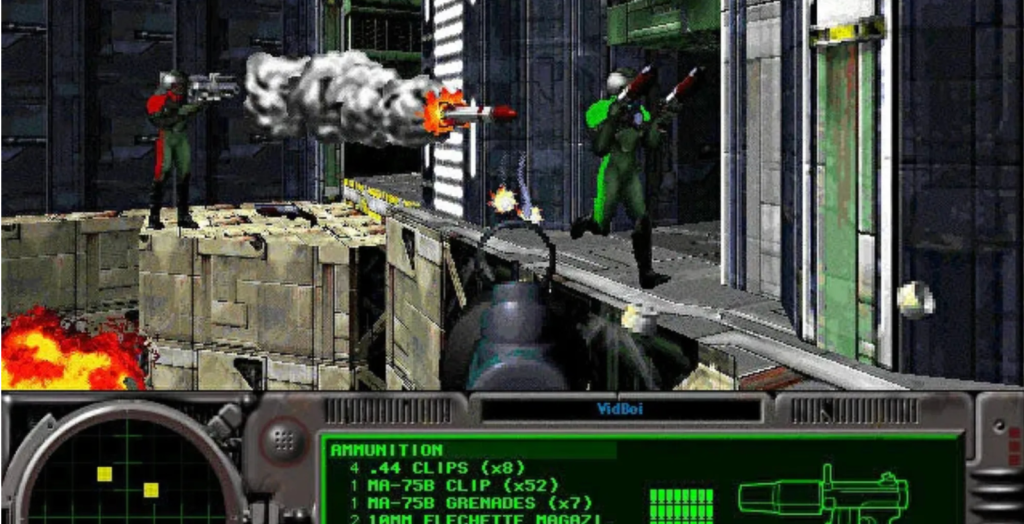
Instead of developing a new idea, Bungie decided to recycle their first ever IP: Marathon. Weird choice, since only olds like me had ever heard of it. Even weirder (and this is speculation, but I’m convinced it’s true), when Bungie went back and looked at the god-awful graphics of the time, they decided to turn flaw into feature. Here’s the original Marathon:
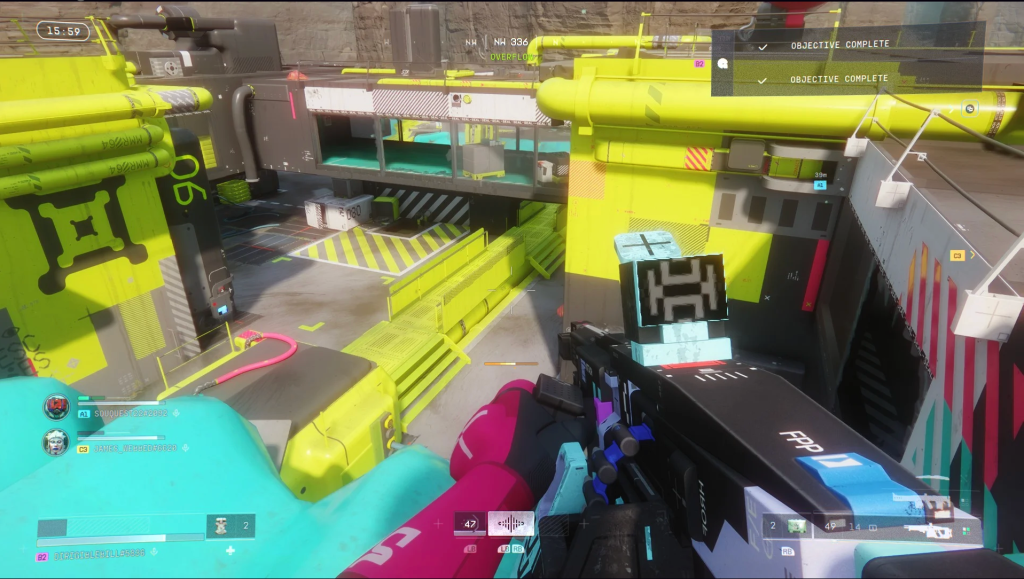
Bungie went back, played the original to figure out the lore and feel of the game, and they decided: Marathon wasn’t blocky and pixelated because that’s the best we could do with 8 bit graphics and 16k of memory! No! The game was pixelated ON PURPOSE! Let’s harken back to days of lore that almost no one gaming today ever played or thinks twice about and develop a AAA game with the same blocky pixelated look! It’ll be cute! It’ll be meta!
And that’s how we got a game that cost Bungie $250,000,000 and looks like this:
250 MILLION DOLLARS.
Okay, but gaming is very big and popular, and this is the studio that created Halo and Destiny. A studio that Sony bought for $3.6 billion. Surely they are going to create a game with a big story that draws in millions of gamers and spans across a broad universe with lore and depth they can milk for over a decade. Right?
Nope. Instead of creating a game that people can lose themselves in, they chased a genre where players lose their minds (trust me, we are going to learn some book publishing lessons from all this). Even though Destiny had a strong multiplayer component, creating squads with friends to go on adventures together, or loading up in small maps to battle other players in their PVP modes, the allure of the game was the sweeping saga. Film and TV stars (the late, great Lance Reddick, Nathan Fillion, Gina Torres, Nolan North) gave life to characters who lived (and occasionally, tragically, shockingly died). You traipsed across the galaxy with this cast. You fought for the same cause. You collected so many guns that vault maintenance became an issue.
As Destiny 2 was winding down its biggest plot line, a new kind of game was gaining an audience. Destiny is what’s called a “Looter Shooter.” You shoot guns and then hopefully pick up a better gun. Reload and repeat. This new kind of game was called an “Extraction Shooter.” The allure here is that you load into a world, try to grab some better gear, and then get out before another player kills you. When you die, you lose everything. But if you kill another player, you get all their loot. Winner-take-all.
First popularized with a game called Escape from Tarkov, game publishers were chasing the latest craze just like authors and book publishers tend to. So Bungie pivoted, chasing a trend, going away from what they did best, and they created a game for a hardcore audience instead of a new game similar to Halo or Destiny. When the free beta launched, the overall reaction was: wtf? Terrible UI, almost unreadable text (and a ton of it), an art style that was not only weird but it would turn out that some of it was stolen. It flopped big-time, especially as it landed alongside a surprising new extraction shooter called Arc Raiders.
The beta was so bad that Bungie delayed release and poured energy into making Marathon better. Imagine the pressure: your company is purchased for $3.6 billion dollars, which is roughly $4 million per developer, easily eight times the cost of a normal acquisition. The expectation is that you are going to help your new owner recoup some of those costs. And then your new game gets absolutely ripped by media and gamers alike when it lands.
When it finally released, the reception wasn’t much better. Hardcore fans love the game, some saying it’s the best thing they’ve played in years. These are a very vocal minority, as the game is currently getting fewer active players than Destiny 2, which has been largely abandoned for the past six months (hilariously, Destiny 1 recently saw a surge in active gamers as Destiny 2 fans went off to look for something else to play). Marathon’s player base has declined over 80% since its release less than two months ago. This is catastrophic for Sony and Bungie. Their cash cow, Destiny, was left fallow while hundreds of millions of dollars and years of development were poured into a niche genre that most players can’t stand and an IP that hardly anyone remembered.
Oh, and let’s make it pixelated and hope everyone gets the joke.
Writing Lessons
One of the hardest things to do as an author is know when to write a sequel and when to start something new. The biggest mistake you can make as a new author is to get sequelitis. You fall in love with the first world you create, the first characters who lived in your head, and you can’t leave them. It’s too easy. Too familiar. Now you’re six books in and getting better at your craft, and the only thing you can promote is the first thing you ever wrote. At some point, you have to put a bow on it and start something new. And then do that again. And again. When I wrote WOOL, my small but loyal readership was asking for a fifth book in my Molly Fyde series. When I wrote SAND, people were asking for more WOOL.…

 点赞
点赞 收藏
收藏 点踩
点踩 分享
分享