Asus ProArt PA32QCV

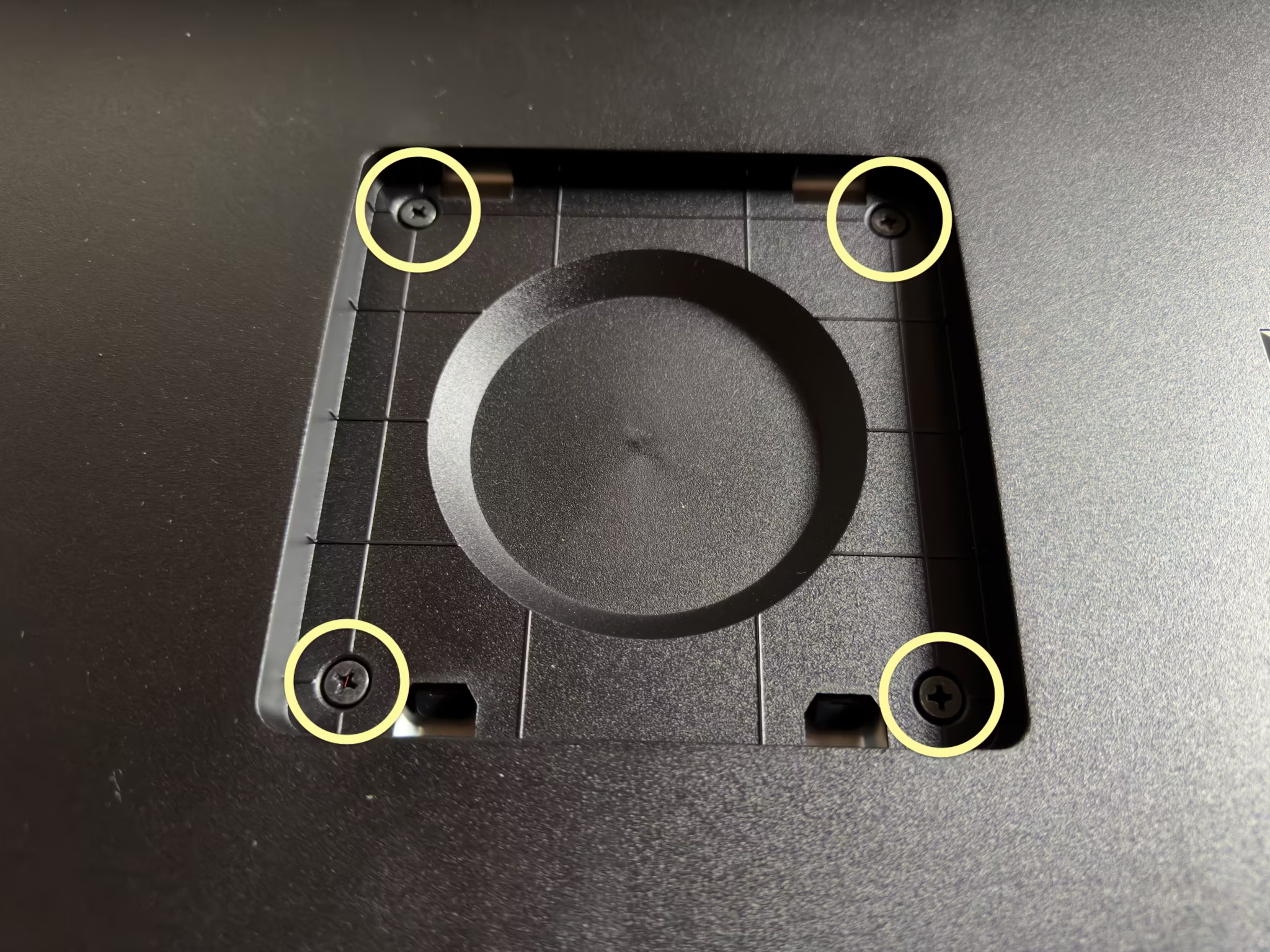
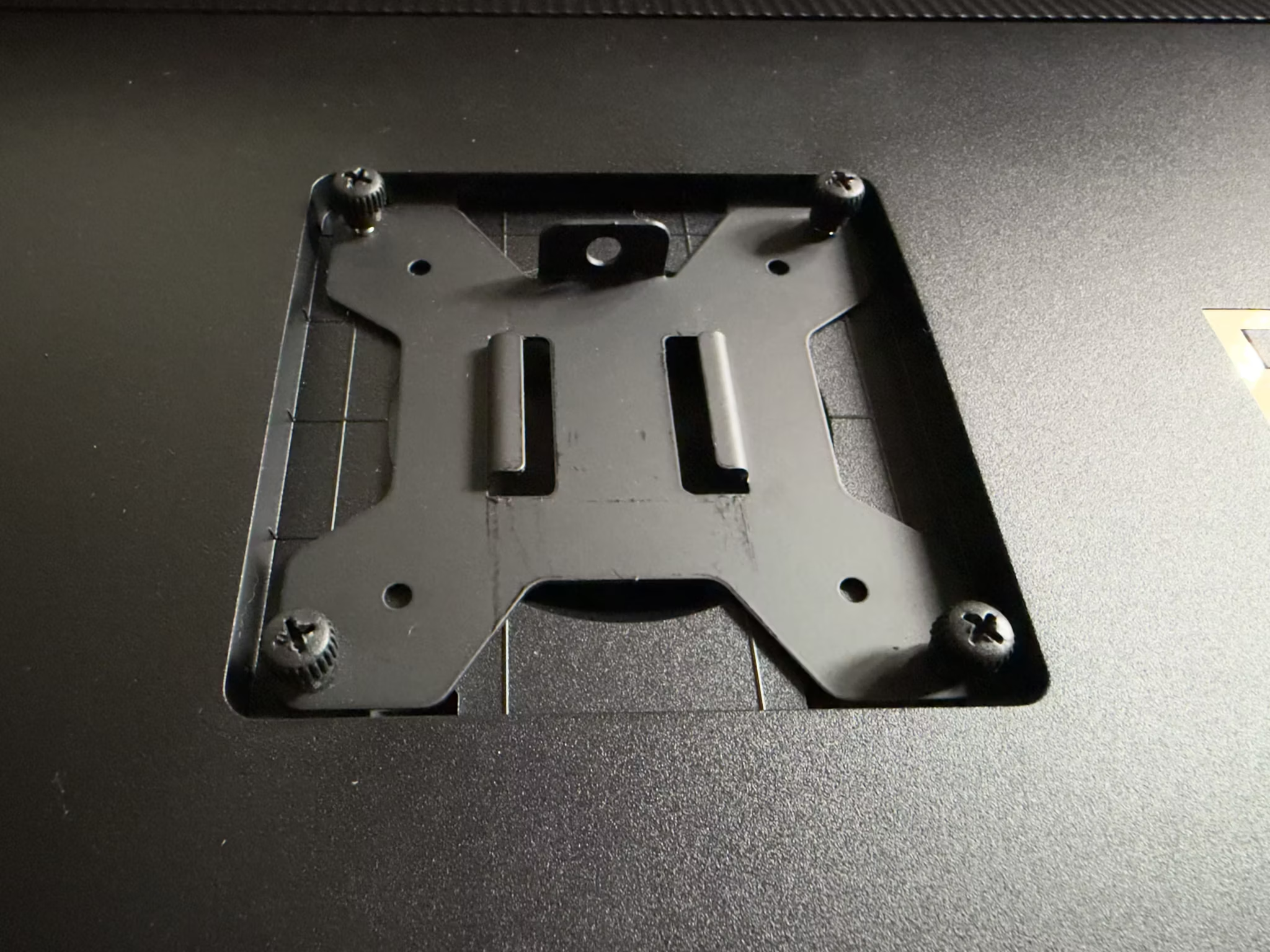
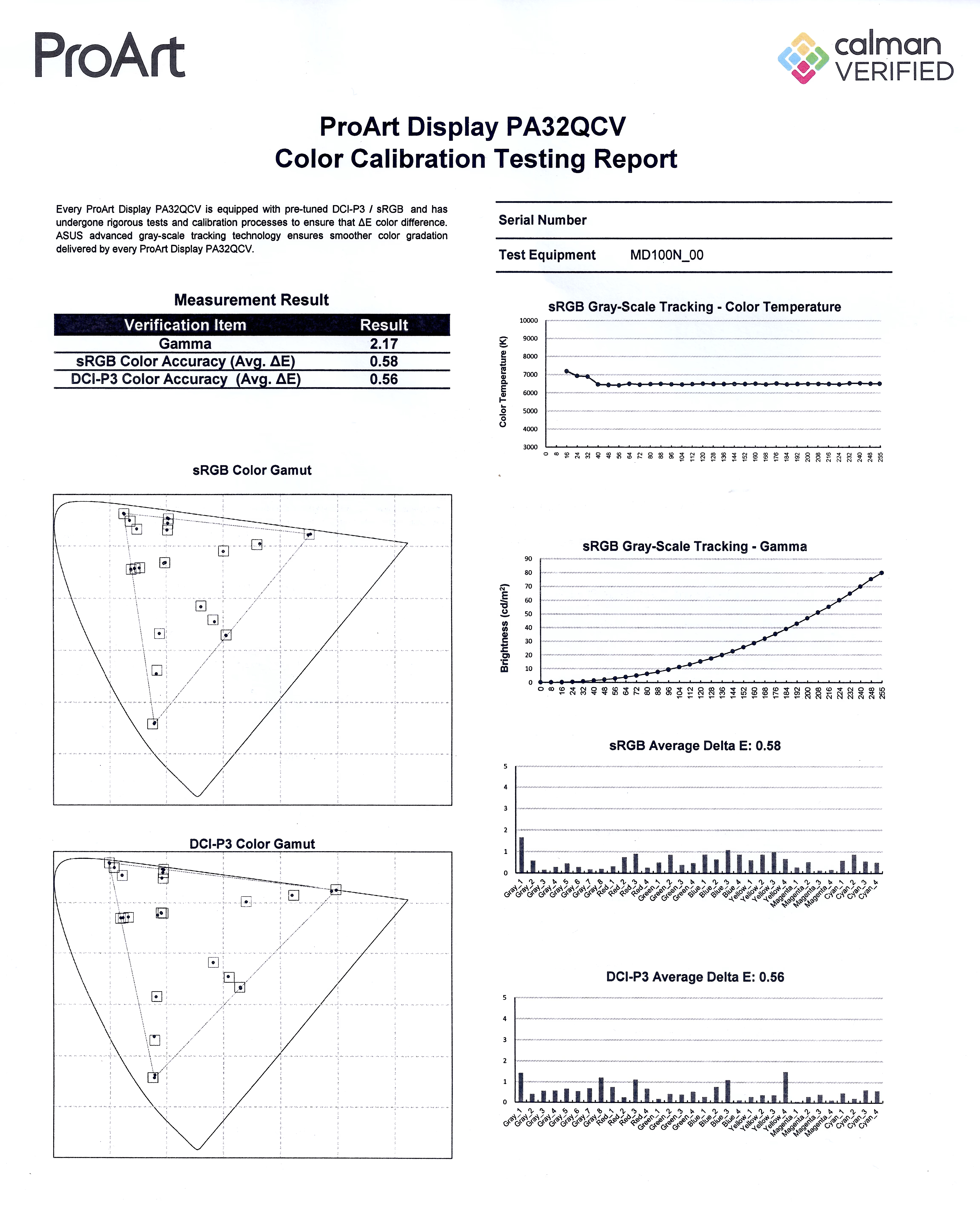
I’ll cut to the chase: it’s a nice resolution upgrade from an Apple or LG 5k display. But that’s about it – in every other visual respect (brightness, contrast, etc) it’s basically the same or marginally worse (see Matte-ugly). Though the built-in KVM is a nice addition.
Resolution
The extra resolution is significant – it is 38% more pixels – and welcome, but it’s not revolutionary. It feels like what should have just been the natural progression and not a big deal – in the same way we started with 9″ sub-VGA displays and have over decades worked our way up to bigger and higher-resolution ones.
And in that vein, the prospect of downgrading back to a 5k display is immediately deeply unappealing (pay attention, Apple 😠). The notion of going down to a mere 4k display is absurd (tempting as bright[er] OLEDs are1).
Dimness (née Brightness)
Even though it’s supposedly brighter than the LG UltraFine 5K it’s replacing for me – at least at peak, given its DisplayHDR 600 rating – it really isn’t. For everyday work (coding etc) I had the LG set at 50% brightness (so nominally 250 nits, given its 500 peak rating) but the equivalent brightness requires ~75% on the Asus. Which actually fits if you take the Asus’s manual (not its tech specs) at its word of a 350 nominal max brightness, since 250 nits is roughly 75% of 350.
So that’s disappointing. The LG UltraFine 5K was sort of bright for its day, but that day was nearly a decade ago. We now have cheap laptops with 1000-nit displays, so 500 is unequivocally dim now.
Not that I expected much else – while Asus can’t seem to agree with themselves over the actual peak brightness, they never claim more than 400, so going in I suspected it would be dim. What I didn’t expect was that the claims of multiple reviewers, that it’s actually closer to 700, would turn out to be completely false.
The one thing that makes a difference in practice, in the Asus’s favour over some older displays like the LG, is that it supports HDR mode. So you ca…

 点赞
点赞 收藏
收藏 点踩
点踩 分享
分享