'Crazy idea' succeeds: Scientists monitor space junk with radio telescopes

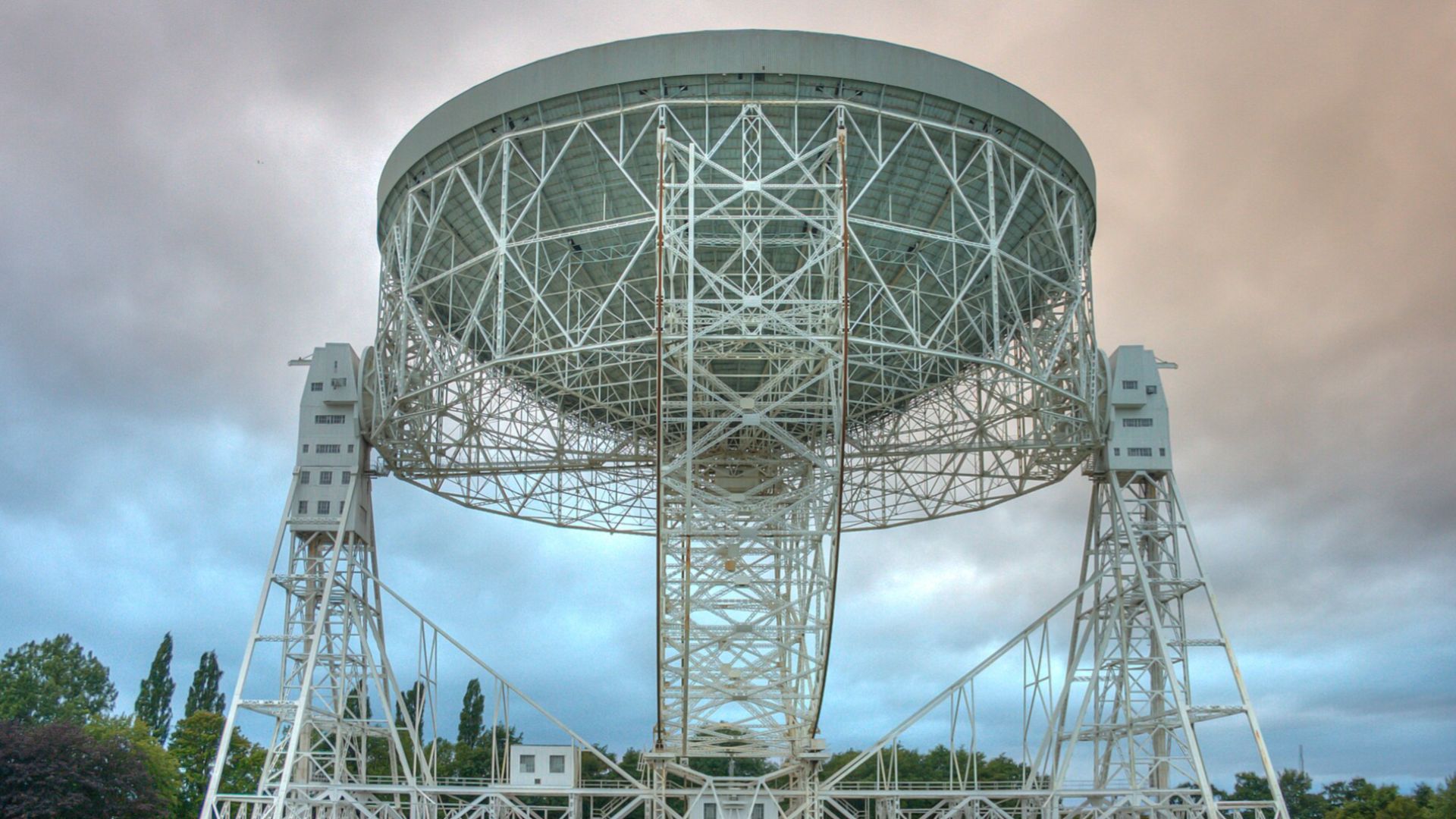

Radio telescopes are designed to listen for signals from the stars and from distant galaxies, but scientists are also pointing out that these instruments can also track objects somewhat closer to home: junk in Earth's orbit.
Engineers have used the famed radio telescope at Jodrell Bank in the U.K. as part of an international plan to watch high-altitude space debris. Normally, old satellites and bits of spacecraft stuck up in geostationary orbit are too high up for our normal ways of watching space debris. However, said international project, called Long Baseline Multistatic Radar (LBMR), successfully used a radio telescope to get around this problem.
"That's the first time that's ever been done," Simon Garrington, associate director of Jodrell Bank, said in a video about the project.
A pressing problem
It's hardly a secret that junk is rapidly piling up in Earth's orbit — dead satellites, rocket remnants, rubble from satellite collisions or anti-satellite missile tests, and more. And as we keep filling Earth's orbit with thousands more satellites each year, we're also increasing the risk that one is struck by a debris fragment. We need to track this debris.
Most satellites exist in low Earth orbit (LEO) below altitudes of 1,250 miles (2000 kilometers), and indeed space debris is more concentrated at LEO. Still, there’s good reason to be just as concerned about debris in the much higher geostationary orbit (GEO), which falls 22,500 miles (36,000 kilometers) in altitude. Crucial communications and weather satellites lie in GEO, for instance, and space debris doesn't need to come in great quantities to pose a threat — just one unfortunate strike can cripple a satellite.
This leaves debris-hawks with a conundrum. They typically track space junk in LEO with radar, but most ground-based radar systems aren't sensitive enough to watch GEO's heights. Instead, they rely on optical telescopes to see objects in GEO. These telescopes are good for tracking larger objects (larger than…

 点赞
点赞 收藏
收藏 点踩
点踩 分享
分享