Goodbye XSLT

This is my brief take on the story of a web standard (XSLT) that was created around 25 years ago and has existed in all modern web browsers ever since, but has now been deemed too hard and too costly to maintain, too much of a security risk, and is used by a sufficiently small number of active websites that XSLT can simply be removed from web browsers – effectively killing all those pages currently using XSLT.
Like many of the pages on this, my own website.
The “killing” hasn’t started quite yet. Google’s plan was to disable XSLT in Chrome Canary builds starting in December 2025, but as of this time (March 2026), XSLT still appears to be enabled in Canary by default, so maybe there’s a new plan that I’m unaware of. By November 2026, according to the original plan, XSLT will be removed from all Chrome builds. And presumably other browser vendors will follow suit, since Google claims that other major browser vendors support their plan.
I’m not sure why XSLT didn’t work in my Raspberry Pi’s “Official Build” of Chromium (145.0.7632.116); perhaps it was removed early in order to save space. Anyway, I was blissfully unaware of all this until a few days ago, when I started tinkering with a Raspberry Pi and decided to see how well PCjs ran in the Pi’s default web browser.
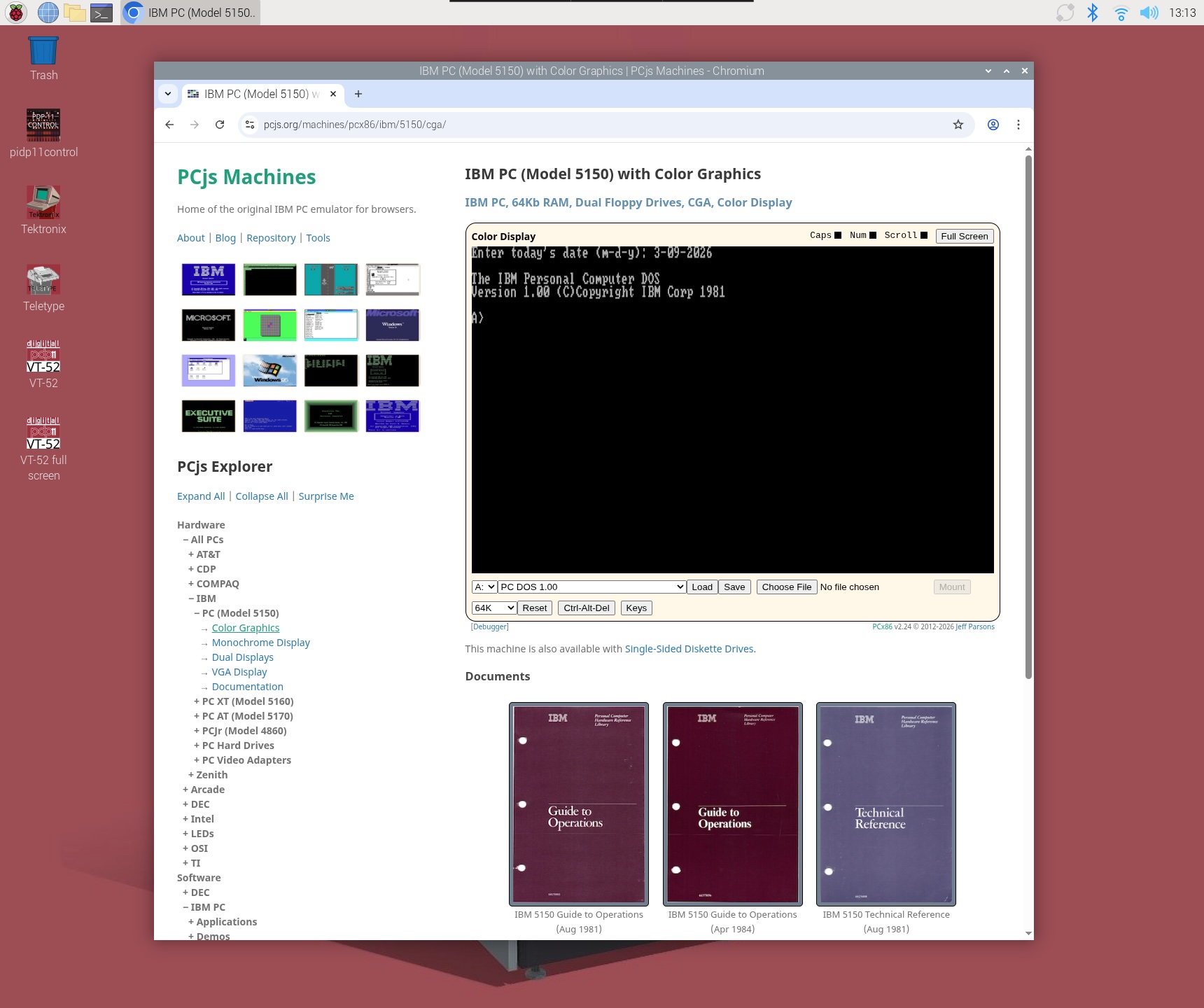
At first, all seemed well.
But that particular IBM PC was a newer machine using a JSON config file. Most of the machines on PCjs use XML config files, and I quickly discovered that all those machines were broken.
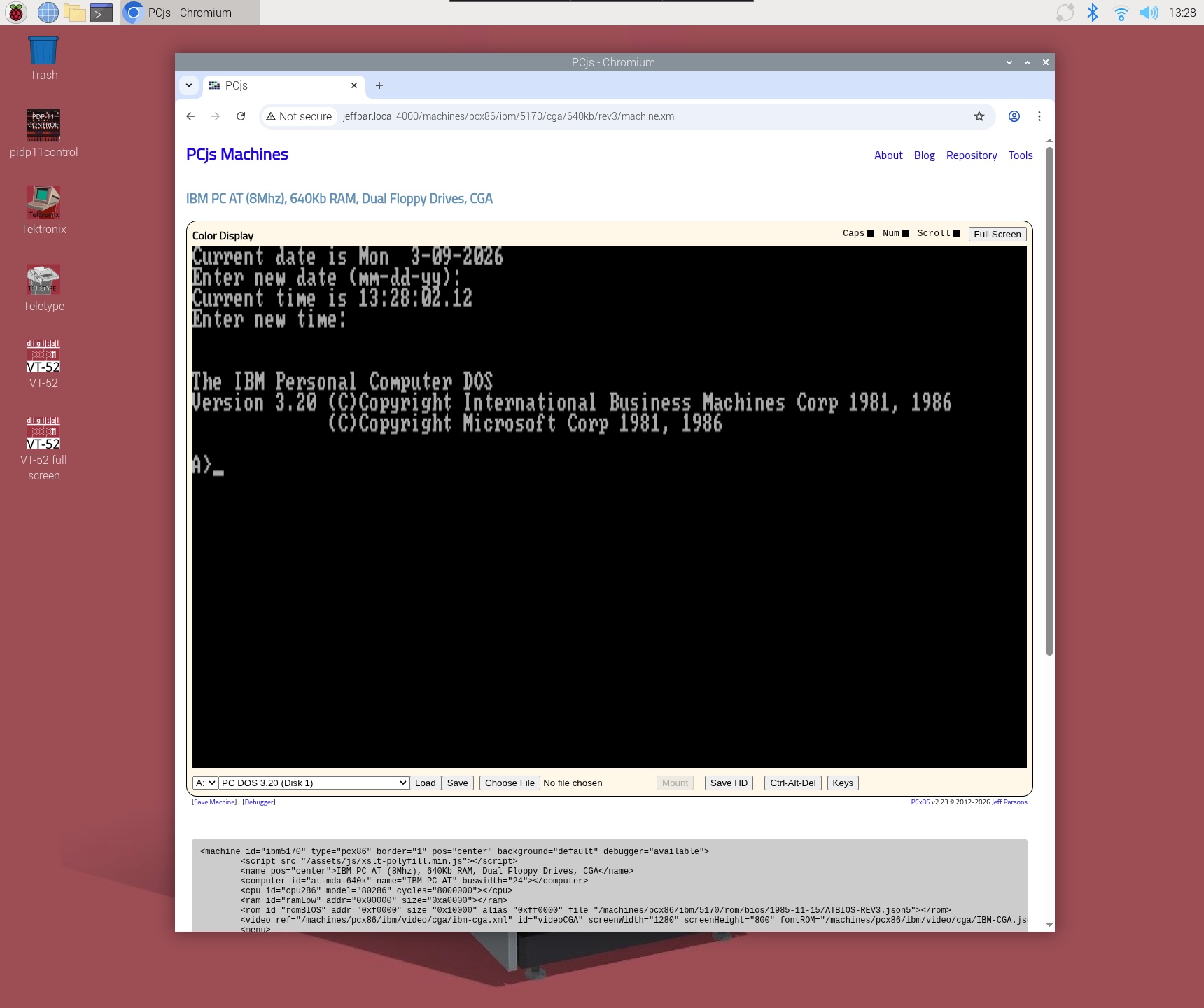
Note that the machine on that page doesn’t simply use an XML config file. The entire page is an XML config file. Here’s what that XML file looks like:
IBM PC AT (8Mhz), 1Mb RAM, Dual Floppy Drives, CGA

 点赞
点赞 收藏
收藏 点踩
点踩 分享
分享