The Enshittification of Plex 💩

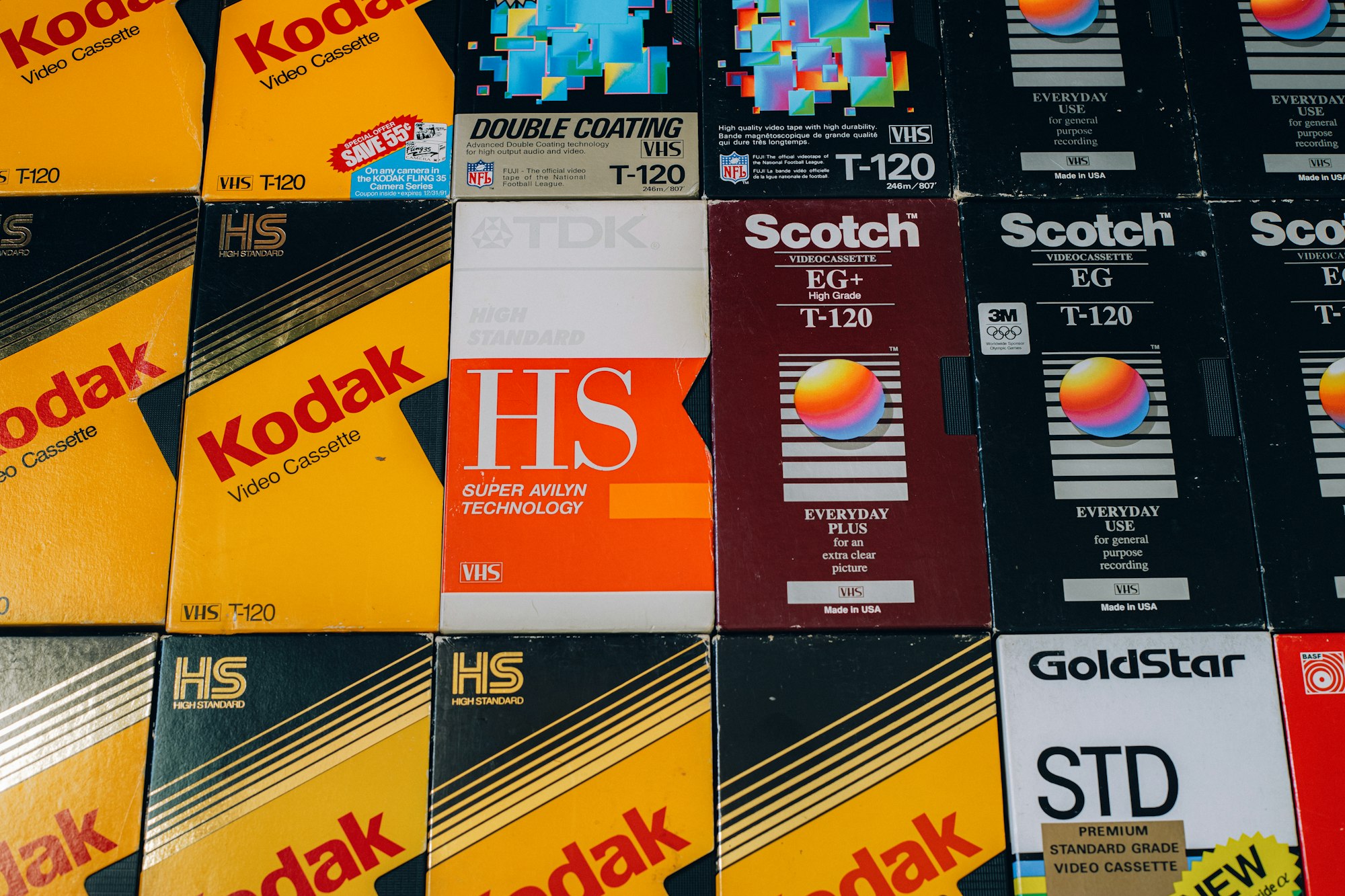
Perhaps you heard the news this week that Plex is raising the cost of a lifetime pass from $250 to $750? Perhaps you’ve become numb to the general enshittification of the Plex Media Server software?
Today, I’m going to break down everything that’s happened over the last decade that got us to this point. I’ll aim to be as factually accurate as possible. But I’m now at the point with Plex where I’m done. I’m out. It has been obvious for years that there is only one end result here and with the news of the massive price hike recently I’m fairly certain we are watching the final stages of collapse.
“But lifetime passers are grandfathered in” you might say, “so why should I care?”. That is true, they are. But Plex has to exist for their authentication services, live TV EPG services, and many more aspects of the Plex experience to work at all. So if Plex the company goes away, then so will everything else around it regardless of whether you have a lifetime pass, as I do, or not.
I’m switching to Jellyfin for good, and I hope you will too.
What is Plex?
It’s a “bring your own files”, self-hosted version of a media streaming platform like a Netflix or Spotify. But you run the service on your hardware, streaming your files, using your electricity, hardware, and so forth.
Plex began as a fork of XBMC, originally as a Mac OS X port of XBMC. At the time it was known as OSXBMC and was the creation of Elan Feingold. In May 2008 the Plex name was adopted after the XBMC codebase was forked. Kodi’s own wiki - Kodi is the newer modern name for the XBMC project - notes that newer Plex clients were later rewritten and are no longer based on the forked code.
License is a particularly messy area of Plex’s history. XBMC was GPL-based, so early Plex inherited open-source obligations, but Plex evolved into a commerical product with significant closed-source/proprietary parts. Some Plex client code has remained open for compliance reasons, but the core Plex Media Server code is not open-source.
What is Jellyfin?
To answer this we must introduce Emby. Emby came from a separate lineage of media software known as Media Browser in March 2015. Jellyfin is a fork of Emby. The split here occurred in 2018 from Emby v3.5.2 after Emby moved toward a proprietary/closed-source model.Jellyfin is the free-software continuation and alternative to both Emby and Plex.
A timeline of events
The idea here is give you a picture of the notably things that have happened in the Plex universe over the last decade or so. You can see quite clearly around 2019+ how the company has been flailing and looking for a purpose since The Verge’s article in July 2019.August 2012 - PlexPass launches
Plex framed PlexPass as a supporter / early-access program
Early access, private forums, premium feature testing, and discounts were part of the pitch
Launch price was $3.99/monthNovember 2012 - PlexSync becomes an early premium feature
PlexSync let users reformat and load media onto mobile devices for offline viewing
Announced as a PlexPass featureSeptember 2014 - Plex Pass price hike
Plex announced new pricing effective Sept 2014
Monthly increased from $3.99 -> $4.99
Annual increased from $29.99 -> $39.99
Lifetime increase from $74.99 -> $149.99November 2014 - Plex Home / parental-control tiering
Plex introduced Plex Home, managed users, and finer access controls
Some multiuser features became free
More advanced Home / sharing controls stayed Plex PassJuly 2015 - Forum security breach
Plex’s forum was hacked.
HaveIBeenPwnd.net listed 327,000+ exposed accounts including emails, IPs, usernames, and weakly implemented salted password hashes.
Plex reset users passwords
Reports noted a ransom demandSeptember 2016 - DVR beta added to Plex Pass
Plex DVR launched in beta for Plex Pass subscribers
Initially tied to HDHomeRun tuners and guide dataDecember 2016 - Hardware transcoding preview
Plex Media Server 1.4.0 added a Hardware Transcoding Preview
It was introduced as a Plex Pass feature for Windows, macOS, and Linux
Early support included Intel graphics caveatsPlex’s current docs still list hardware-accelerated streaming as premium, while ordinary software transcoding remains free
exceptions include NVIDIA SHIELD and WD My Cloud Pro PR2100 / PR4100 serversJune-August 2017 - Live TV / DVR solidifies as Plex Pass
Plex added Live TV and later expanded time shifting / DVR support
Live TV / DVR required Plex Pass plus supported tuner / antenna hardwareAugust 2017 - Privacy policy changes and backlash
A proposed policy removed users’ ability to opt out of some data collection, prompting fears about library tracking
Plex revised the policy in response and restored opt-out controlsDecember 2017 - Plexamp launches
Plex Labs unveiled Plexamp as its first project
A Winamp-inspired desktop music player for Plex music librariesOctober 2018 - Plex Cloud and feature retirements
Plex retires Watch Later, Recommended, Cloud Sync and plugins
Plex shutdown their hosted Plex Cloud service after reliability / cost problemsNov 2018 - Plex adds TIDAL integration
This added streaming music, TIDAL-powered discovery, universal playlists/search, and library augmentation alongside personal music collectionsJuly 2019 - The Verge very publicly highlights Plex’s piracy problem
A Verge feature highlighted Plex’s role in private shared libraries
Plex is framed as enabling “unofficial piracy streaming clubs”
Emphasizes the piracy problem that Plex has (ed: and always will have!)Dec 2019 - Ad-supported streaming launches
Plex launched free, ad-supported movies and TV in 200+ countries,
This marked a major pivot beyond personal media libraries into studio-backed streamingFeb 2020 - Plex servers used for DDoS amplication
Researchers found exposed Plex Media Server instances being abused for PMSSDP reflection/amplification DDoS attacks
Plex said unusual network exposure was required and shipped a hotfixApr 2020 - Plexamp 3.0 relaunch
Plexamp was rewritten/relaunched across desktop and mobile as a Plex Pass app
coverage notes its search/recent plays included servers, podcasts, and TIDALMay 2020 - Skip Intro added
Plex launched Skip Intro as a new Plex Pass feature for TV librariesMay 2020 - CVE-2020-5741
Flaw where an attacker with admin account access could abuse Camera Upload to execute malicious codeJuly 2020 - Free Live TV expands Plex’s ad business
Plex launched free Live TV in 220+ countries with 80+ channels, further broadening its shift toward ad-supported streamingJan 2021 - Mar 2022 - Plex Arcade gets the “killed by Google” treatment
Plex launched a retro-game streaming subscription with Atari/Parsec
Then announced Plex Arcade would shut down on Mar. 31, 2022April 2021 - Plex raises $50m
Plex announced a growth equity investment round from existing investor Intercap
Only about $15M was new capital
The rest was used to buy shares/options from employees and shareholdersDec 2021 - CVE-2021-42835
Plex disclosed a Windows local privilege-escalation flaw affecting PMS before 1.25.0
Exploitation required local/physical access and was fixed in 1.25.0.5282+April 2022 - Universal Watchlist and cross-service search
Plex launched Discover ( to a mixed response )
Launched cross-service search
And a universal watchlist to help users find content across streaming services
Presumably aimed at become a “one stop shop” for all your streaming needs?August 2022 - Account database breach
Another breach this time involving suspicious database activity
A third party accessed emails, usernames, and encrypted/bcrypt-hashed passwords
Plex forced account password resets and said payment data was not storedFeb 2023 - Skip Credits added
Skip Credits became available for Plex Pass holders on personal libraries
Plex’s own free streaming catalog also got the featureMar 2023 - LastPass breach linked to unpatched Plex on an employees computer
Reports said…

 点赞
点赞 收藏
收藏 点踩
点踩 分享
分享