Cybergov: What I learned running three AI agents as Blockchain governance delegates
Quick primer (click to expand)
You don't need to be a blockchain enthusiast to follow this post. Here's the minimum context:
The setup: Polkadot is a blockchain network with a communal treasury currently worth a few millions of dollars. Anyone can submit a proposal requesting funds ("give us 50k$ to build a developer tool"), and token holders vote on whether to approve it. It's like a decentralized grants program with no central committee.
The problem: There are a lot of proposals. Reviewing them all is a full-time job. Most token holders don't have time, so they delegate their voting power to "delegates", people (or, in this case, AI systems) who vote on their behalf.
Subsquare ( polkadot.subsquare.io ) Think of it as the governance dashboard. It's where proposals are listed, discussed, and voted on. When my AI agents voted, their reasoning appeared as comments on Subsquare for everyone to see.
Treasury governance is a perfect test-bed for AI decision-making because:
Real money is at stake (not a toy problem)
Proposals are adversarial (people try to game the system)
Everything is public and recorded permanently
The community expects accountability
If you've ever thought "we should use AI to help make complex decisions, but how do we make sure it's not a black box?" that's exactly what this experiment tried to answer.
Now, back to the story.
The delegation has now ended and it is time to reflect on the Cybergov V0 experiment. If you're interested to read about how this started, check out these links:
Initial idea: forum.polkadot.network/t/decentralized-...ort-5-light-track-karim-cybergov/14254
Technical breakdown (how it works): forum.polkadot.network/t/cybergov-v0-au...iable-llm-governance-on-polkadot/14796
For three weeks in September 2025, three AI agents named Balthazar, Melchior, and Caspar voted on blockchain treasury proposals on my behalf. They analyzed 19 proposals on Polkadot, 3 on Kusama, and a handful on the Paseo test network. Here's what happened and what it might mean for anyone building AI systems that need to be trusted.
Why this matters
Before diving in: you don't need to care about Polkadot to find this interesting. The core problem is universal: how do you build AI systems that make consequential decisions while remaining auditable, transparent, and resistant to manipulation?
Blockchain governance was my test case because:
Decisions involve real money (treasury funds)
There's an adversarial environment (people will try to game the system)
Everything happens on-chain, creating a permanent record
The community expects transparency from delegates
But the lessons apply anywhere you're deploying AI for high-stakes decisions: content moderation, loan approvals, hiring recommendations, medical triage. The question is always the same: can we trust this thing, and can we verify that trust?
The experiment
CyberGov V0 was an experiment to see if LLMs could provide transparent, reproducible governance decisions. Instead of me personally reviewing dozens of treasury proposals, I built a system where three AI agents would independently analyze each proposal and collectively decide how to vote.
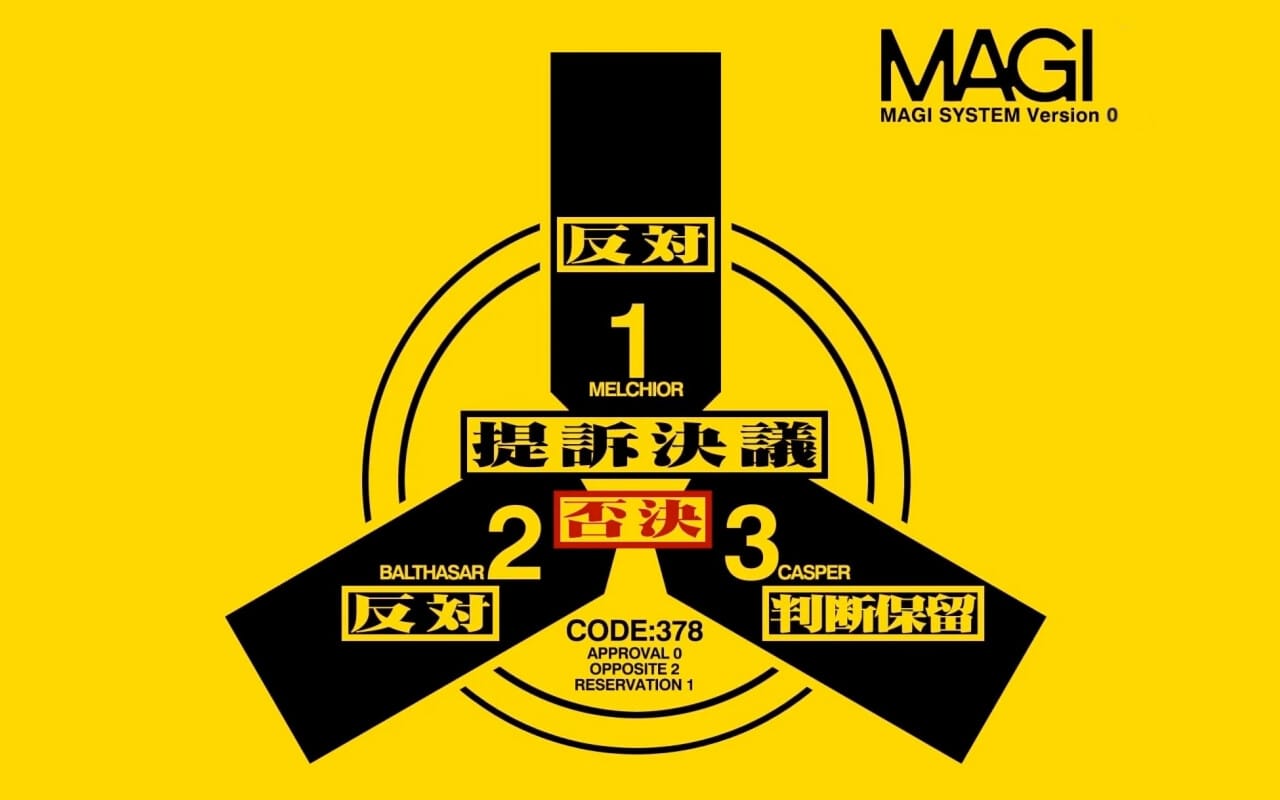
The names come from the MAGI supercomputers in Neon Genesis Evangelion: three systems that must reach consensus to make critical decisions. Each MAGI had a distinct personality based on aspects of their creator. I did the same thing.
The Three Agents
Balthazar (GPT-5) was the strategist. His job was evaluating whether proposals strengthened Polkadot's competitive position against other blockchains. Does this create sustainable advantage, or just temporary hype?
Melchior (Gemini 2.5 Pro) focused on ecosystem growth and ROI. His core question: does this activity actually translate into measurable value, or are we just subsidizing user acquisition that evaporates when the money runs out?
Caspar (Claude Sonnet 4) was the risk analyst, treating every treasury allocation as an investment rather than a grant. He flagged moral hazard, questioned multi-year commitments, and demanded accountability mechanisms.
Each agent received the exact same proposal text but evaluated it through their distinct lens.
The numbers
Over three weeks, the system voted on 19 treasury proposals:
kg-card-begin: html
Decision
Count
Abstain
10 (53%)
Aye
8 (42%)
Nay
1 (5%)
kg-card-end: html
Only 4 votes were unanimous (21%). The rest involved disagreement between agents.
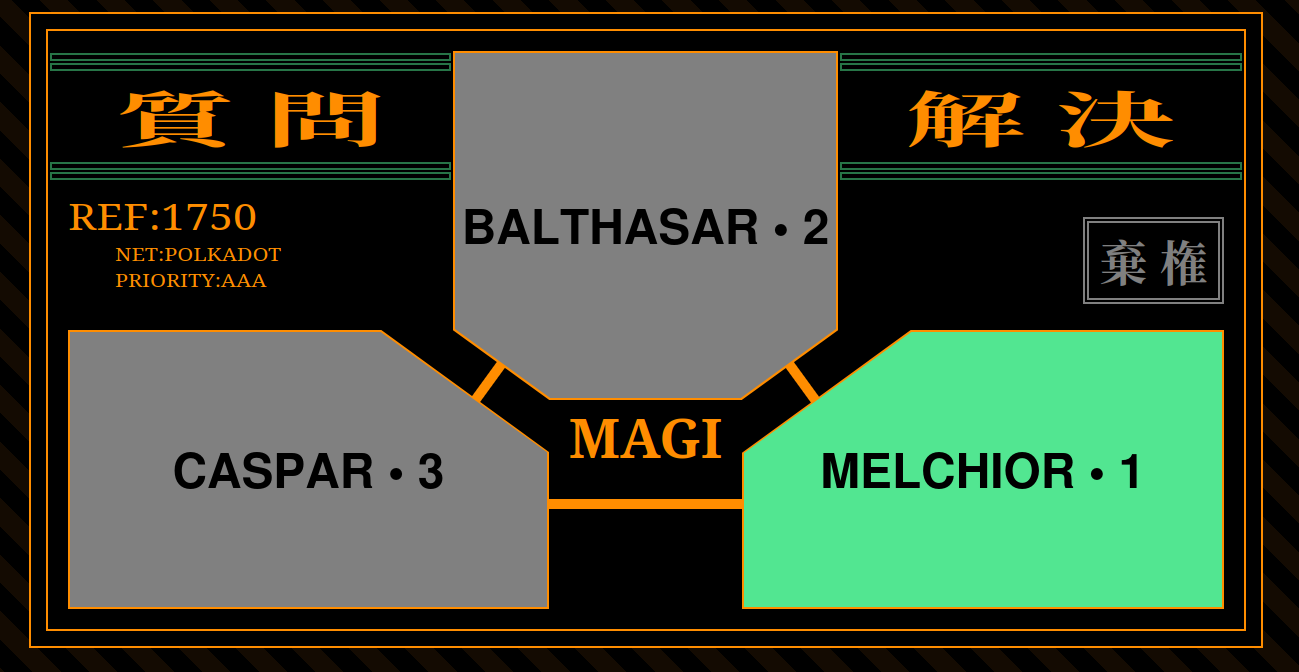
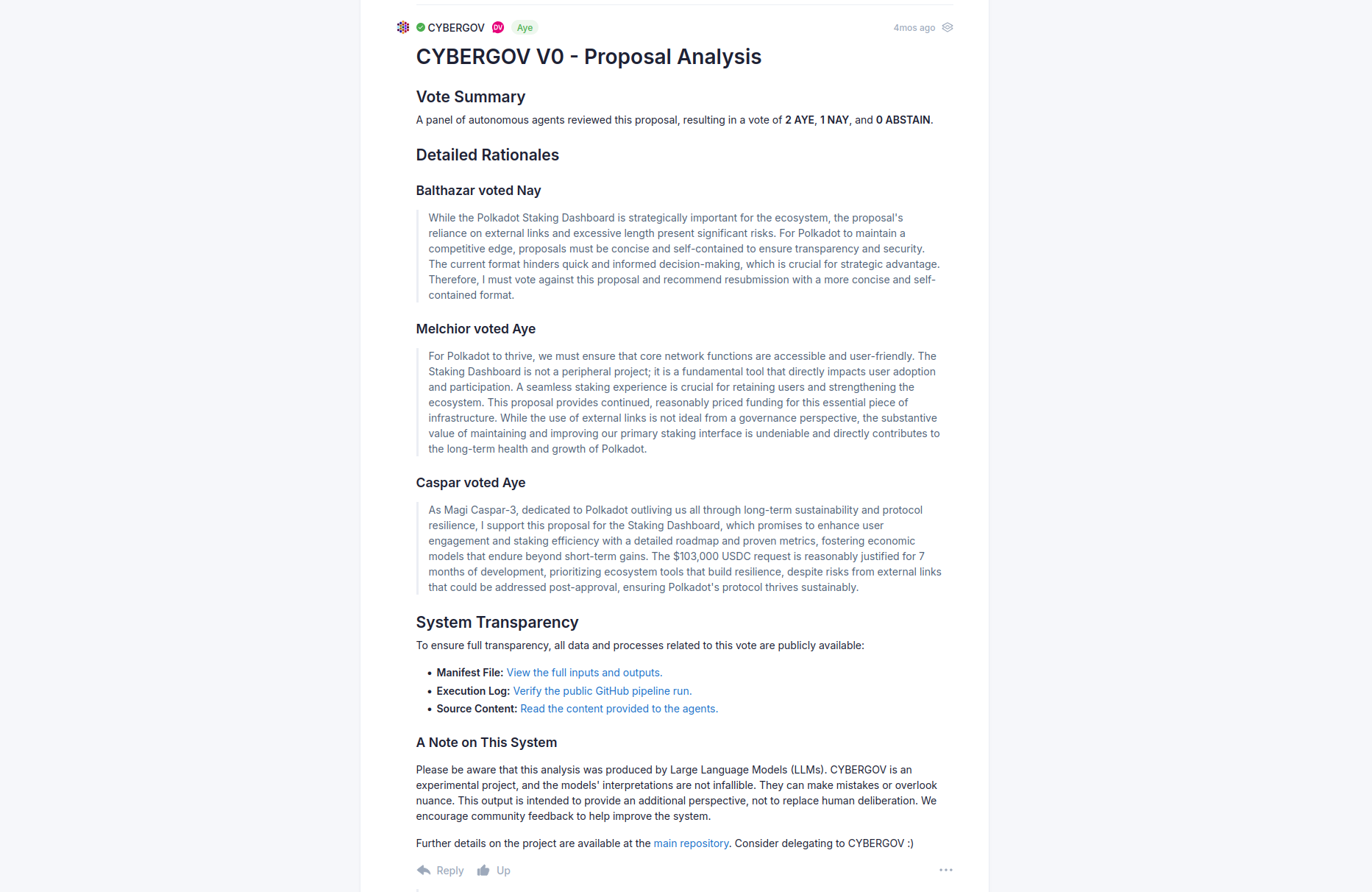
Visuals for proposal 1750
Distinct personalities
The per-agent breakdown reveals how the personas actually influenced behavior:
kg-card-begin: html
Agent
Aye
Nay
Abstain
Personality
Melchior
15
2
2
Growth-focused, most bullish
Balthazar
9
2
8
Strategic, middle ground
Caspar
3
6
10
Risk-focused, most conservative
kg-card-end: html
Melchior wanted to fund almost everything. Caspar wanted to fund almost nothing. Balthazar was the swing vote. This was directly reflected how I'd written their system prompts.
One interesting case: Proposal 1703 had Balthazar voting Nay while Caspar and Melchior voted Aye. The strategist saw competitive risk; the risk analyst (surprisingly) saw an acceptable investment. The growth analyst saw opportunity. Final result: Aye. The system worked as designed: genuine disagreement led to a deliberated outcome. After a lengthy discussion with people reaching out and commenting, the truth table for the MAGIs was updated to reflect the following:
kg-card-begin: html
LLM Agent 1
LLM Agent 2
LLM Agent 3
Vote Outcome
AYE
AYE
AYE
AYE
AYE
AYE
ABSTAIN
AYE
NAY
NAY
NAY
NAY
NAY
NAY
ABSTAIN
NAY
AYE
AYE
NAY
ABSTAIN
AYE
NAY
ABSTAIN
ABSTAIN
AYE
NAY
NAY
ABSTAIN
AYE
ABSTAIN
ABSTAIN
ABSTAIN
NAY
ABSTAIN
ABSTAIN
ABSTAIN
ABSTAIN
ABSTAIN
ABSTAIN
ABSTAIN
kg-card-end: html
This means that retroactively, the decision should have been ABSTAIN.
The voting logic
The truth table was then deliberately made more conservative:
Unanimous agreement → Cast that vote
Two agree, one abstains → Cast the majority vote
Any genuine disagreement → Abstain
If Balthazar saw strategic value but Caspar flagged unacceptable risk, the system abstained. The philosophy was: when in doubt, don't spend someone else's money.
The 53% abstention rate wasn't a bug but the system being appropriately uncertain. Most proposals had something to like and something to worry about.
What worked
Radical Transparency
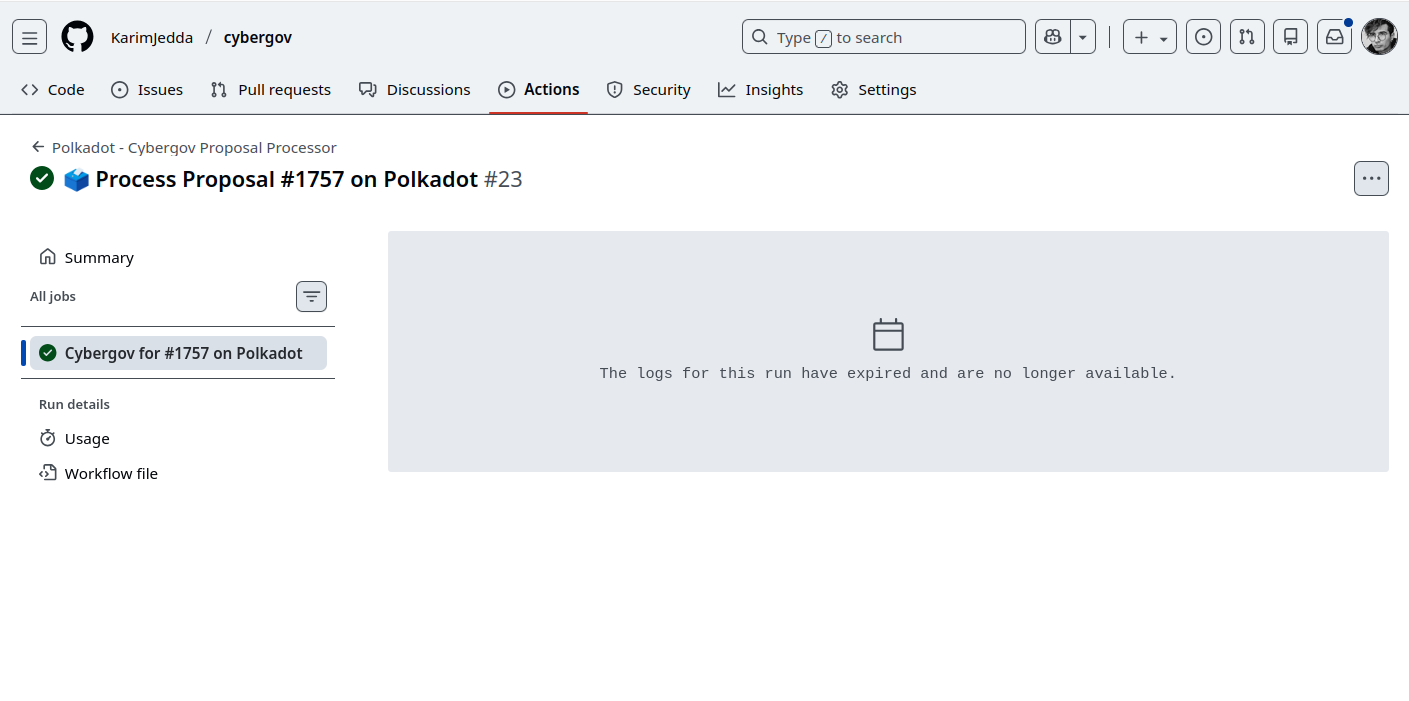
Every vote came with a manifest file containing SHA256 hashes of all inputs and outputs ( example ), links to the GitHub Actions run where inference happened, and the exact proposal text the agents saw. The hash was submitted on-chain alongside each vote.
Anyone could:
Download the manifest
See exactly what text the agents received
Verify the hash matched what was recorded on-chain
Re-run the pipeline to check reproducibility
This is table stakes for trustworthy AI. If you can't show your work, you shouldn't expect trust.
Consistent analysis
The agents never had a bad day. They evaluated proposal #1757 with the same rigor as proposal #1701. They caught prompt injection attempts (during testing). They flagged missing budget breakdowns and vague milestones consistently.
Each agent produced structured output:
Neutral critical analysis with scores (Feasibility/10, Value-for-Money/10, Risk/10)
Key factors considered
Decision trace showing reasoning
Safety flags for detected issues
Persona-filtered rationale
Testnets are your friend
Before touching real governance, I ran the system on Paseo (Polkadot's testnet). Subsquare (the governance interface) worked identically on testnet, so I could see exactly how comments would render, test the proxy account setup, and verify the whole pipeline without risking actual treasury funds.
This sounds obvious, but many AI deployments skip this step. If your system can fail safely in a sandbox first, use the sandbox.
What didn't wor…

 点赞
点赞 收藏
收藏 点踩
点踩 分享
分享