Curiosity Blog, Sols 4954–4960: Celebrating Our Rover Engineers Past and Present

Curiosity Navigation
Curiosity HomeMission OverviewWhere is Curiosity?Mission Updates
ScienceOverviewInstrumentsHighlightsExploration GoalsNews and Features
MultimediaCuriosity Raw ImagesImagesVideosAudioMosaicsMore Resources
Mars MissionsMars Perseverance RoverMars Curiosity RoverMars Reconnaissance OrbiterMars OdysseyMore Mars MissionsMars Home
3 min read
Curiosity Blog, Sols 4954–4960: Celebrating Our Rover Engineers Past and Present
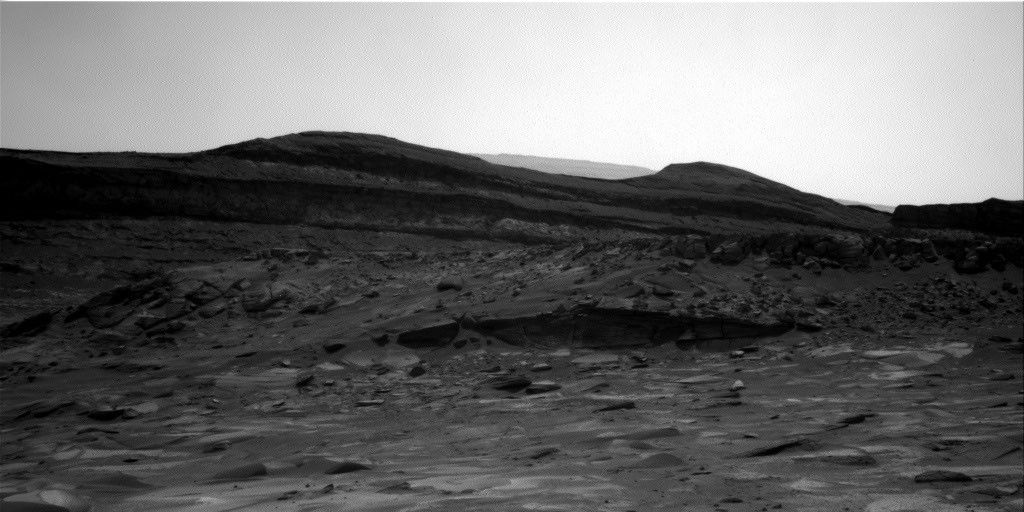
In this image acquired by NASA’s Mars rover Curiosity, the relatively light-toned bedrock in the foreground gives way to darker-toned rocks in the middle of the image, along what could be an erosional surface. Curiosity acquired the image using its Right Navigation Camera on July 15, 2026 — Sol 4955, or Martian day 4,955 of the Mars Science Laboratory mission — at 05:51:59 UTC.
NASA/JPL-Caltech
Written by Lucy Thompson, Senior Research Scientist, University of New Brunswick, Canada
Earth planning date: Friday, July 27, 2026
As an APXS uplink lead and strategic planner, I have the privilege of working with the rover engineers most days that I am on operations. The APXS instrument measures the chemistry of rocks, unconsolidated materials and the atmosphere, and is situated on the end of Curiosity’s robotic arm. This means that any target of interest that we wish to analyze has to be safe to deploy the arm, APXS, and MAHLI (the closeup imager) to. We therefore rely on the rover engineers for their assessment and to sequence the arm moves to place us safely on the targets. Recently, our workspaces have been dusty with varied relief, but the rover engineers have successfully found areas that they have been able to brush and deploy APXS and MAHLI. This week was no exception, despite some of our workspaces appearing less than ideal upon initial observation. The team managed to find rock targets of interest (x5), which the rover engineers were able to safely place the arm on and brush so th…

 点赞
点赞 收藏
收藏 点踩
点踩 分享
分享