vibes-based thinking as a cultural response to unknowns

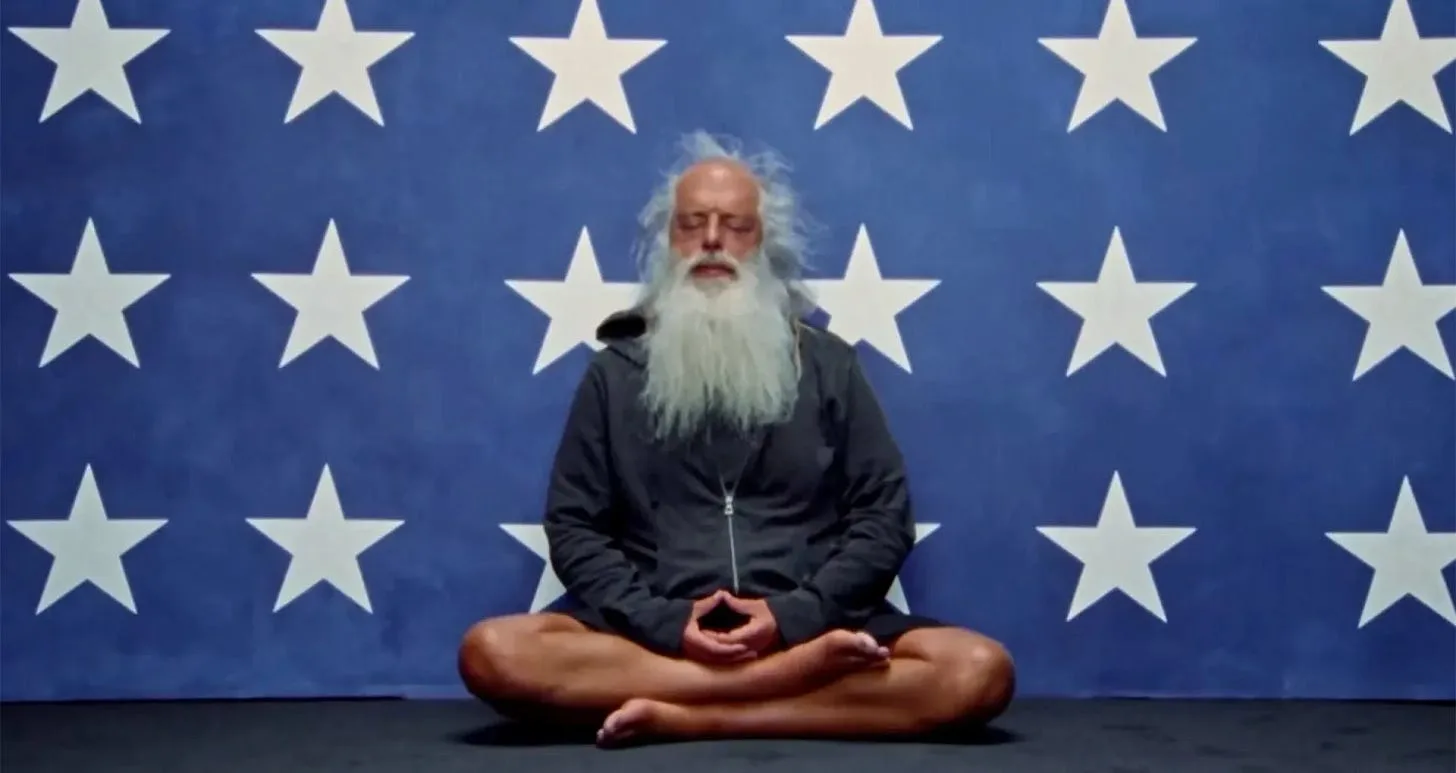
tl;dr: some meditations on the shift away from probabalistic/frequentist reasoning to vibes-based means for quantifying and understanding big risks.
The vibes in an email can be off, like a conference speaker request I received recently that addressed me as “sir,” and felt like a scam. If I’m not feeling a spark on a first date, I often conclude that the vibes weren’t aligned. A month ago, I felt like the vibes were off in my relationship, and sure enough, that afternoon I was dumped. The frequent correctness of vibes-based intuitions leads us to believe that it’s an effective measure. And sometimes, it is.
The concept of “vibes,” or “vibing” with something, has permeated almost every aspect of life and culture, from first dates to predicting catastrophic collapse. Vibes are in part a cultural derivative of vibrations (like the Beach Boys’ Good Vibrations ); a low, instinctual hum that pulls the mind towards something abstract, a particular feeling or inclination on an idea. A way of describing something indescribable, that somehow, everyone understands instantly.
While vibes appear like an innocent cultural shift in communication, they are also a measurable shift in how risk researchers and experts actually reason about probability; they can license prediction without the burden of proof. Vibes present a distinct cultural response to unknowns.
When thinking about complex catastrophic risks, vibes become a determination of sorts. Vibes allow one to make a judgment or a prediction without having to rigorously defend it, because identifying causal shifts and perceiving changes is enough when dealing with unprecedented risks. In life, vibes are a way to define a feeling or a shift without defining what explicitly underpins the feeling itself; the perception of what may be intangible. Vibes garner a certain reliance on intuition, feelings, language, tone, and even aesthetics.
The shift to vibes is the field’s quiet and gradual abandonment of frequentist and actuarial (expected value, base rates, etc.) modes of thinking on risk, and a move toward scenario, narrative, and imagination as the dominant mode of thought— like fat-tailed risks, unknown unknowns, x-risk prediction markets, “p-doom,” and red-teaming. One could argue that the scenario-based thinking that emerged during the Cold War from strategists like Herman Kahn was, in a way, an early instance of the same concept, developed to deal with a novel technological risk at the time that had no base rate to consult. There had never been a thermonuclear war; at the time, there was nothing to count. So instead, Herman Kahn wrote and told nuanced stories, and branded them as analysis of deterrence failure modes and nuclear warfighting. It seems as if we are doing the same thing again; like society still responds to complexity and the unknown in the same ways. Vibes are our default.
We optimize, especially in the West (most aggressively in the Bay Area), for an ultra-rational way of thinking. We know that humans are not the best at decision-making under deep complexity and uncertainty: it is hard to disagree. Today, many intellectual and research communities strive for rationality and to act as rationally as possible, yet as the world grows more complex, we are forced to deal with new magnitudes of classic trolley problems. Humans simply feel too much for this to be possible. AI was supposed to be this thing that can think without feeling; to be objective in a way we simply cannot. A machine with the objectivity we lack. We just didn’t build exactly that.
In 2016, DeepMind’s AlphaGo played Lee Sedol, one of the greatest Go players alive. In the second game, the machine made a move that no human player would have chosen. A move so alien to thousands of years of accumulated play that commentators assumed it was a mistake. Lee stood up and left the room. When he returned, he was visibly shaken. The move turned the game; the machine won four of five; the grandmaster eventually retired from competition. In the end, AlphaGo won the game. And that never-before-seen move, experts said, was the one that turned the course of the game in favor of the AI.
What was so unsettling about move 37 was not that it was calculated, but that it looked like taste and intuition. The model appeared to feel an inclination; a feel for the board that no one could reverse-engineer. Humans built an entity that was supposed to out-rationalize us, and in a way it has out-vibed us.
Perhaps this is why we cling to vibes now more than ever. Maybe the shift to vibes is a quiet resistance that these communities don’t even see as resistance; a natural tendency to set ourselves apart from AI models because on the inside, we still see ourselves as innately separate and unique. We rely on vibes, research taste, and intuition more in the AI age than we used to, and we hear a lot more conversations around vibes and taste, and our perception of them. There is no precedent. Perhaps we rely on them because we think they’ve become special: a rarer, scarcer form of intelligence than the purely rational kind, which the machines were supposed to monopolize.
I am not outside of this. Bits and pieces of my own work rest on a vibe or feeling I couldn’t have defended when I first sensed it. Some time ago I began noticing a gap between the canonical nuclear policy and nuclear winter fields and the effective altruism-aligned resilience sub-field. While the resilience sub-field is constantly referencing the biggest nuclear winter studies, the canonical researchers rarely engage with resilience research. It was not a classic gap in the literature, but instead a subtle gap in attention and legibility.
There was no dataset, no citation count, no survey of the field to point at; I couldn’t have cited it off the top of my head. It was merely a low hum I picked up through conversations, through what came up at workshops and conferences and what didn’t; through reading and noticing the shape and texture of what wasn’t there. When I tell others about this idea, they tell me it makes sense, and they don’t ask for sources. This is functionally how vibes operate: my idea was received as true because it felt true to the people who would know. I still think some of my feelings and vibes are grounded, but I can’t pretend like the idea was arrived at through a frequentist and quantitative process.
The world and society itself continue to grow more complex with technology, and we don’t understand everything (far from it)— there is still a cultural preference for simplicity and feeling, and the conversation on vibes is largely a manifestation of this. Do we have a cultural preference for simplicity? Is this simplicity merely an intuitive gut feeling?
The ongoing conversation between probabilistic and vibes-based approaches to communicating risk is uniquely visible in the rise of prediction markets like Polymarket and Kalshi: trading platforms where users can buy and sell event contracts based on the outcomes of future occurrences (including existential risks). While prediction markets were marketed and sold as instruments for “truth tracking,” the rationalist culture of Silicon Valley, AI safety, and effective altruism dominates the narrative. The gradual drift into quite literally gambling on the probability of catastrophe and collapse is more so a story about a community’s stated values clashing with what the product actually rewards. We assume that the market reveals the truth, but the evolution of prediction markets has exposed this assumption, and now we are watching it decay under its own incentives.
Back in March, Polymarket removed an event contract on whether a nuclear weapon would be detonated this year, in light of the platform’s increasing association with gambling on death and war. Before being archived, the market gave a 22% chance of nuclear use— and garnered over $800,000 in volume while live.
The event was not tied to a particular regional conf…

 点赞
点赞 收藏
收藏 点踩
点踩 分享
分享