The Wireless Cassette Walkman: A Visual History (1988–1999)


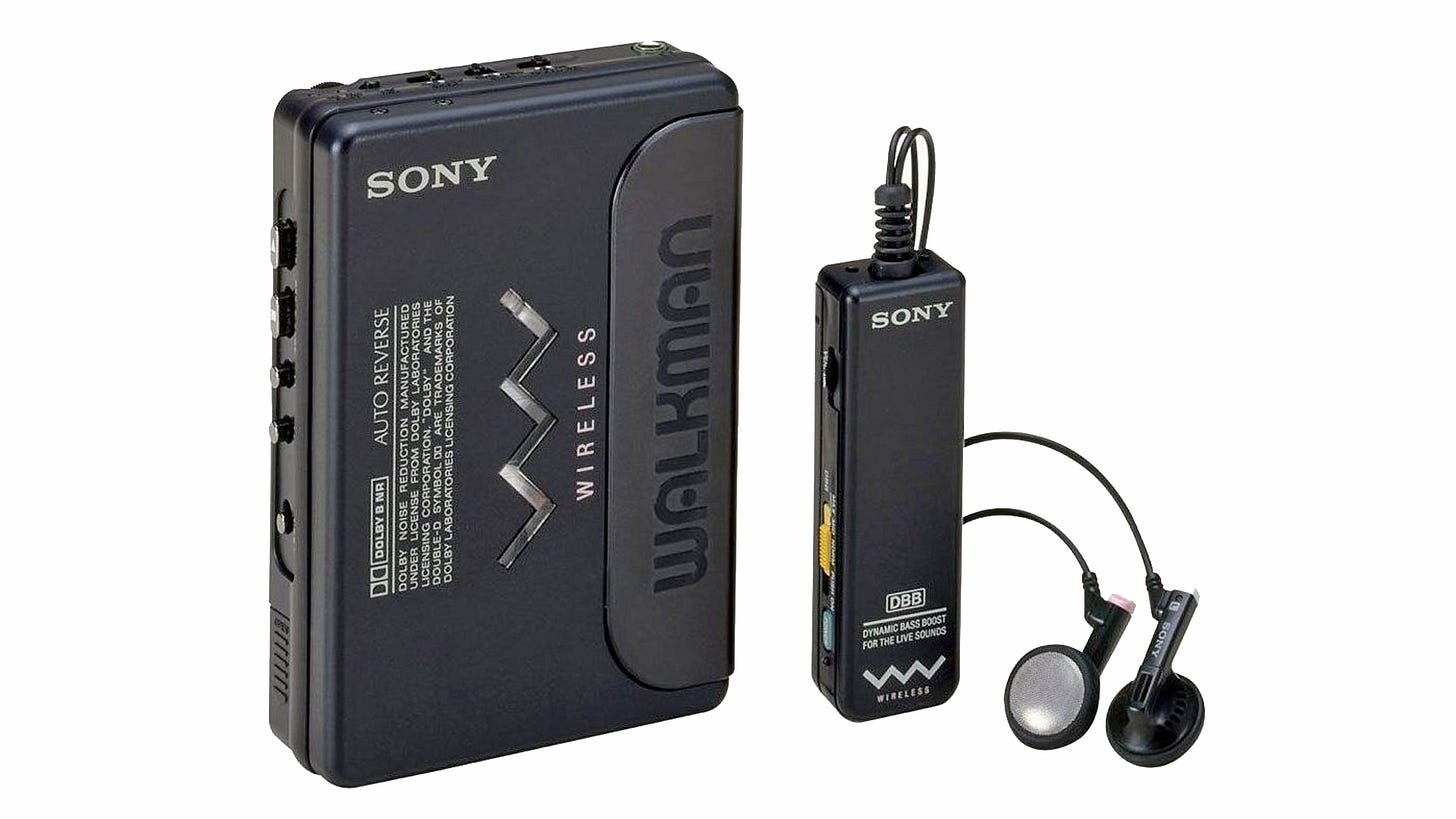
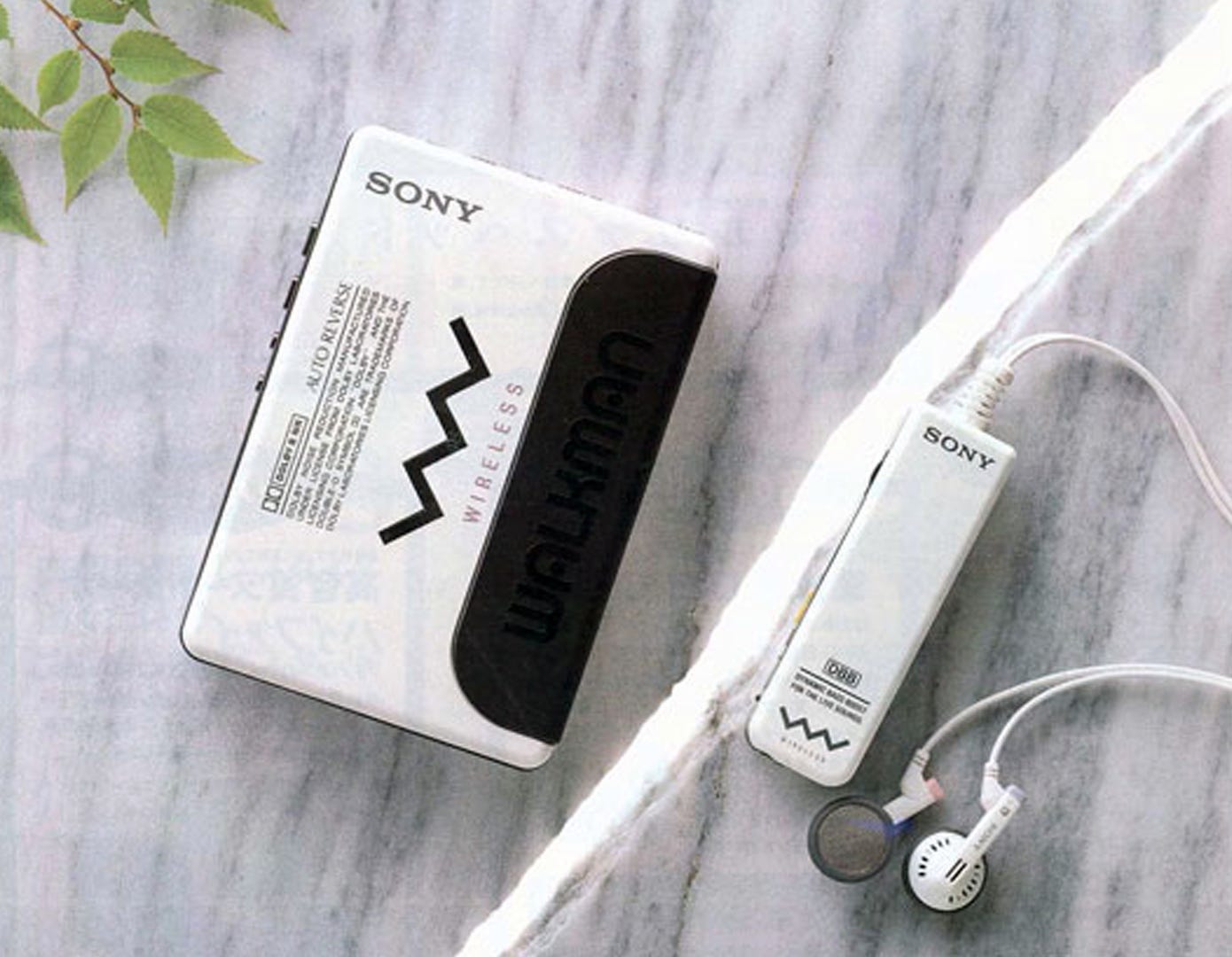
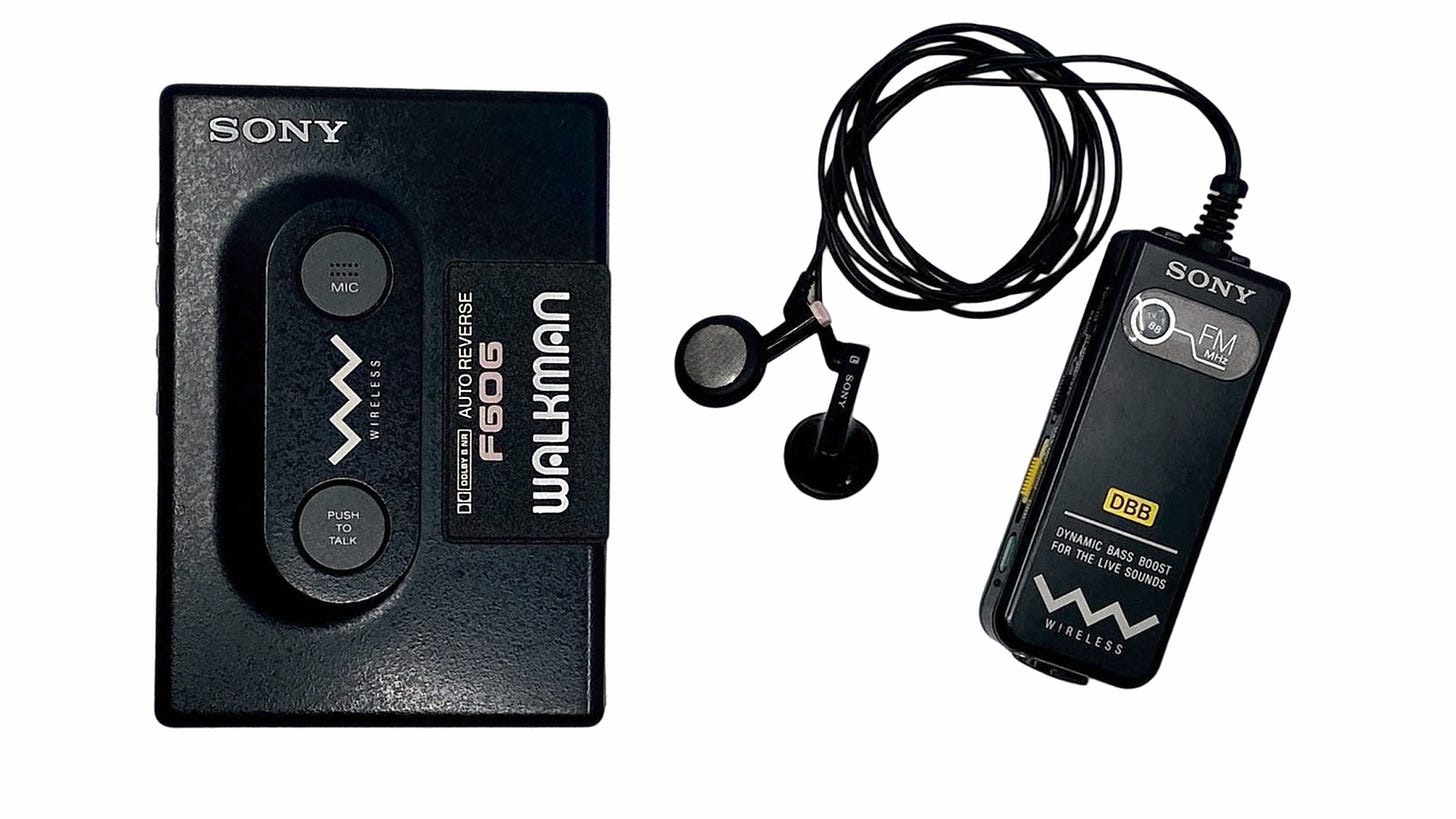
Sony spent more than a decade trying to remove one small but stubborn obstacle from portable music: the headphone cable on the Walkman.
For most Walkman owners the wire was simply part of the experience. It dangled from jacket pockets, snagged on door handles, and wrapped itself around the player every time the headphones were pulled out of a bag. Anyone who carried a Walkman regularly remembers that ritual of untangling the cord before pressing play.
The timing of these experiments was not accidental. By the late 1980s cassette Walkman sales had begun to slow as compact discs gained attention. Sony’s Discman represented the next generation of portable listening, but early CD players were still large, expensive, and prone to skipping during movement. Cassette players remained the practical choice for everyday portable music. Features like wireless listening helped Sony keep the cassette Walkman feeling modern while the CD format was still finding its place.
Between 1988 and 1999 Sony released a small group of Walkman models that tried to replace the headphone wire with a short-range radio link. Long before Bluetooth, the company experimented with wireless listening by embedding miniature RF transmitters inside cassette players and pairing them with dedicated wireless receivers or headphones.
The idea never became a major branch of the Walkman lineup, but Sony kept returning to it. What began as a technical curiosity gradually evolved into a small ecosystem of transmitters, receivers, and remote controls before quietly disappearing at the end of the 1990s.
Seen across the timeline, the wireless Walkman passed through three rough phases. The earliest models simply replaced the headphone cable. Early-1990s versions turned the receiver into a remote control interface. Later designs refined the system and packaged it as a complete cordless listening setup.
1988 WM-505: The First Wireless Walkman
The WM-505 introduced Sony’s wireless cassette concept in 1988. Insi…

 点赞
点赞 收藏
收藏 点踩
点踩 分享
分享