The OED on Wrong (Wrong 4)


The Oxford English Dictionary's definition of “wrong” occupies about five large-format pages covered with small print. It's about equally divided between the noun form (“Bob committed a great wrong”) and the adjectival or adverbial form (“you're doing it wrong” or “you're going the wrong way.”).
The mere fact of this word's odd spelling, beginning with a silent letter “w,” suggests that it has an old and interesting history. The OED definition confirms as much. The word found its way into English from Old Norse and related languages. Its most ancient root seems to be in a word describing something that is bent. It's a cousin of the word “awry,” meaning something that has gone astray. Another related word is “wring” meaning to twist something out of shape. Also related is “writhe.”
Other dictionaries tend to list the most commonly used definition first, but the OED is organized chronologically. It lists every definition that a word has ever had, beginning with the oldest. For each of these, it includes a quote from a document exemplifying this particular usage.
This feature makes it easy to see that this dichotomy in the meaning of “wrong” goes way back. People have been using it to mean a moral wrong since at least 1300, and a factual wrong since at least 1420. Though, when we reach that far back, the distinction between those two kinds of wrongness might become a bit hazy; separating moral from factual wrongs might be just a modern way of thinking.
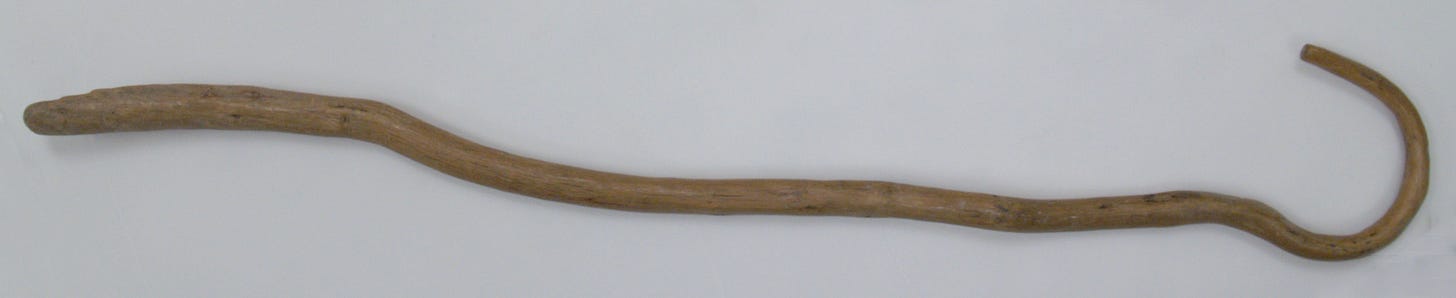
What these two definitions of wrongness have in common is the notion of being twisted, or bent. In its oldest form, the word was applied in a literal sense to physical objects, such as a piece of wood. For example, one old source describes a shepherd's crook as being “wrong at the end.” Meaning not that something was wrong with it in the modern sense---as a shepherd's crook, it was perfect---but merely that it was bent. Another source describes someone as having a wrong nose; perhaps it had been broken, and not heal…

 点赞
点赞 收藏
收藏 点踩
点踩 分享
分享