White House Official Says Moonshot Accessed Banned Nvidia Chips

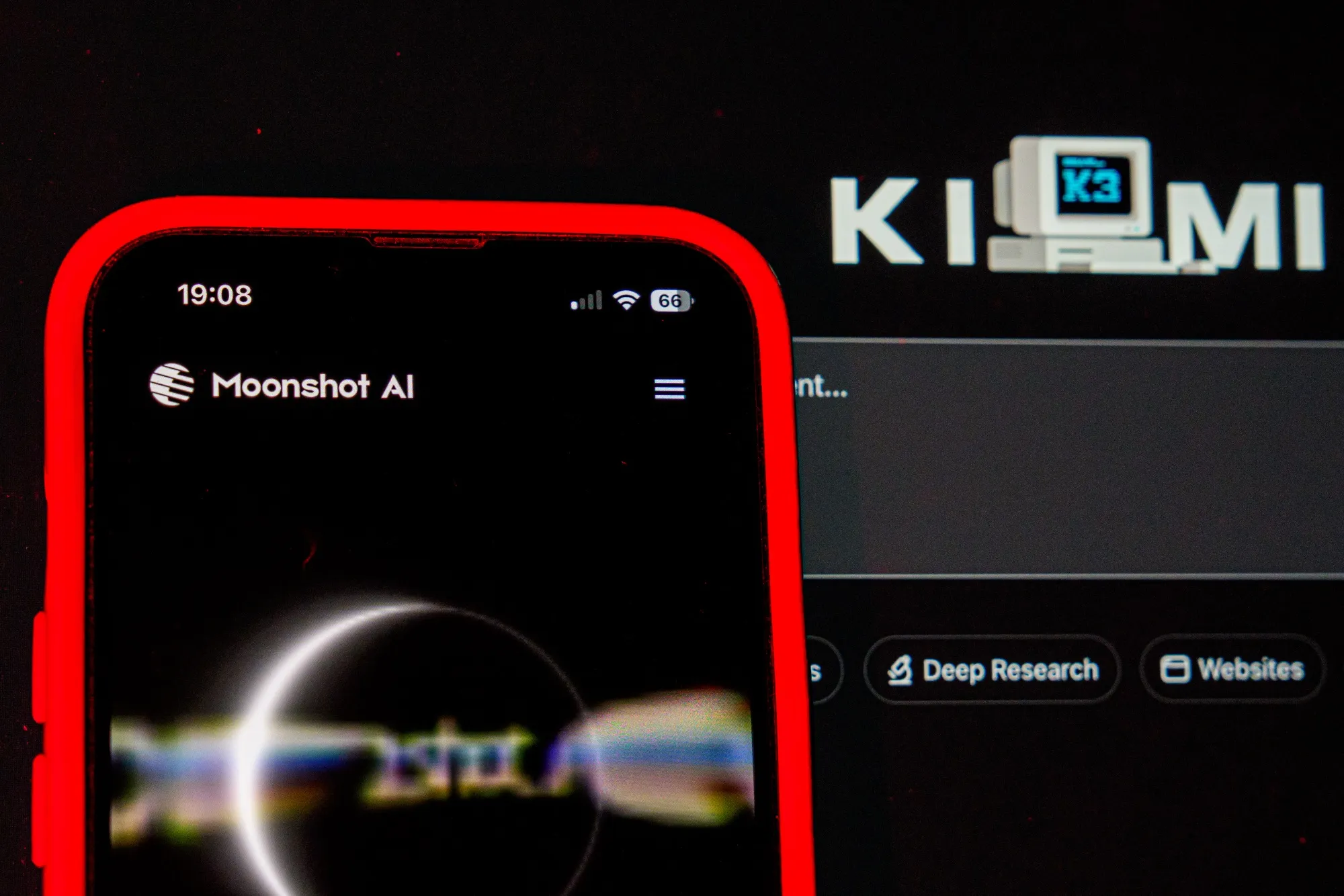
The Moonshot logo on a smartphone arranged in Hong Kong.
A White House official accused China’s Moonshot of improperly using US AI models and Nvidia Corp. chips to create the Kimi K3 system that stunned the tech industry last week with its advanced capabilities.
The company “acquired GB300-equipped servers and has accessed GB300s in Thailand, likely to train its AI models,” White House Office of Science and Technology Policy Director Michael Kratsios said in a social media post Wednesday, making the case that Moonshot violated US export control rules and companies’ terms of service to build its product.
The semiconductor servers Kratsios referenced are part of the Blackwell generation of Nvidia products, which the US forbids from sale to Chinese companies. Though the Trump administration has allowed some sales of Nvidia’s H200 chips, it continues to prevent sales of the more advanced Blackwells.
A May memo affirmed that the Bureau of Industry and Security, which is responsible for export controls on AI chips, restricts sale of advanced processors to Chinese companies outside of China. Trump officials are now looking into whether some companies took advantage of a loophole to ship advanced AI chips to subsidiaries of Chinese firms.
An Nvidia spokesperson earlier dismissed the idea of a loophole and said it has operated as though it does not exist. The company did not respond to a request for comment on the Kratsios post.
Moonshot’s K3 upended assumptions that Chinese AI capabilities were meaningfully behind US leaders such as OpenAI and Anthropic PBC. The Chinese lab said its open-weight model outperforms all rivals except for Anthropic’s Claude Fable 5 and OpenAI’s GPT-5.6 on overall capability, setting off a rout in tech stocks similar to DeepSeek’s impact last year.
Moonshot “developed a sophisticated internal platform to conduct large scale distillation against US models,” Kratsios said, referencing a technique in which AI researchers use the outputs of a so-called teacher model to train a student model and replicate some of its capabilities.
Treasury Secretary Scott Bessent on Tuesday voiced similar distillation concerns, though not specific to Moonshot, about open-source Chinese AI companies engaging in what he called intellectual property theft to create AI models.
“This administration supports open source models, but what we do not support is IP theft. If we see, especially, that overseas models are stealing from our great companies, we have the ability to sanction them,” Bessent said on Fox Business.
Read More: Bessent Says US to Scrutinize Chinese AI Models for IP Theft
Bessent’s comments echoed growing accusations from OpenAI and Anthropic that their Chinese rivals have made systematic and unauthorized use of results from leading US models to develop a rival generation of chatbots at a fraction of the cost. Anthropic has previously accused Mooonshot specifically of distilling its models. Moonshot has not responded to those allegations.
In April, the Trump administration vowed to take further steps to address the practice, known as adversarial distillation, including weighing steps to hold foreign actors accountable. Lawmakers in the House and the Senate have advanced legislation with similar aims of blacklisting or sanctioning Chinese firms found to be improperly distilling from US models.

 点赞
点赞 收藏
收藏 点踩
点踩 分享
分享