Delegated authority, running locally: Give an agent on your machine an identity you can trust


Part 3 of our agent-identity series: a reference architecture showing how a locally running AI agent, like the coding assistant in your editor or the copilot in your browser, can borrow a human's authority in a scoped, short-lived, auditable way, anchored in an app the user already trusts.
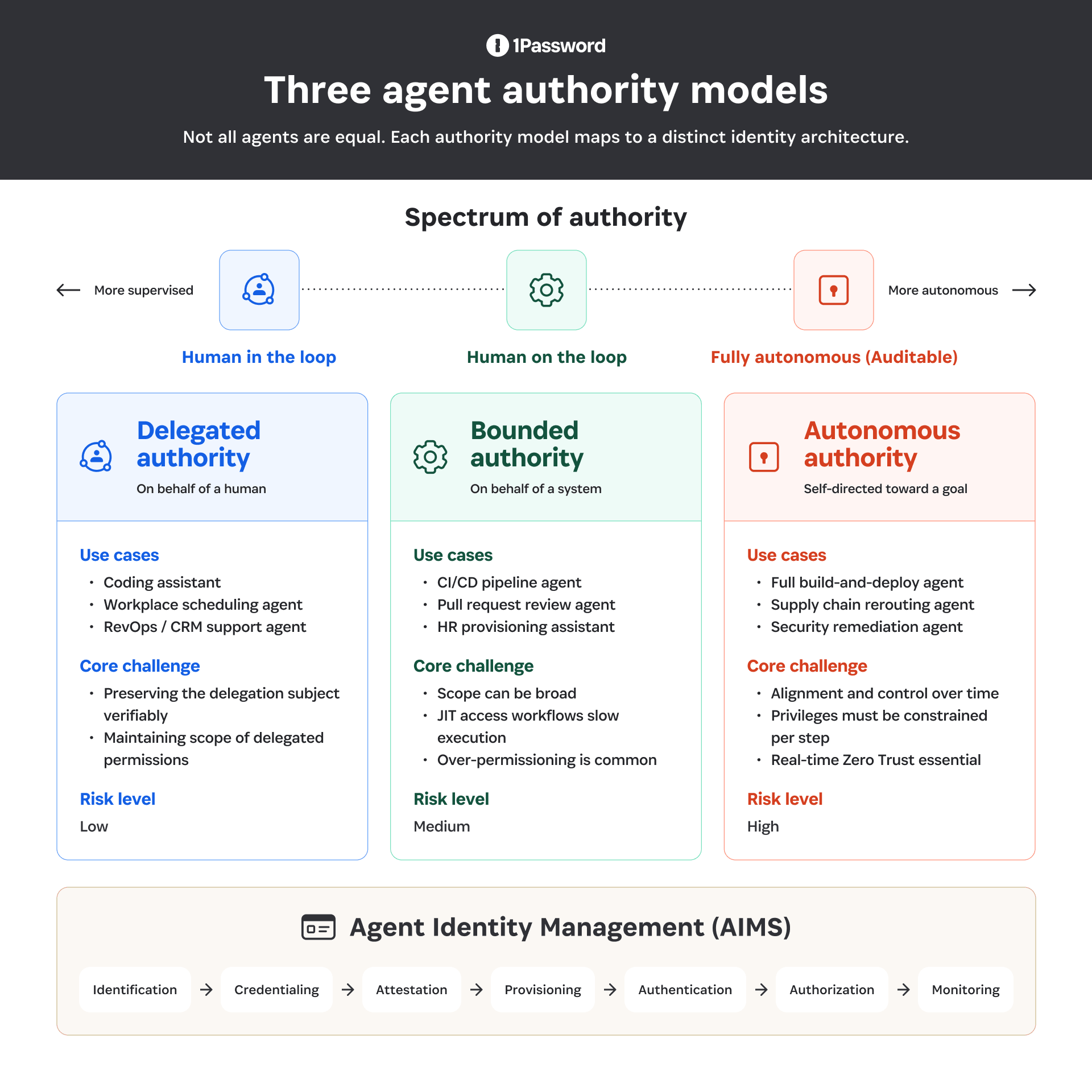
The second post in this series gave us a way to reason about agent identity: a 3x2 taxonomy along two axes.
The Authority Model describes the authority under which the agent operates: delegated (acting for a specific human), bounded (operating within a fixed grant), or autonomous (making unsupervised decisions across tasks).
Deployment refers to whether the agent deployed locally or remotely.
Each combination of authority model and deployment has its own set of requirements, worthy of a blog post describing the architecture.
This is the first of those deep dives, and it covers the most common cell: delegated authority, running locally. It's the pattern behind the IDE coding assistant, the browser copilot, and the desktop AI helper.
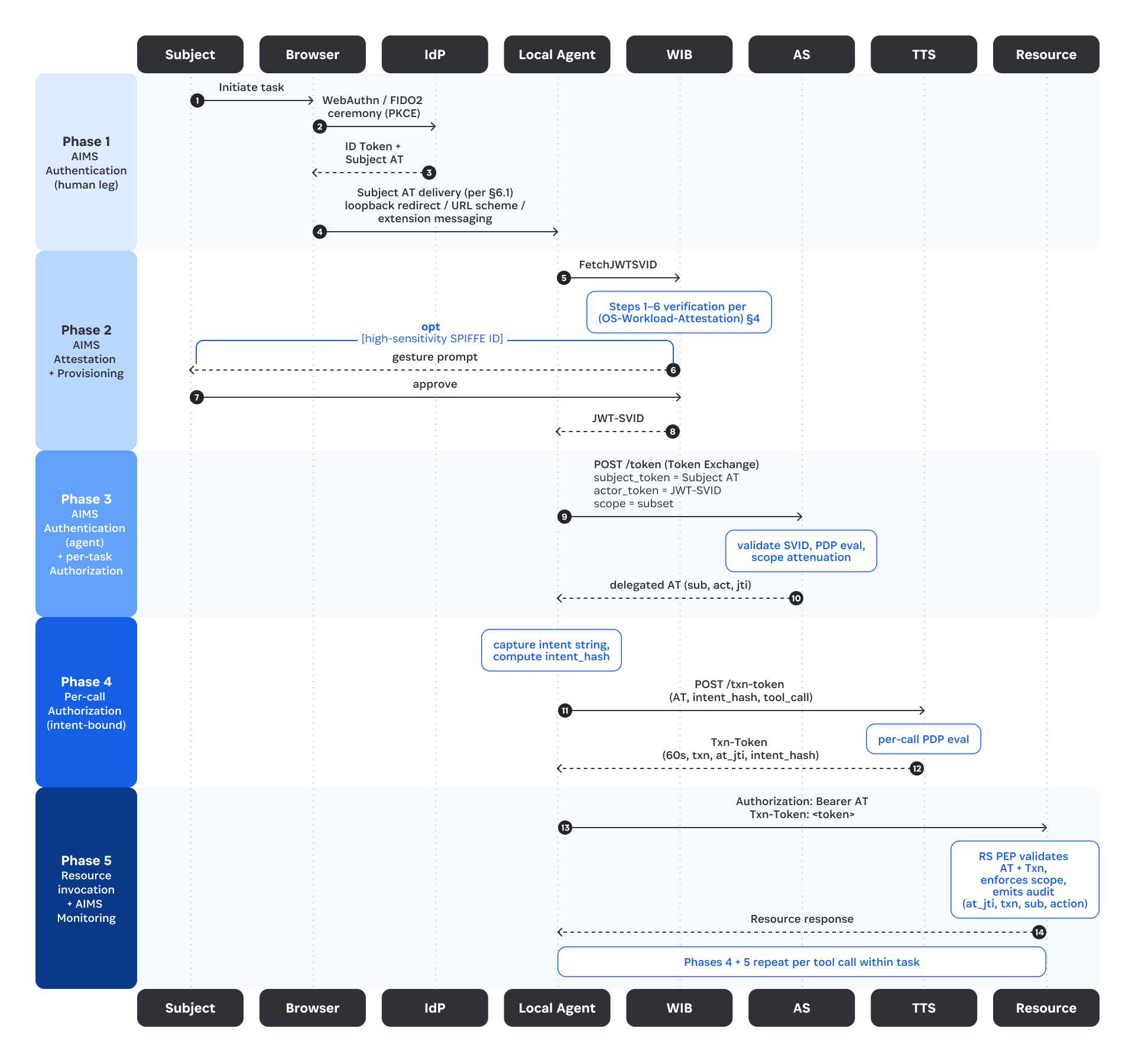
What follows is a reference architecture, not a new protocol. It defines no new tokens or wire formats. Its contribution is a coherent composition of existing and emerging open standards, plus a few constraints layered on top. It's also aspirational. This is the direction we believe the industry should move in, not a claim that anyone, including 1Password, has shipped it end-to-end.
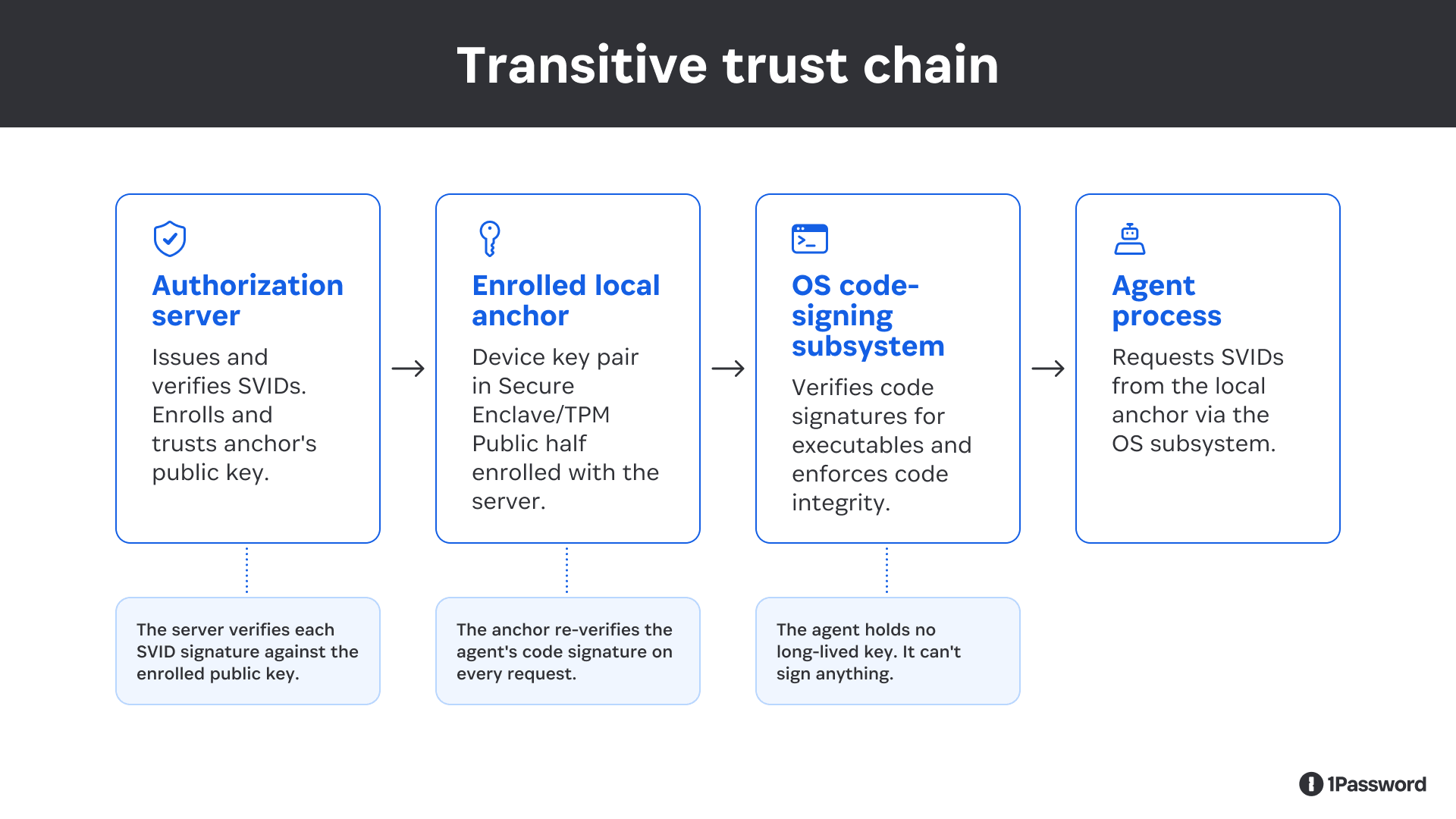
The architecture answers one narrow, hard question. How do you give an unattestable local process a trustworthy, scoped, short-lived, auditable identity without a long-lived agent key on disk?
And it has to do that while satisfying the three requirements the last post set out, which cut across every architecture in this series and don't relax just because the agent is convenient:
Eliminate long-lived credentials
Produce attribution-complete audit records, every action traceable to a specific human and reconstructable from logs alone
Maintain strict development/pr…

 点赞
点赞 收藏
收藏 点踩
点踩 分享
分享