Nvidia Touts Progress Getting New Rubin Design to Customers

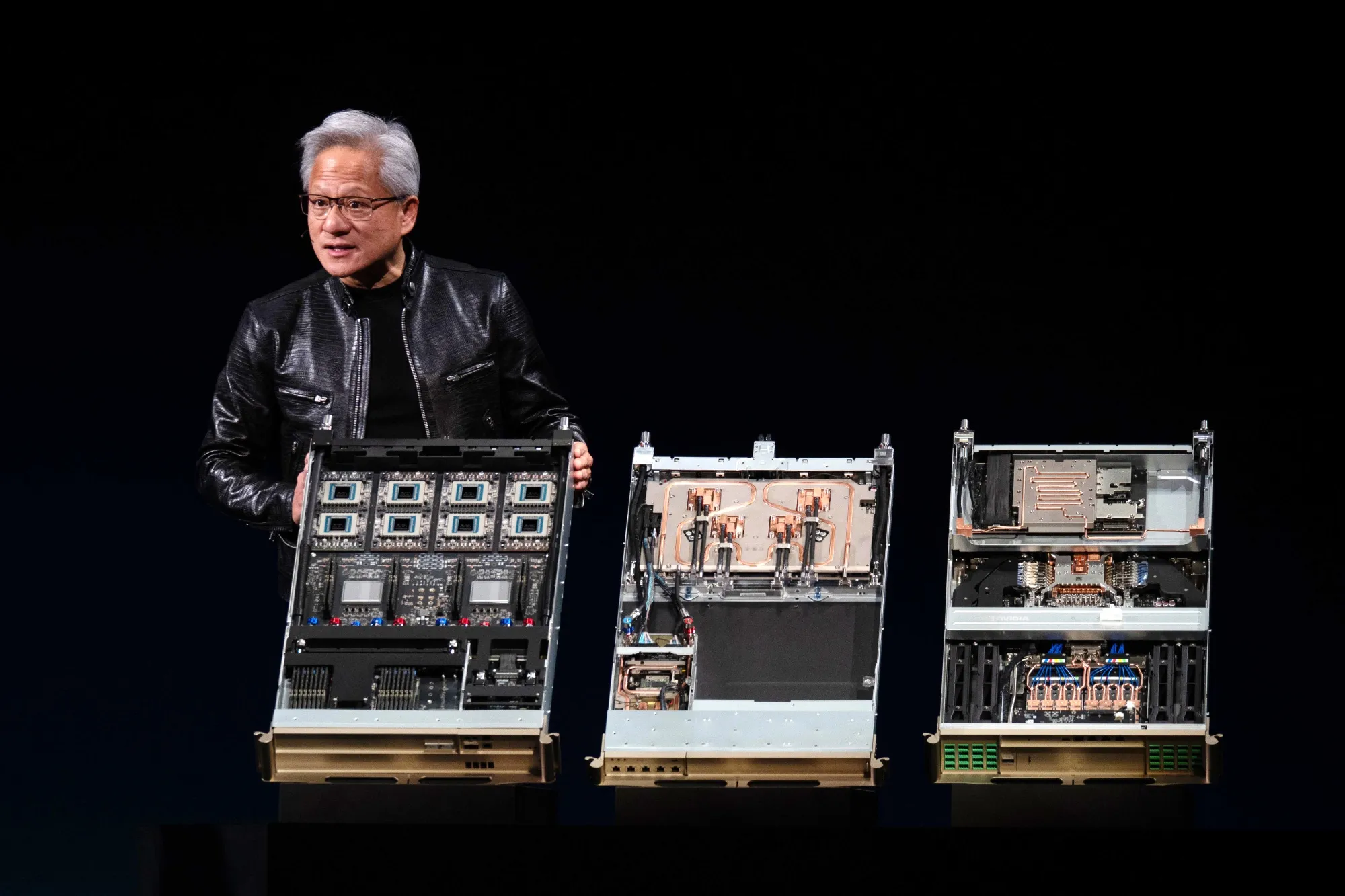
Nvidia CEO Jensen Huang presents the Vera Rubin data center AI system at the Nvidia GTC event on the sidelines of Computex 2026 in Taipei on June 1.
Nvidia Corp., the semiconductor company at the heart of the artificial intelligence boom, said its latest chip designs are making their way to customers and will help solidify the chipmaker’s leadership in the industry.
Computing systems based on new Vera Rubin technology have been delivered to major AI companies and are about to make their way into use, according to Ian Buck, an Nvidia vice president and general manager.
“We are absolutely in full production,” he said during a briefing at Nvidia headquarters. “It’s being stood up at all of our major customers.”
The Vera Rubin rollout has come under close scrutiny by investors and analysts, who are concerned about possible delays and manufacturing snags. Though Chief Executive Officer Jensen Huang has already pushed back on those fears, the company continues to face broader worries about the loss of its competitive edge.
In a year when the chip industry’s benchmark index is up by 66%, Nvidia has gained just 9%. Shares of Intel Corp., Arm Holdings Plc and Advanced Micro Devices Inc., meanwhile, have all more than doubled.
Nvidia remains the dominant provider of AI accelerators, the chips used by data centers to run artificial intelligence software. But rivals like AMD and Broadcom Inc. are jockeying for a bigger piece of the market. Data center customers such as Amazon.com Inc. also are working on in-house designs that could reduce their reliance on Nvidia.
Against that backdrop, Nvidia is under pressure to show that its latest products are on schedule and superior to the competition. During briefings at its headquarters in Santa Clara, California, the company stressed that its new equipment will be more powerful and easier to deploy.
OpenAI, the maker of ChatGPT, plans to adopt Vera Rubin “at scale” in the third quarter, Nvidia said. CoreWeave Inc., Alphabet Inc.’s Google Cloud, Microsoft Corp.’s Azure division, Meta Platforms Inc., Dell Technologies Inc. and others are all using Vera Rubin systems, the company said.
Despite investors’ downbeat view of Nvidia this year, its sales are poised to accelerate. Revenue is projected to increase 82% to $393.4 billion this fiscal year, up from a 65% pace, and total sales are expected to eclipse half a trillion dollars the following year.
The company is on course to account for about a third of the whole chip industry’s sales — all while remaining hugely profitable. Gross margin, which measures the percentage of sales after deducting production, is estimated to reach around 75% this year.
Nvidia is rolling out a range of new technologies — some prosaic and some groundbreaking — to improve the performance of products, executives said.
With previous generations, computer trays that house key components, such as AI accelerators, central processing units and networking, were assembled by hand. That included the onerous task of plugging in numerous cables. The work took a long time and resulted in a high rate of failures, particularly during the period when factories were training workers on a new design.
Internal cabling has largely been eliminated with the new design. Connections happen via circuit boards or specially designed links. That means something that took a human hours to complete can now be done by a robot in minutes, with a much lower failure rate, Nvidia said.
The upgrade was made possible in part by liquid cooling of all the major components. That eliminates the need for fans and the extra space required for cool air to flow through the computer.
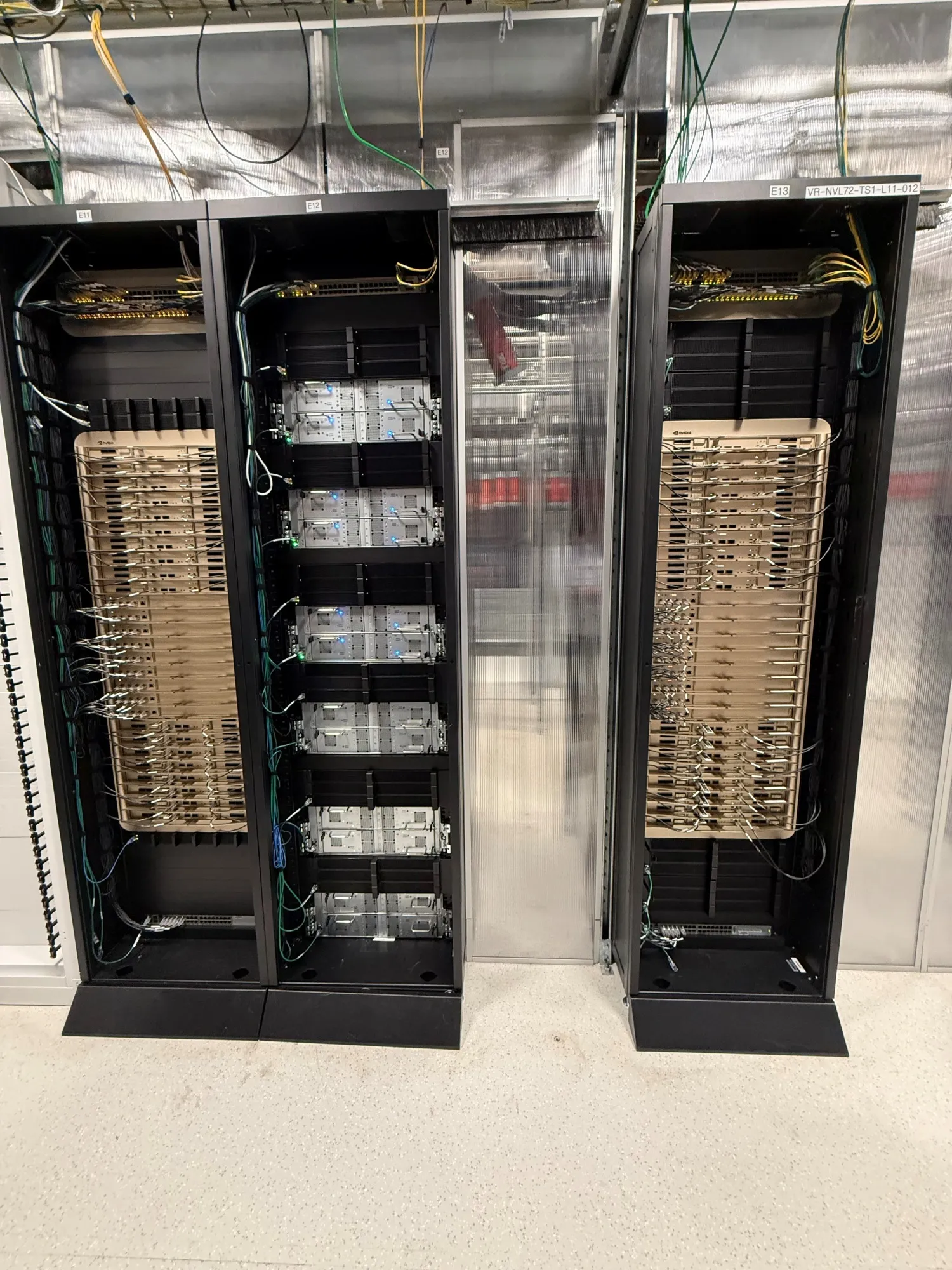
A new full rack of Nvidia AI accelerators, called NVL72, will deliver 10 times as many tokens – the basic unit of AI computing – as the previous generation. That performance was measured by data center operator CoreWeave, the company said.
During the briefings, Nvidia took the unusual step of showing direct comparisons with what competitors are delivering. Its new Vera microprocessor is as much as 1.8 times faster than AMD’s Turin design when it comes to running Python programming language code, the company said. Early adopters of that new product include OpenAI and Anthropic PBC.
“A new design would compare much more favorably,” AMD said in an emailed response. AMD is holding an event in San Francisco later this week to launch its new Venice server design.
Nvidia has built a network of sites near its Silicon Valley headquarters to rapidly prototype and test everything that needs to go into an AI data center. That includes facilities where customers can try out software and services on new hardware before taking delivery of the equipment.
On a tour of a small data center built for this purpose, located in a residential part of Sunnyvale, California, Nvidia engineers pointed to a rack of Vera Rubin servers being tested by OpenAI. The message: The latest Nvidia gear is here and ready to handle the world’s most critical AI tasks.

 点赞
点赞 收藏
收藏 点踩
点踩 分享
分享