What Do You Have to Hide?

Welcome back to The Honest Broker interview series —also available on our YouTube channel. You can also find it on Apple Podcasts and other podcasting platforms.
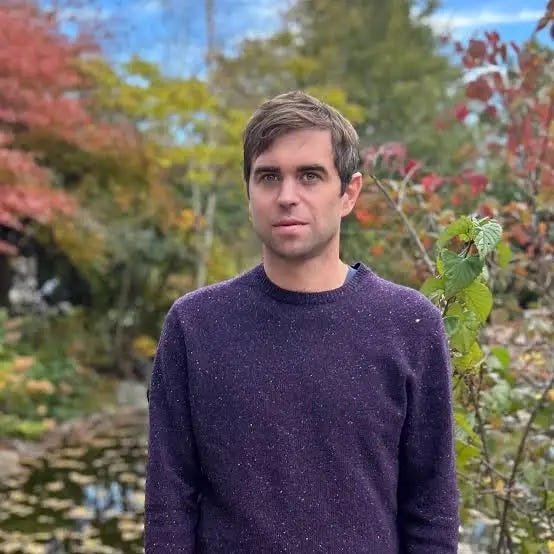
Today, I’m pleased to share my conversation with Lowry Pressly.
Please support The Honest Broker by taking out a premium subscription (just $6 per month).Subscribe now
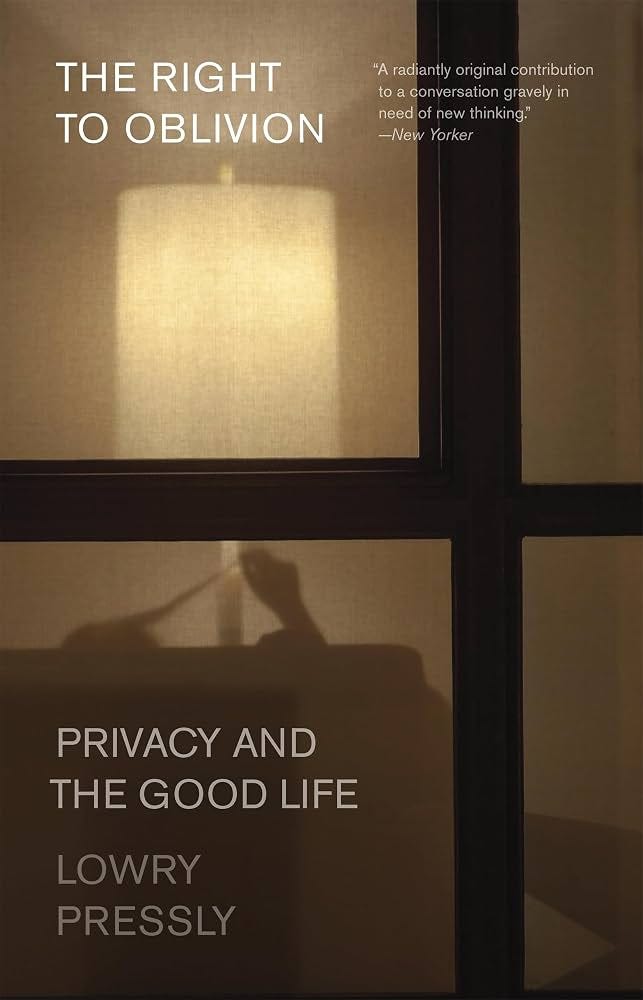
Lowry Pressly is Assistant Professor of Political Science at Stanford University. He holds a PhD from Harvard University and a JD from Yale Law School. He is the author of The Right to Oblivion: Privacy and the Good Life, which was named by The New Yorker as one of the best new books of 2024.
I invited Lowry to join me in Austin, and we sat down to have a conversation about data, surveillance, and the role of privacy in a flourishing human life.
Below are highlights from our conversation. For the full dialogue, check out the video at the top of the page.
A CONVERSATION WITH LOWRY PRESSLY
Jared: When most people think about privacy, it’s purely in terms of apps and websites and tech companies. We even have this nomenclature of privacy settings—how private a person you are is almost measurable by how many of those features you turn on. Is that too narrow an understanding?
Lowry: Without a doubt. The idea of privacy as something important to human beings as such doesn’t emerge in the public consciousness until the middle of the nineteenth century, as a reaction primarily to the photograph camera and the first mass media. The danger today is thinking of privacy through the lens of privacy settings. One, it gives us the wrong idea of what privacy is—deciding the audiences for your information is better described as confidentiality or secrecy. Two, and this is the dangerous one: the camera and the newspaper weren’t part of an economic system whose profit motive was tied to the diminution of privacy.
When we use the technologies of the data economy to think about privacy, we take for granted that what Mark Zuckerberg calls privacy settin…

 点赞
点赞 收藏
收藏 点踩
点踩 分享
分享