Scientists may have found the 1st twin star system where both stars exploded

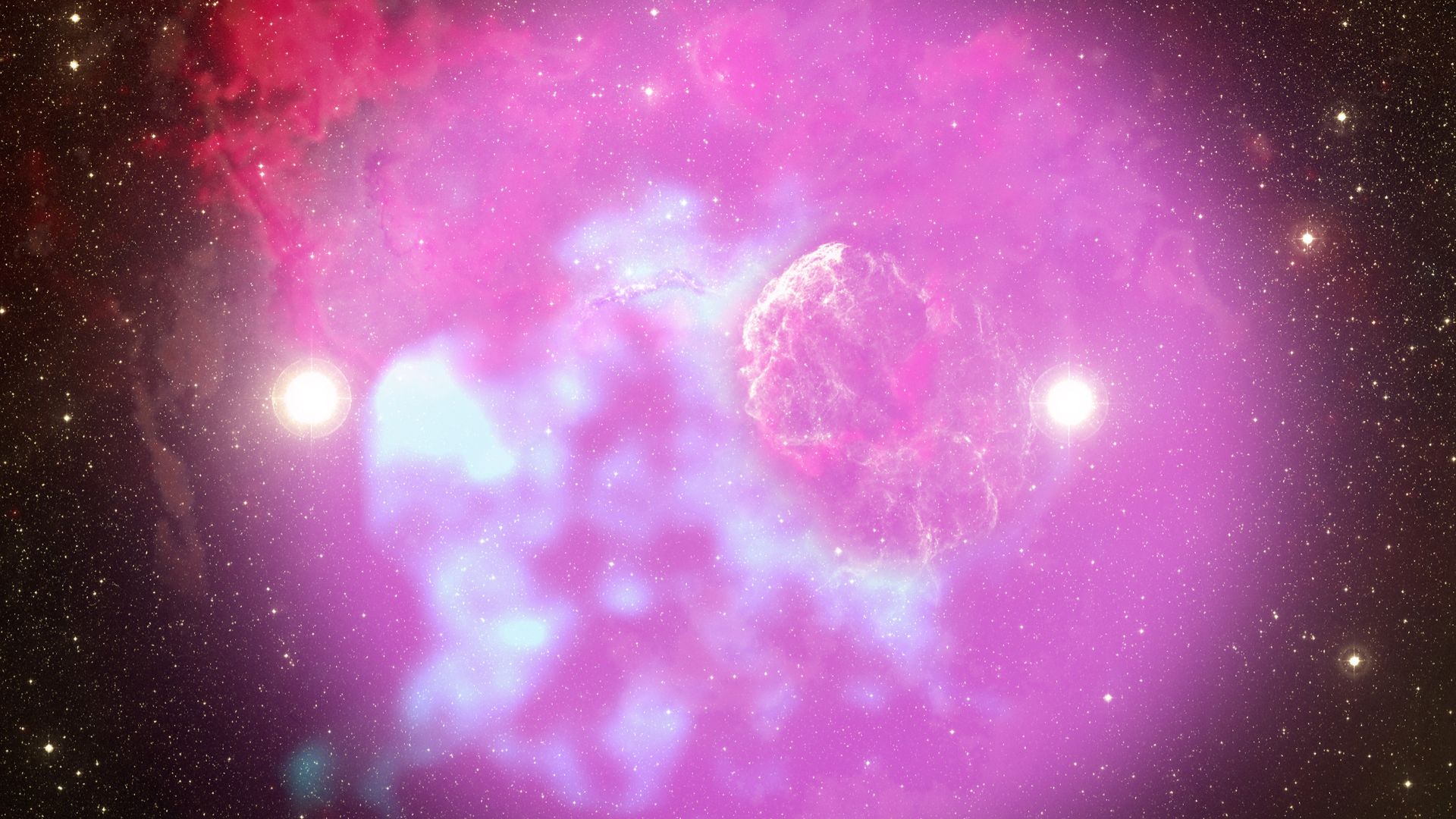
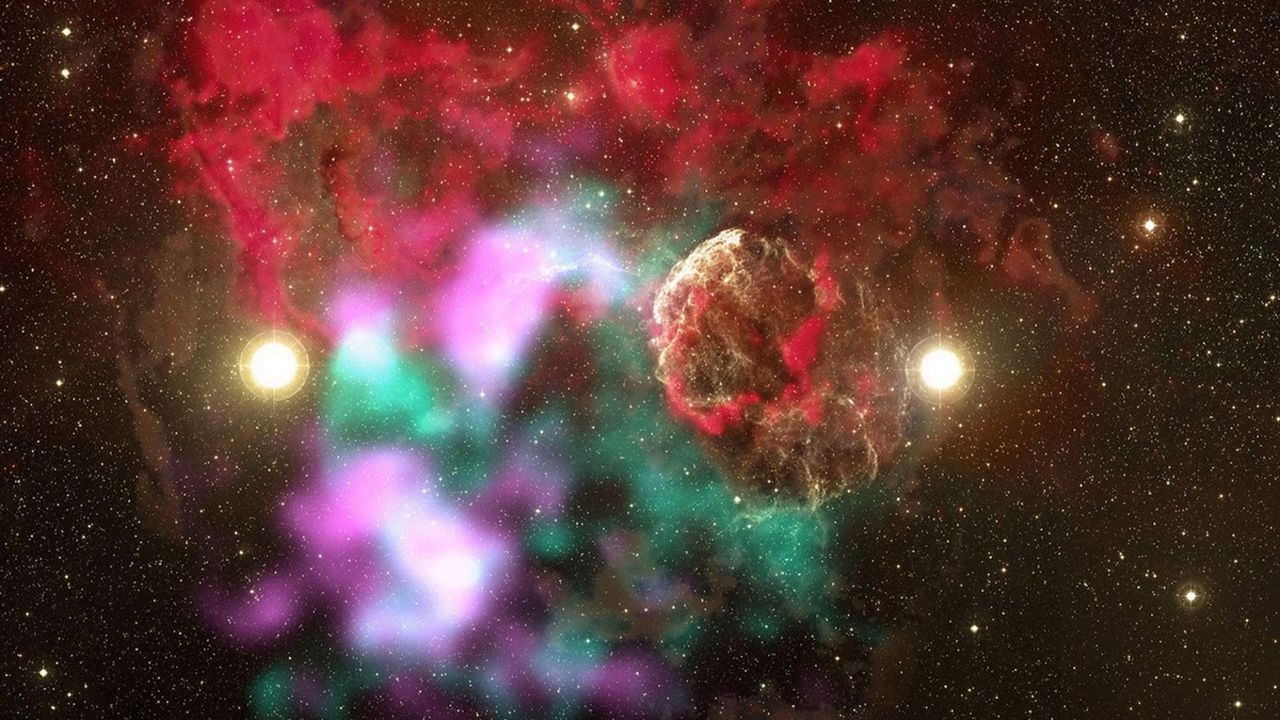
For the first time, scientists may have discovered a binary system—like the twin suns of the fictional planet Tatooine in "Star Wars"—where both stars exploded as supernovas, a new study finds.
Although Earth may orbit around a single star, more than half of all stars are in systems where two or more suns orbit each other. "When it comes to massive stars, the percentage in multiple systems are even higher," study lead author Miltiadis Michailidis, a postdoctoral fellow at Stanford University in California, told Space.com.
When massive stars burn all their fuel, they can die in giant explosions known as supernovas. These outbursts can briefly outshine all of the other suns in these stars' galaxies. They often leave behind expanding super-hot clouds of debris known as supernova remnants. Astronomers have detected about 300 such remnants in our galaxy to date.
Given how often massive stars are found in binary systems, "one can expect many pairs of massive stars where both will explode as supernovas," Michailidis noted. "However, this has never been observed, until now."
One reason supernova pairs may have escaped attention is that "if the stars are too close together when they exploded, the resulting supernova remnants may look like that from a single explosion," Michailidis explained. Another is that one star going supernova may propel its partner far enough away to hide the fact they were ever a duo, he added.
In the new study, Michailidis and his colleagues investigated a supernova remnant known as IC 443, located about 6,000 light-years from Earth in the constellation Gemini. IC 443 is also known as the Jellyfish Nebula for how it resembles a jellyfish.
IC 443 is one of the most extensively studied supernova remnants in the galaxy because of how shock waves from the supernova have collided with surrounding clouds of gas and dust to create a set of concentric bubble shells, "much like how a drop of water falling on a lake creates circular waves," Michailidis…

 点赞
点赞 收藏
收藏 点踩
点踩 分享
分享