Radiometry, part 1: I got it backwards
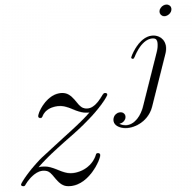
Radiometric quantities are crucial for physically-based rendering. These physical quantities enable us to formulate how much light there is in a scene, where it is and which way it is going. In the end, rendering is all about figuring out what light reaches a camera and how. Without radiometry, there is no way to formalize this problem. For example, the rendering equation, which is the backbone of modern rendering, is formulated in terms of radiance (a radiometric quantity). When you write a path tracer, there are two common sources of errors that result in bias. One is an insufficient understanding of Monte Carlo integration and probability theory when it comes to advanced importance sampling strategies. The other is that you are not even trying to compute the right integral because of a flawed understanding of radiometry. There is a common way to explain radiometry by arguing in terms of differential quantities and limits. I always found that a bit confusing. Thus, we take a completely different route here. We start with the most important quantity for rendering, radiance, and use integrals to work our way towards all the other quantities.

 点赞
点赞 收藏
收藏 点踩
点踩 分享
分享