Engineered Microbes, Seen from the Sky

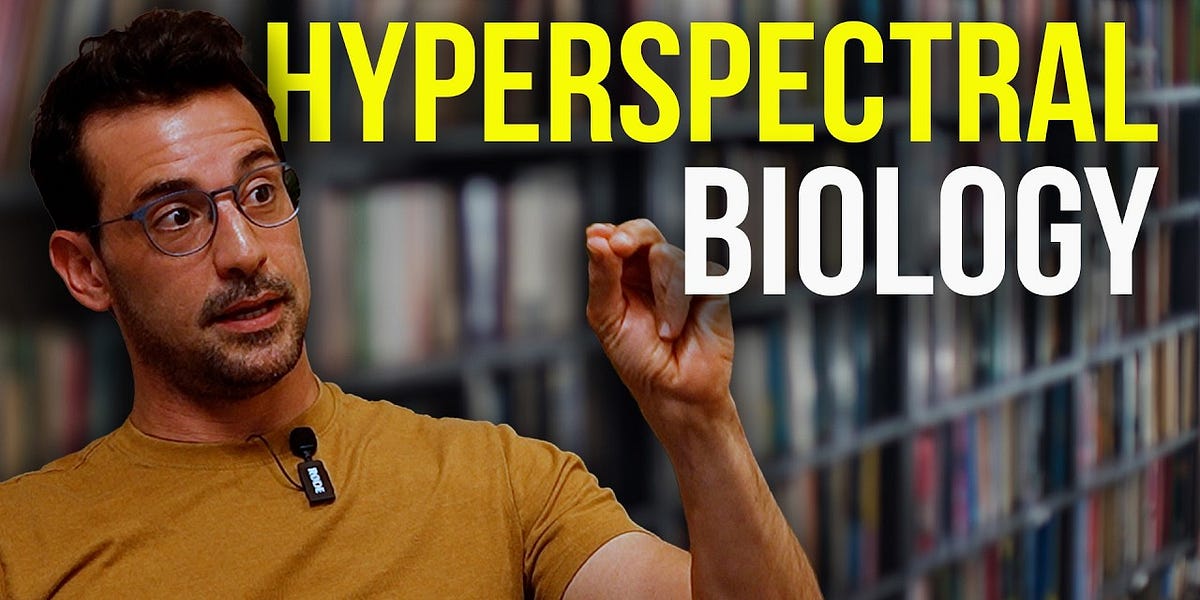
Scientists have studied bacteria under microscopes for 400 years. But Yonatan Chemla, a postdoctoral fellow at MIT, has developed a technology that lets us see microbes from a drone 100 meters in the air.
In this episode, we discuss the emerging field of "hyperspectral biology," which uses hyperspectral cameras (first built by NASA in the 1980s) to detect molecules with unique light-absorption signatures. With this technology, you could engineer a microbe to sense a landmine, for example, and release a pigment in response. A drone could then spot that pigment from hundreds of meters away, thus identifying the locations of the landmines.
By spraying other types of engineered microbes over a field, they could similarly map heavy metals, report on soil health, or find gold deposits. But almost none of this can happen in the United States.
The EPA regulates engineered microbes as chemicals under the Toxic Substances Control Act, a 1976 law that never mentions biology, and the agency seems to have approved just one product through it. As a result, many of biotechnology's most useful ideas — microbes that break down plastic, sense landmines, or remove pollution from water — never leave the laboratory.
This episode is much more casual than other podcasts I've recorded. We talked for many hours, into the early morning, and so I feel like my lines of questioning are not as good as they could've been. The video quality is also not great; sorry!
Watch on YouTube:
Chapters:00:00:00 Introduction00:04:08 Applications for hyperspectral biology00:07:33 How to build a biosensor00:13:00 Molecular absorption data00:22:12 How hyperspectral cameras work00:38:15 Spatial resolution and satellite monitoring00:51:04 Regulations around environmental release01:08:44 Risk vs progress
Further Reading:
Summary of the Toxic Substances Control Act, EPA: epa.gov/laws-regulations/summary-toxic-substances-control-act
Design and regulation of engineered bacteria for envir…

 点赞
点赞 收藏
收藏 点踩
点踩 分享
分享