TSMC’s $265 Billion US Spending Driven by Demand and Rivals, CFO Says

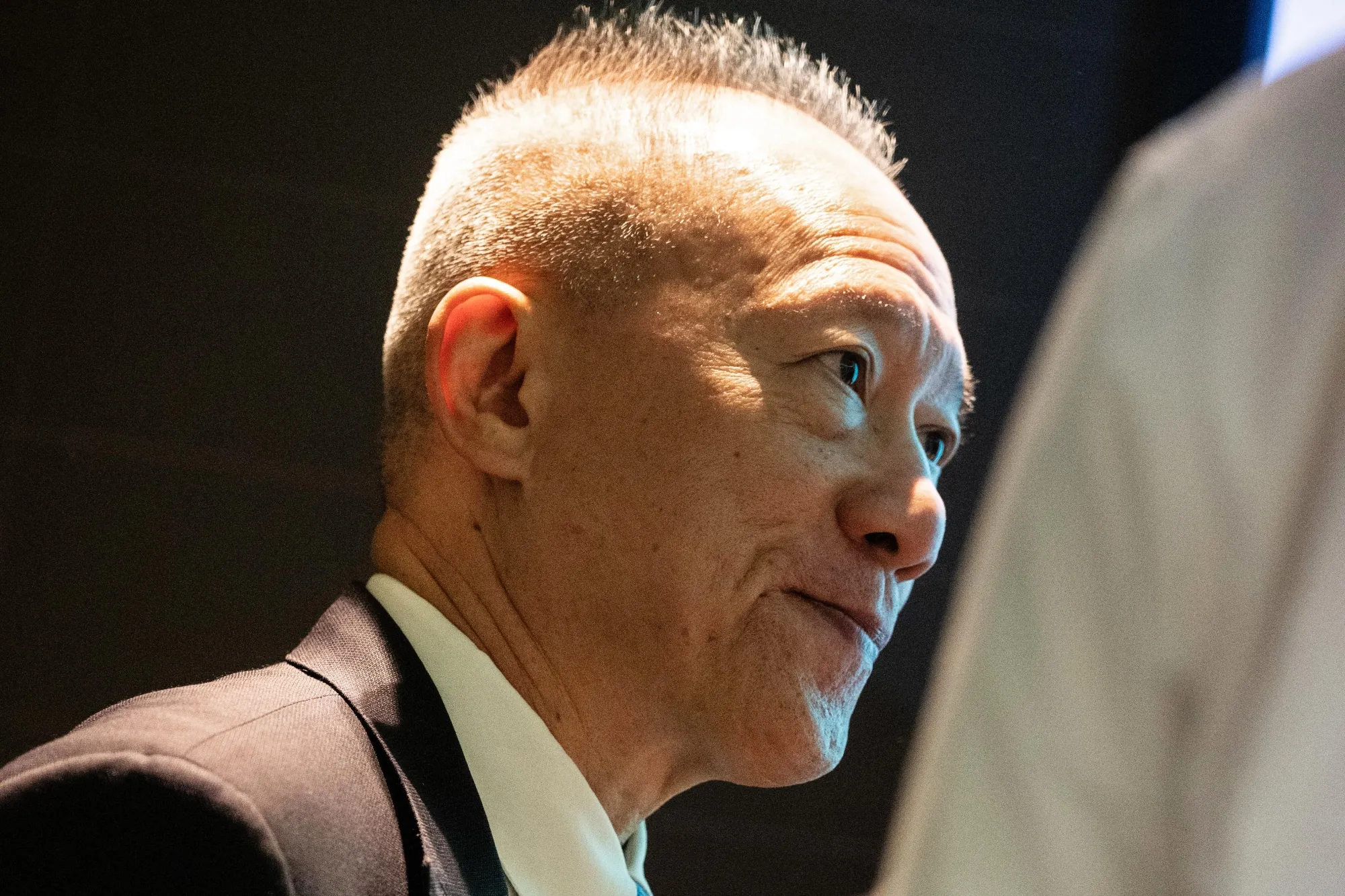
Wendell Huang
Taiwan Semiconductor Manufacturing Co. is adding $100 billion to its investments in Arizona to meet strong demand from US customers and to ward off ambitious rivals, a senior executive said this week.
The company, fresh off reporting expectation-beating sales and profit for the June quarter and increasing its growth forecasts, still sees challenges in fulfilling all customer orders. The artificial intelligence megatrend, as TSMC has taken to calling it, is going to drive growth for the company through at least the next few years.
“We are doing everything we can, wherever we can, to expand to support the customers’ growth,” Chief Financial Officer Wendell Huang said in an interview on Friday.
The company faces growing competition from Intel Corp. and Elon Musk’s Terafab. To that Huang added that TSMC wants to “also demonstrate that we do not intend to leave any food on the table to anybody else.”
The main chipmaker for Nvidia Corp. and Apple Inc. confirmed the additional investment during its earnings conference on Thursday, after Bloomberg News reported that the company’s increasing its total commitment in the US to $265 billion as part of a larger trade deal between Washington and Taipei.
Huang said the sheer amount makes it the largest-ever foreign direct investment in the US, adding that the schedule for the completion of the total commitment will depend on the market. TSMC, which already has one chipmaking fab operational, has two more coming online by the end of this decade and will now add more facilities to its Arizona campus.
On Thursday, Chief Executive Officer C.C. Wei said the additional $100 billion will probably lead to four more plants. That potentially will bring TSMC’s presence in Arizona to eventually include 10 chip fabrication plants and two packaging facilities.
Over the last several years, policymakers in Washington have grown increasingly concerned that the bulk of cutting-edge semiconductors — the most coveted resource in a tech-powered global economy — are produced in Taiwan: an earthquake-prone, self-governing island that China has claimed as its own and threatened to take by force.
Geopolitical considerations and a strategic decision to be closer to key AI customers in the US have also driven TSMC to steadily boost its investment plans. The four biggest US AI operators and developers, from Meta Platforms Inc. to Alphabet Inc., are expected to spend upwards of $725 billion on hardware this year alone. North American customers, including Nvidia and its peer Advanced Micro Devices Inc., accounted for 78% of the Taiwanese company’s overall revenue in the past quarter.
Read More: TSMC Hikes Sales, Spending Outlook to Catch AI ‘Megatrend’
TSMC is not the only chipmaker working to be closer to its major customers. Idaho-based memory designer Micron Technology Inc., which competes with South Korea’s Samsung Electronics Co. and SK Hynix Inc. for orders from Nvidia and others, is spending a total of $250 billion to grow capacity at home.
Intel, an Nvidia neighbor in Santa Clara, California, is also pushing to secure customers looking for advanced fabrication of AI accelerators and other processing semiconductors. It’s a pronounced change in strategy after the US chipmaking pioneer spent much of its history developing and marketing chips under its own brand.
Elsewhere, Tesla Inc. and SpaceX chief Elon Musk is starting his own semiconductor manufacturing venture, citing insufficient capacity from TSMC — which has acknowledged that it cannot meet all AI-fueled demand for years to come. The Asian company increased its capital expenditure plan for this year to at least $60 billion.
“TSMC’s capex acceleration began in 2025, one and a half to two years after the AI cycle took off, implying share loss or demand overflow to competitors,” GF Securities analysts Jeff Pu and Henry Huang said in a post-earnings note, downgrading the chipmaker as they don’t see TSMC’s margins expanding in coming quarters as the company resists aggressive pricing. Following TSMC earnings, there was a global selloff in technology stocks due to persistent and growing concerns over whether hefty AI spending can lead to meaningful returns.
TSMC’s Huang reiterated on Friday that while the company is expanding in the US, it will still ramp up the latest technology in Taiwan first, as developing next-generation chips requires close collaboration between the research and development teams and factories.
The CFO also upheld the company’s previous statement that it will not use ASML Holding NV’s most cutting-edge extreme ultraviolet lithography systems — which cost upwards of €350 million ($400 million) apiece — just yet, partly due to cost concerns.

 点赞
点赞 收藏
收藏 点踩
点踩 分享
分享