AI Pioneer Kai-Fu Lee’s Startup Targets Hong Kong IPO Next Year

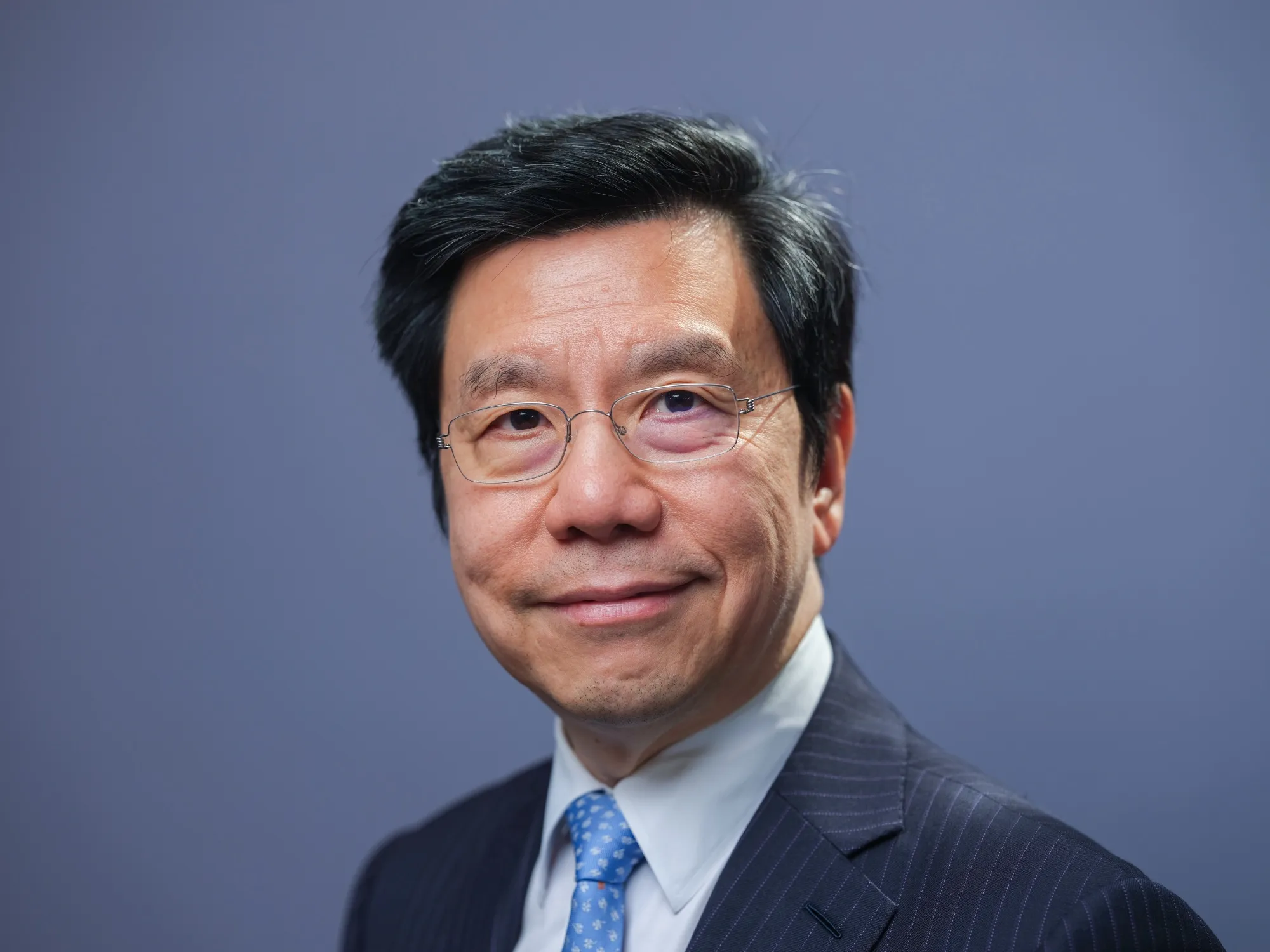
Kai-Fu Lee
01.ai, the Chinese AI startup founded by computer scientist Kai-Fu Lee, is pushing ahead with plans to raise funds before an initial public offering in 2027.
The Beijing-headquartered company is seeking to raise capital in a pre-IPO financing round before pursuing a listing on Hong Kong’s stock exchange. Lee, who headed Google’s Chinese operation before becoming an entrepreneur and investor, aims to conclude that funding around the time 01.ai unveils annual results for the first time. He didn’t elaborate on targets or potential investors.
Lee’s company joins a roster of AI labs including Kimi K3-developer Moonshot seeking to raise capital on the city’s bourse, to bankroll research and the costly infrastructure needed to support artificial intelligence services. 01.ai is in the process of unwinding its offshore holding structure, a prerequisite for a smoother overseas listing, he said.
“We’re aiming for 2027, after the fiscal year-end,” Lee told Bloomberg News on the sidelines of the World AI Conference in Shanghai, China’s highest-profile tech summit. The company’s fiscal year closes in December.
Read More: Moonshot Plans IPO in Six Months After China AI Breakthrough
Lee has spent the past year or two pivoting his business, in a bruising strategic reset. He established 01.ai in 2023 to build AI models and took it to a valuation of more than $1 billion with funding from investors including Alibaba Group Holding Ltd.’s cloud unit. But the startup no longer positions itself as a maker of frontier large language models, a race it effectively conceded after DeepSeek’s open-weight releases upended the economics of training AI models.
As one of the country’s half-dozen so-called “AI Tigers,” 01.ai faced a broader reckoning when investors pushed model developers to show they can turn research into revenue. Of the group, Z.AI (which often goes by the name Zhipu) and MiniMax Group Inc. listed on the Hong Kong exchange this year, while rivals StepFun, DeepSeek and Moonshot are preparing their own debuts.
Only a handful of companies with essentially bottomless balance sheets could still justify the cost of building models from scratch. Everyone else needed a new business model, said Lee, who also worked at Microsoft Corp. and Apple Inc., then set up Sinovation Ventures before turning entrepreneur.
Read More: AI Pioneer Sees Handful of Models Surviving US, China Shakeout
Lee’s own answer to the revenue dilemma has been to pivot 01.ai toward enterprise AI infrastructure, knitting together the disconnected, often chaotic pools of data sitting inside large organizations so that executives can query and visualize them instantly. Lee calls the product “Boss AI,” describing 01.ai as the “Palantir of China.”
The business reset has meant that 01.ai doesn’t build its own foundation models so much as fine-tune or customize existing Chinese open-weight models — such as DeepSeek, Alibaba’s Qwen or Z.AI’s GLM — and wrap them in software that organizes a client’s data before layering AI agents on top.
01.ai’s product typically deploys on a customer’s servers rather than in the cloud. Enterprise buyers, Lee said, increasingly insist on keeping sensitive data in-house, even when that makes the underlying economics messier than running everything through a large cloud services provider.
The reoriented strategy appears to be paying off commercially. Roughly half of 01.AI’s business now comes from outside China, spanning parts of Asia as well as Europe and South America, Lee said.
He ruled out any push into the US market, saying buyers there remain wary of Chinese software. The company remains lean by industry standards, with about 240 employees.

 点赞
点赞 收藏
收藏 点踩
点踩 分享
分享