Notable links: July 17, 2026

Most Fridays, I share a handful of pieces that caught my eye at the intersection of technology, media, and society.
Did someone forward this to you? Subscribe for free.Mamdani invests in tech capacity to “solve real problems”
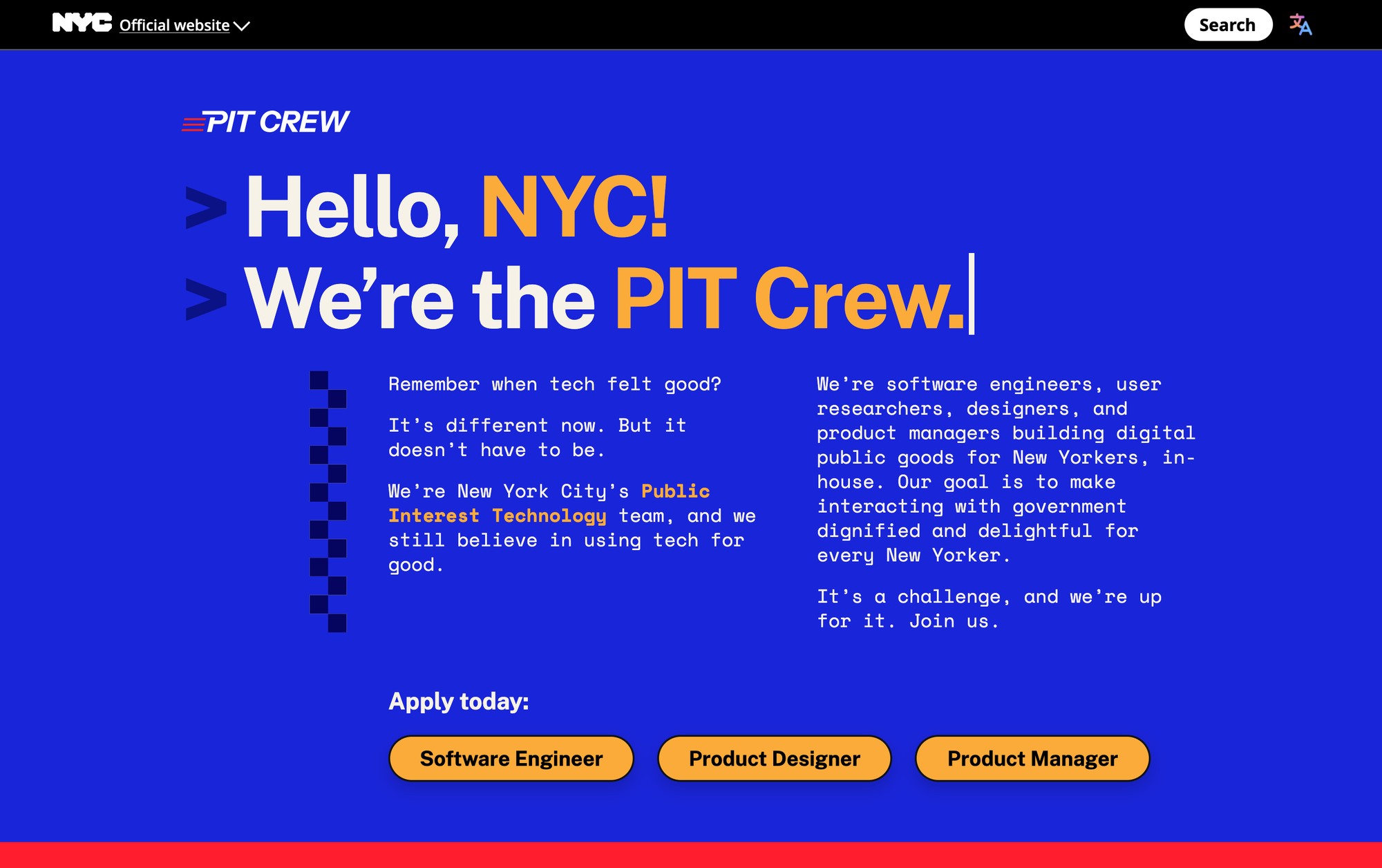
There’s a lot that newsrooms can learn from Zohran Mamdani’s mayoral administration in New York City. His latest announcement is the Public Interest Technology (PIT) Crew, a set of dynamic, cross-disciplinary digital teams that will solve problems across the city using a rapid, human-centered approach.As Pamela Herd notes here, this is a shift from contracting out to building internal capacity:
“Traditionally, the conventional wisdom since the 1990s and before was that governments could buy tech products like an off-the-shelf product. This led to a massive turn to contracting out, which was great for consultants but bad for government capacity. The outsourced approach often cost too much, delivering too little and too late.
What people who know tech and government have been screaming for years is that building good tech needs in-house capacity, even when you are using contractors. It requires the government owning the design, development and delivery of technology, relying on rapid iteration to fix problems in a way that is impossible when contractors are running things.”
This dynamic is also highly prevalent in newsrooms, resulting in the same problems. If you rely too heavily on buying existing technology or working with outside contractors, you are building operational, functional, and intellectual dependencies on those organizations. You import their values and ways of working, which in the case of some vendors may be catastrophic in itself, but you also put yourself on their timelines and make yourself subject to their feature priorities and interests. And that’s before you consider security and trust profiles, which may radically differ between newsrooms and the vendors that serve them.
New York City isn’t alone; other governments are beginning to shift from outsourcing back to internally owned technology. The article links to a report explaining Colorado’s move back to internally-run IT, which states the issue plainly:
“There is an alignment problem: the issue is not effort, but that we have organized around internal structures rather than outcomes, and that misalignment has made excellent work harder.”
Mamdani’s PIT Crew sounds a lot like how a product team should work: directed groups of experts rapidly prototyping solutions to concretely defined problems anchored in real people’s needs. By doing it internally, he can make sure these solutions are built exactly the way the city needs, build institutional capacity and knowledge, and, theoretically at least, do it far more cheaply in the long run.
As these sorts of civic measures succeed, I think (or, perhaps, I hope ) we’ll see more newsrooms translate those outcomes to their own businesses and begin to understand that they need to prioritize technical capacity too. All the same reasons apply here.
Of course, most newsrooms don’t have the budget of the New York City Mayor’s office. I think the solution to that is third entities: non-profit organizations that exist to provide shared technical capacity across newsrooms, based on newsroom needs, that behave as if they were part of newsroom teams. Think of it as a kind of PIT Crew for news, operated independently but in deep collaboration with newsrooms. By using a radically open source approach, newsrooms can pool resources together and solve shared technical problems more easily, on their terms and according to their values.
While there are always places for startups and tech platforms, the idea that the tech industry can always serve needs better than building institutional capacity is fundamentally broken; it’s also fundamentally right-wing. I’m delighted to see the New York City Mayor’s office move in a more productive direction. I hope it becomes an example for everyone.We are not alone
I was delighted to be included in this roundup by Adiel Kaplan, the Program Director at the Tow-Knight Center for Journalism Futures at the Craig Newmark Graduate School of Journalism at CUNY.As Adiel says:
“Having a say in what the future of news looks like will likely require not just that collaboration across newsrooms, but also outside them, with other institutions that want to shape a future with informed communities at its center — which is, after all, the mission. Right?
It will also require a different way of thinking about our role in this ecosystem, beyond creating content and distributing it. It might mean getting more involved in building technology, or joining forces in new ways with government-funded institutions.”
This is exciting to me: I’ve been saying for a while now that news needs to get more involved in building technology. My flippant line is that news treats technology as something that happens to it, like an asteroid — but it’s actually a creative work, like an article. Although many newsrooms are too small to build a strong capacity in themselves, it’s perfectly possible for news as an industry to build capacity and create the technology that is unique to its use cases on its terms. So I think it’s a very good thing that news institutions are talking about this need.
The people listed in the article are exceptional. I’m just happy to be on the list in such fine company. Don’t sleep on any of them; I feel most connected to Ivan Sigal’s ambitious and vital work at the Modal Foundation and what Trei Brundrett is building (in collaboration with Blaine Cook and others) at New_ Public. But these are all worthy endeavors: the Library Newsroom Project is a genius on-the-ground effort to create local newsrooms based in every public library in the US, and Sannuta Raghu’s news atoms embed meaning and provenance in natural language articles. All are promising.
We need to move forward. There are certainly more people who could have been added to such a list; my hope is that if one were written a year from now, it would be exponentially longer. Let’s innovate.White House Directed Patel to Oversee Investigation Involving Times Reporting
The White House personally directed FBI Director Kash Patel to issue subpoenas to journalists reporting on the President’s new Qatari-gifted Air Force One.
“The White House’s deep involvement in the case came after officials said that President Trump was enraged about the coverage of the Qatari-donated plane, which The Times reported Thursday lacks the same defensive countermeasures of the previous Air Force One.”
These subpoenas were delivered by hand to some of the reporters at home, echoing the FBI’s raid of a Washington Post engagement reporter’s home earlier this year. In both cases, it’s highly likely that these were attempts to discover who leaked information to their respective newsrooms.
There’s lots to say about first amendment issues here, and commentators like Dan Kennedy at Media Nation have pertinent thoughts. It’s clear that journalism is under attack by the administration, and they rescinded rules that protected journalists in leak investigations last year. The US Press Freedom Tracker is a sobering read. But it’s also important to take a moment to talk about the technology side of this story.
When the administration wants to issue a subpoena to a newsroom, it has a few avenues available to it. The first is to issue it directly to the newsroom or to its reporters, as they did here. In some ways, this is the best outcome: then the newsroom knows about the subpoena and can actively fight it in court.
The other avenue is to subpoena the newsroom’s service providers. If source information is stored unencrypted on a service like Google Workspace, the administration could subpoena Google. If a gag order is added — which might well happen if it’s a criminal subpoena or labeled a matter of national security — then the newsroom would never find…

 点赞
点赞 收藏
收藏 点踩
点踩 分享
分享