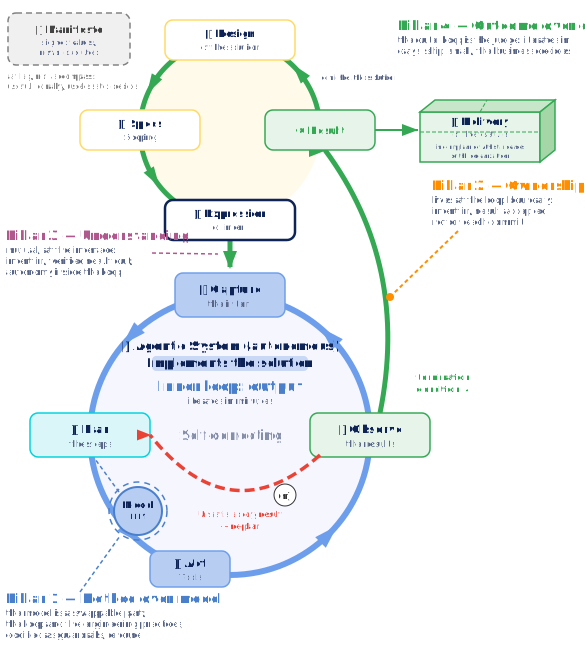
Four Pillars, One Loop: A Manifesto Is Not a Compass
A manifesto is something you sign. A guiding principle is something you execute. The whole argument of this article fits in that distinction.
Introduction
When I first saw the AI-Driven Development Manifesto (AIDD), I thought it was an excellent idea. Four values, twelve commitments, written by developers against vibe coding, in the “X over Y” lineage of the Agile Manifesto. At first reading, the values are easy to agree with. I could sign them.
Then I started to see the manifesto implemented as guiding principles, and that changed my reading. In the details, some of its foundations worry me. They graft an AI onto the existing lifecycle instead of rethinking the lifecycle around the agent. I understand the original fight: in the vibe-coding era, that caution made sense. But agentic development has moved far beyond vibe coding, and the models have evolved. Applied to agentic engineering, these policies may not protect the value of the end product (a goal I share). They may just add inertia, and prevent the efficiency the loop is built to deliver.
We should not fight the obvious. The agents write the code now; the humans do not. The question worth working on is how the team keeps the knowledge, not how to verify what an AI already does better than we do.
My June and July posts built such an agentic delivery engine: the loop described in Codifying the Rules and amplified in The Amplified Agentic Loop. Read from inside that loop, each pillar lands somewhere more precise than its slogan. This article reads them one by one. First, the thesis they will illustrate.
A manifesto is not a compass
A manifesto is a public, signed, dated declaration of values. It is always written against something: AIDD against vibe coding, as Agile was against heavyweight process. Its register is rhetorical by design: broad values, memorable slogans. Its function is real: rally a community, mark a moment, start conversations. This article exists because the manifesto worked.
Guiding pr…