Taft at the Beach


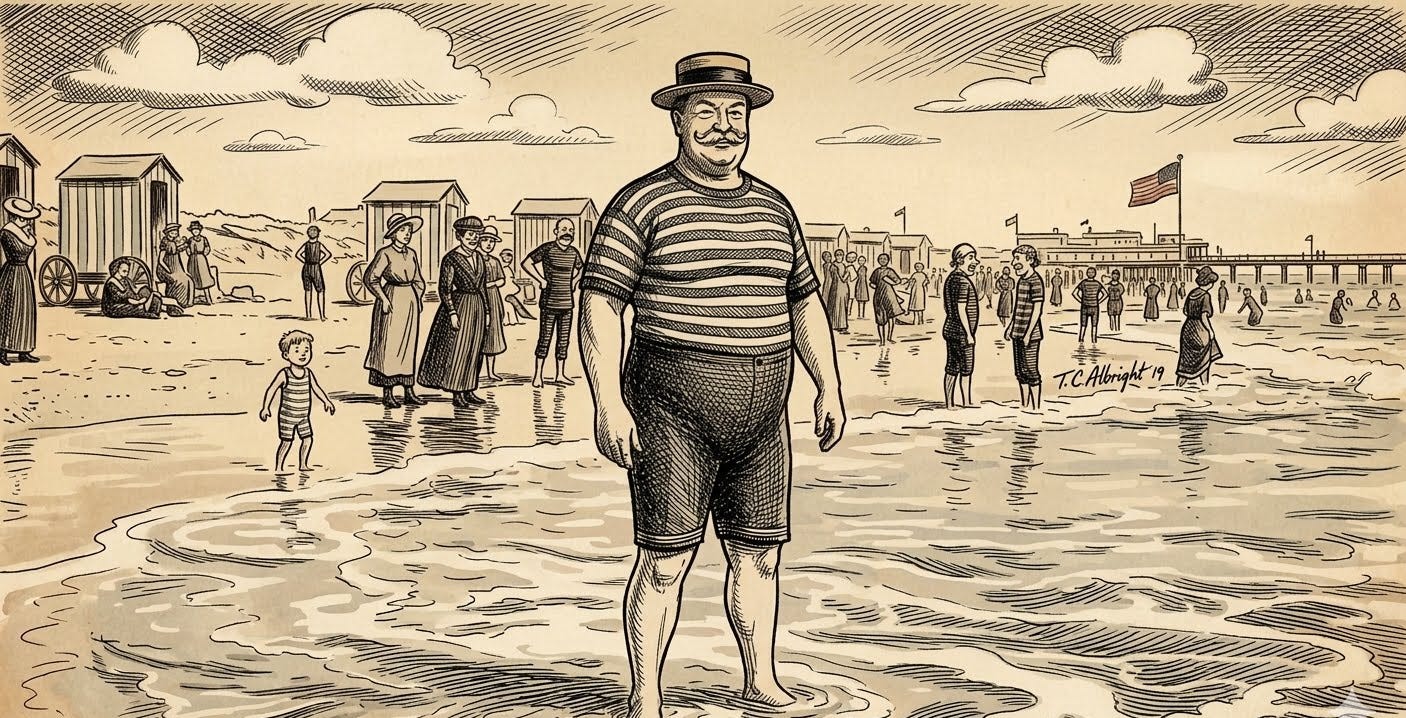
Credit: Collection of the Bar Harbor Inn
A lot of attention is being paid to William Howard Taft these days, a strange honor for one of the nation’s most mediocre presidents —so mediocre that, in fact, he once jokingly wrote to a friend, “I don’t remember that I was ever president.”
Unlike most mediocre presidents, though, Taft got to enjoy a second life as Chief Justice of the United States, from 1921 to 1930. This role suited him much better, and in it he proved, not just one of the most able stewards the Court has had, but also one of the most influential architects of the presidency in history.
To receive new posts and support Can We Still Govern? consider becoming a subscriber.
Today, Taft’s influence can be seen in the Roberts Court, which cites his Myers v. U.S. decision in every separation-of-powers opinion it writes. It will undoubtedly soon cite Taft again when it hands down Trump v. Slaughter.
The decision is potentially one of the most important constitutional and administrative law cases in decades. Triggered by President Trump’s early 2025 firing spree that saw hundreds of thousands of government workers lose or leave their jobs, Slaughter will ask the Court to decide whether the FTC’s (Federal Trade Commission) statutory for-cause removal protections violate the separation of powers. At stake is how far the Supreme Court will go in removing job protections of federal employees at the behest of President Trump.
Can Congress protect officers from “the Damocles’ sword of removal” on grounds that their jobs entail sensitive or technical functions requiring insulation from politics? Or must the President possess “all of” the executive power in the name of democracy and good government?
Led by Chief Justice Roberts, a majority seems poised to answer the latter. This Term’s cases will tell us what exceptions to the removal power the judges will tolerate, and whether institutions like the National Labor Relations Board, Merit Systems Protection Board…

 点赞
点赞 收藏
收藏 点踩
点踩 分享
分享